
Cleaning a window air conditioner yourself takes about 1 to 2 hours for a basic clean, and 2 to 3 hours if you pull the unit out and wash the coils. You can do most of it with a vacuum, a soft brush, mild soap and water. The job is easy to medium. The one thing you must have first is your unit’s manual, because it tells you how the filter and front panel come off on your model.
Expect to spend little or nothing if you already own a vacuum and a screwdriver. You’ll only buy coil cleaner or a new filter if yours is damaged. Check the price of a replacement filter on the maker’s site or the label inside the unit, since it changes by model and size. Do the work on a dry, mild day, not in the middle of a heat wave, so you’re not without cooling for hours.
What you need to clean a window AC unit
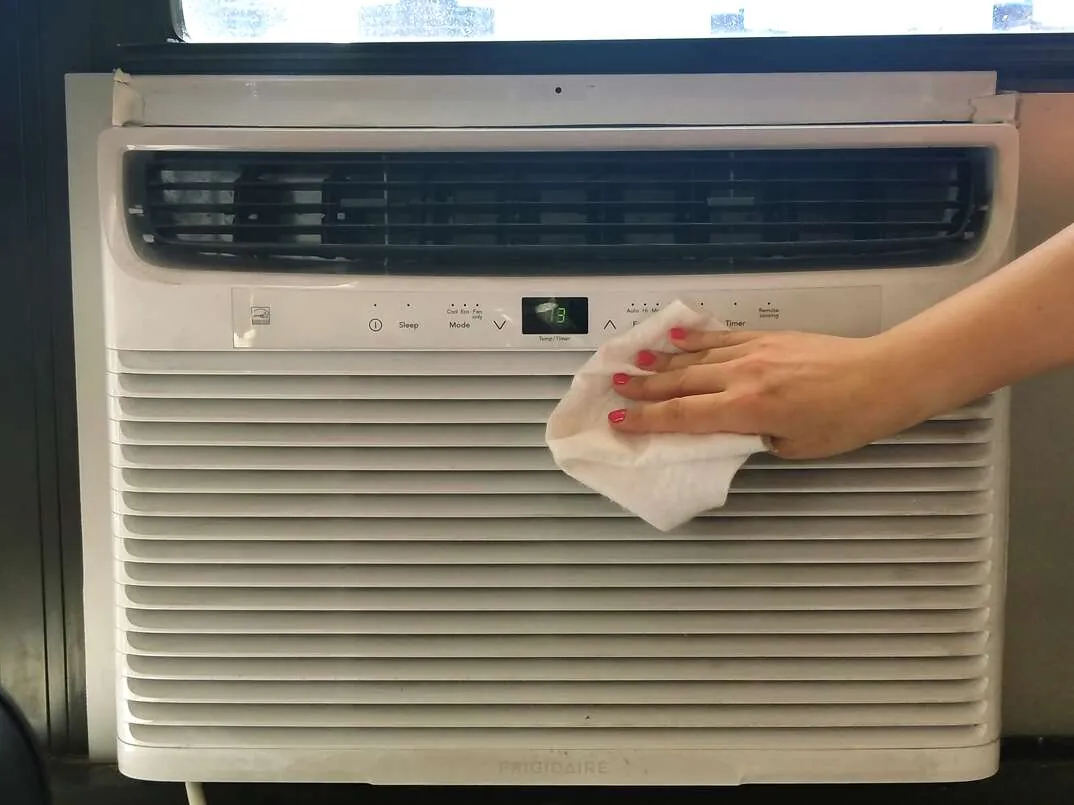
Gather these before you start, so you’re not hunting for a brush with the unit half apart.
| Item | How much | Why it’s needed | A substitute |
|---|---|---|---|
| Owner’s manual | 1 copy | Shows how your panel and filter detach | Maker’s website page for your model |
| Vacuum with brush | 1 | Pulls dust from filter and fins | Soft brush and a cloth |
| Mild dish soap | 1 small bowl | Lifts grease and grime | None — don’t swap this |
| Warm water | 2–4 cups | Mixing and rinsing | None — don’t swap this |
| Soft brush or old toothbrush | 1 | Cleans tight fin gaps | Pipe cleaner |
| Screwdriver | 1, correct tip | Removes the front panel | None — don’t swap this |
| Coil cleaner spray | 1 can | Loosens dirt on coils | Mild soapy water |
The screwdriver is the item people get wrong most often. Window units use a mix of Phillips and small hex heads, and a tip that almost fits will strip the screw.
Check the manual’s parts list for the exact size before you touch the panel. If the manual is gone, look up your model number on the maker’s site.
Skip the coil cleaner spray if your unit’s coils are only lightly dusty. Soapy water on the soft brush does the job, and you avoid rinsing out a chemical you didn’t need.
Keep the soap and water separate from the coil spray. Mixing them in one bowl wastes both.
Set everything on a towel next to the unit, not on the floor below it. Small screws and the brush handle roll, and you want them within reach once the panel is off.
Before you start cleaning your AC
Switch the unit off at the wall and pull the plug before you touch anything. If it’s wired in with no plug, turn off the breaker that feeds that room. Never work on a unit that’s still receiving power.
Unplug and confirm it’s dead. Press the power button after unplugging — nothing should light up.
Move furniture and cover the floor. Water and dirt will drip. A towel under the unit saves cleanup.
Have a second person for a heavy unit. Many window units weigh enough that one person shouldn’t lift them alone.
Read the manual section on the filter and panel. This is the step people skip, and it’s the one that causes broken clips.
Your manual matters more than any general guide here, because window units differ in how the front panel releases. Some slide up, some tilt out, and a few have a screw hidden behind a small cap. Read that page before you pull on anything.
If the manual is long gone, look up the model number printed on the unit’s side or on the rating plate behind the front grille. The manufacturer’s site usually has the PDF.
Where to stop: don’t open the sealed part of the unit, touch the capacitor, or test electrical parts. A capacitor can hold a lethal charge even when unplugged. That work belongs to a qualified technician — call one instead.
Step-by-step: cleaning a window air conditioner
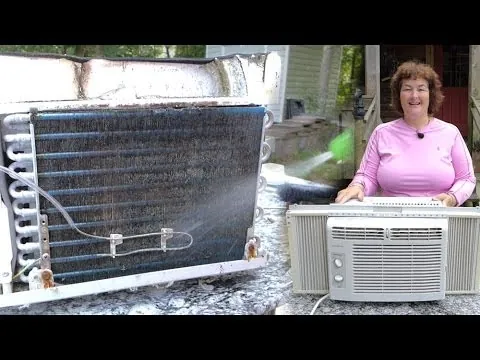
Work through these in order. Each step tells you how you know it’s done before you move on.
Unplug the unit and remove the front panel. Pull the plug from the wall, then take off the front grille as your manual shows — usually 2 to 4 screws or clips. Lift it away slowly. It worked when the panel comes free without bending and the filter is now visible.
Take out the air filter. Slide the filter out of its slot — most units have one behind the front panel. Hold it up to a window: if you can’t see light through it, it’s clogged. That’s your check before cleaning.
Wash the filter. Rinse it under warm running water from the clean side, then add a drop of mild soap if it’s greasy. Use a soft brush for stubborn dust. It’s done when water runs clear through it. Let it dry fully — 1 to 2 hours in the air, not in direct sun.
Vacuum the coils and fins. With the filter out, you’ll see the evaporator coil — rows of thin metal fins. Run the vacuum brush gently along the fins, up and down, not sideways. It worked when loose dust is gone and the fins look grey, not furry. Bent fins block airflow, so don’t press hard.
Spray the coils with cleaner. Apply coil cleaner or mild soapy water to the coil, following the can’s directions. Wait the time the label states — often 5 to 10 minutes. It’s done when dirt loosens and drips away. Don’t let cleaner sit and dry on the coil.
Clean the drain area. Water collects at the bottom and drains out. Wipe the drain channel with a cloth and check the small drain hole is open. Push a pipe cleaner through gently if it’s blocked. It worked when water can flow out freely.
Wipe the cabinet and panel. Use a cloth with mild soapy water on the outer case and the inside of the front panel. Avoid spraying water into any electrical part. It’s done when surfaces are clean and dry to the touch.
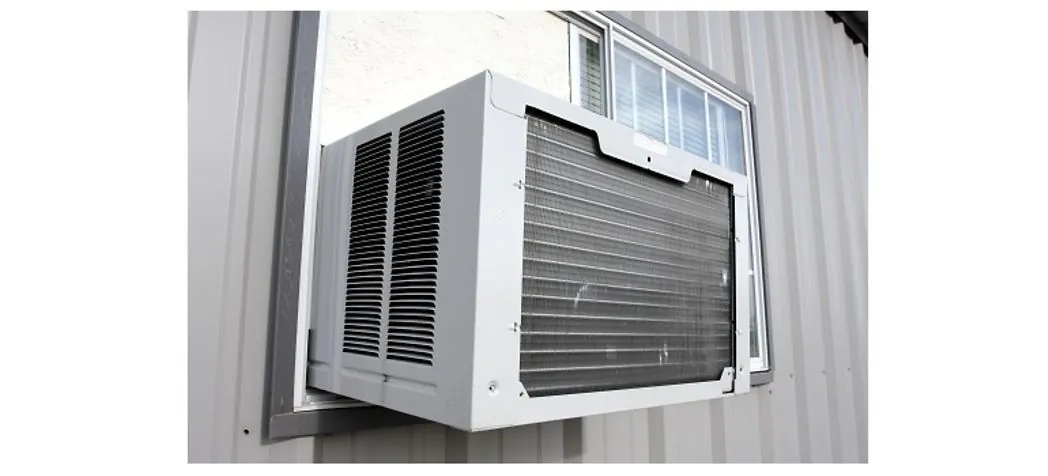
Clean or check the outdoor side. If you can safely reach the back, vacuum the condenser coil too — it’s the coil facing outside. Only do this if the unit is secure and you can reach it without leaning out. If not, leave it for a technician.
Put the dry filter and panel back. The filter must be completely dry before it goes back — a wet filter grows mold. Slide it in, refit the panel, and tighten the screws or clips. It worked when everything sits flush with no gaps.
Plug in and test. Plug the unit back in and switch it on. Set it to cool and let it run 10 to 15 minutes. It worked when cool air comes out steadily and you hear no rattling or grinding.
How to know the cleaning worked
Cold air within a few minutes is your main sign. Set the unit to cool, wait 10 to 15 minutes, and hold your hand at the vent. The air should feel clearly cold, not just moving. If the room cools faster than it did before, the clean did its job.
Listen as well. A clean unit runs with a steady hum. Rattles, grinding or a clicking sound mean something is loose or the fan is hitting dirt — switch it off and check the panel is seated right.
Check the filter again after a week. If it’s already grey, dust is coming back fast, and you may need to clean more often or check for gaps around the unit. A clean filter you can see light through is the sign you’re on track.
Signs it needs a second round:
- Air is cool but weak — the coils likely still hold dirt.
- Water drips from the unit — the drain is still blocked.
- A musty smell stays after cleaning — mold may be deeper in the unit.
- The filter clogs again within days.
If the air never gets cold, cleaning isn’t the fix. Low refrigerant or a failing part needs a technician, and that’s not a do-it-yourself repair.
If something goes wrong
Most problems here are small and fixable. Match what you see to the fix below.
| What happened | Why | What to do |
|---|---|---|
| Unit won’t turn on after cleaning | Plug loose or breaker tripped | Check plug and breaker, then retry |
| Weak airflow | Filter still wet or coils dirty | Dry filter fully, clean coils again |
| Water dripping inside | Drain hole blocked | Clear the drain with a pipe cleaner |
| Musty smell remains | Mold deeper in the unit | Call a technician to clean inside |
| Rattling or grinding | Panel or fan loose | Switch off and reseat the panel |
| Filter won’t fit back | Put in backward or wet | Check the arrow and dry it first |
Water dripping inside is the one worth acting on quickly. On a window unit the drain hole sits at the back of the base pan, and it clogs with dust and algae over a season.
If a pipe cleaner won’t clear it, pour a little water into the pan and watch where it goes. Water that pools instead of running out means the blockage is further in.
Rattling that continues after you reseat the panel is a different case. Stop the unit and leave it off. A loose fan blade can damage the motor, and that isn’t a cleaning fix.
If the unit trips the breaker again right after you reset it, don’t keep resetting. Unplug it and call a technician.
How often to clean a window AC
Clean the filter every 2 to 4 weeks during cooling season, and give the whole unit a deeper clean once a year — ideally before summer starts. That’s the base schedule for a normal home.
Two things change it most. The first is dust and pets: a home with shedding animals or a unit near a dusty road may need the filter cleaned every 1 to 2 weeks. The second is how much you run it — a unit running all day in a hot climate collects dirt faster than one used a few hours at night.
The check that settles it for your home is the light test. Hold the filter to a window; if light doesn’t pass through, clean it now, whatever the calendar says. The U.S. Department of Energy’s Energy Saver guide to air conditioning explains how a clogged filter makes the unit work harder. Read your own filter’s condition rather than a fixed date.
The annual deep clean is a different job from the filter, and it has its own timing. Put it on the calendar for a dry, mild day before the first heat wave, not the first hot afternoon. That way the unit is already clean when you actually need it, and you aren’t scrubbing coils while the room heats up.
If you move into a new place, or the unit sat in a garage or shed all winter, treat the first clean as overdue no matter what month it is. You have no idea how long the last filter went unchanged.
Frequently asked questions
Can I clean a window AC without taking it out?
Yes, for routine cleaning. You can wash the filter and vacuum the indoor coils with the unit still in the window. A full deep clean of the outdoor coil usually needs the unit removed, and that’s a two-person job or a technician’s job.
Why does my window AC smell bad after cleaning?
The smell usually comes from mold or mildew in the drain pan or on a filter that went back damp. Dry the filter fully before refitting, and wipe the drain area. If the smell stays, mold is likely deeper inside and a technician should clean it.
How long does it take to clean a window air conditioner?
About 1 to 2 hours for a basic clean, and 2 to 3 hours if you remove the unit and wash the coils. The filter needs 1 to 2 hours to dry, which you can do while cleaning the rest.
Is it safe to clean a window AC myself?
Yes, for the filter, front panel, coils and drain. It’s not safe to open the sealed electrical section or touch the capacitor — that can hold a lethal charge even unplugged. Leave that to a qualified technician.
What happens if I don’t clean my window AC?
The filter clogs, airflow drops, and the unit cools poorly while using more energy. Dirt builds on the coils and the unit works harder. Over time this can shorten the unit’s life and raise your power bill.
How much water should I use on the coils?
Use light sprays, not a flood — enough to wet the coil and let cleaner work, then let it drip into the drain. Don’t pour cups of water into the unit, since it can reach electrical parts.
Does it matter which coil cleaner I use?
Yes. Use a cleaner made for air conditioner coils and follow its label time. Household bleach or strong cleaners can damage the metal fins and aren’t meant for this job.
Can I clean the filter in a dishwasher?
No. Dishwasher heat can warp the filter frame and damage the mesh. Rinse it by hand in warm water and let it air-dry fully before putting it back.
Conclusion
If your unit still blows warm air or smells musty after a good cleaning, it’s worth calling a technician before summer hits. A quick check now can catch small problems early, and you’ll stay cool when the hot days finally arrive.