
Stuffed animals get dirty from the outside in — dust, skin oils, and smoke settle on the fabric, and dust mites work their way into the filling. To clean one, check its care tag, then match the method to what’s inside: surface wash for glue, foam, or electronics, and a full wash only for plush that’s sewn shut and colorfast. The job takes about 30 minutes of hands-on work, plus 24 to 48 hours of drying time. Call it easy to medium. The one thing you need before you start is the care tag still attached to the toy.
Cost is small: a mesh laundry bag, a mild detergent you already own, and a towel. Difficulty jumps to “needs care” when the toy has a voice box, glued-on eyes, or a music chip — those can’t go in water at all. If the tag is missing, treat the toy as surface-wash only. You can often find the maker’s own cleaning advice on the brand’s official page or on the sewn-in label inside a seam.
What you need to clean a stuffed animal
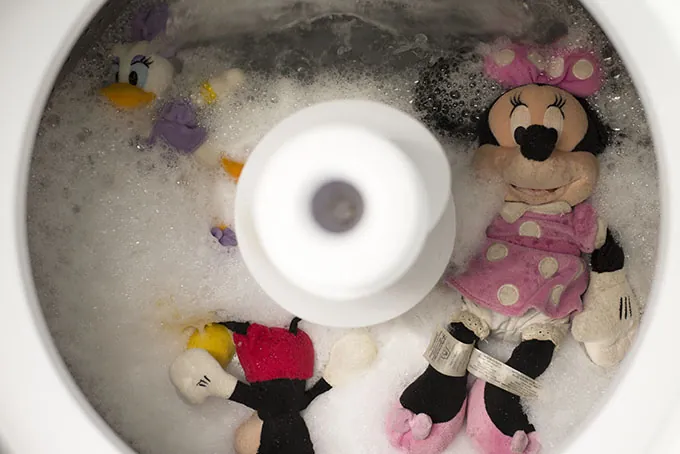
| Item | How much | Why it’s needed | A substitute |
|---|---|---|---|
| Mild liquid detergent | 1 teaspoon per 1 gallon water | Lifts oils without stripping dye | Baby shampoo, same amount |
| Mesh laundry bag | 1 bag per toy | Keeps eyes and seams from snagging | A clean pillowcase, tied shut |
| White towel | 2 towels | Blots water and speeds drying | Any light-colored towel |
| Soft brush or toothbrush | 1, soft bristles | Loosens dirt from fur | A dry washcloth |
| Vacuum with brush tool | 1, low suction | Pulls out loose dust first | A lint roller |
| Baking soda | 2 tablespoons per toy | Absorbs surface odor | Cornstarch, same amount |
Mix the detergent into the water only when you’re ready to use it. A teaspoon sitting in a gallon jug for a week does nothing useful.
Keep the white towel white. A colored towel can bleed onto damp fur, and you won’t see it until the toy is dry.
The soft brush is for the fur only. Work it in the direction the fur lies, and stop at any embroidered nose or mouth.
If the toy has a music box or a battery pack, skip the vacuum brush tool and use the lint roller instead. Suction near a speaker grille can pull the mechanism loose.
Check the toy before it gets wet
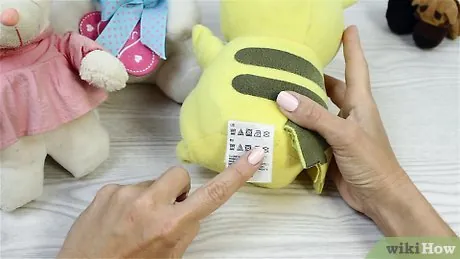
- Read the care tag first. It tells you if the toy is surface-wash only, and that one line decides everything after it. If the tag is gone, don’t risk a machine wash.
- Switch off and remove anything electronic. Take out voice boxes, sound chips, and batteries. Water plus a battery is a ruined toy and, in rare cases, a leak.
- Empty the toy of loose parts. Check pockets, velcro openings, and any attached accessories you can unclip.
- Test the dye on a hidden seam. Rub a damp white cloth on an inside seam. If color comes off, don’t wash it in water.
- The step most people skip: brushing out loose dirt while the toy is dry. Vacuuming or brushing first stops mud from turning into a stain you then have to fight.
One limit worth naming: anything with a music box, a glued eye, or a battery compartment isn’t a do-it-yourself wash job. Take it to a professional toy restorer, or ask the maker’s customer service for their recommended method.
Step-by-step stuffed animal cleaning
- Vacuum the dry toy for 1 to 2 minutes. Use the brush tool on low suction. Work in short strokes over the whole surface. You’ll know it worked when the fur stands up and the brush stops picking up dust. Skip this on very loose or frizzy fur — it can pull threads.
- Spot-clean small marks with a damp cloth and 1 drop of detergent. Dab, don’t rub, for about 30 seconds per mark. Blot with a dry towel. If the mark fades but doesn’t vanish, repeat once. Don’t scrub — it pushes dirt deeper into the weave.
- Mix 1 teaspoon of mild detergent into 1 gallon of cool water. Cool water (under 86°F / 30°C) protects dye and glue. Hot water is what shrinks filling and loosens glued parts.
- Wash by hand in a sink or basin for 5 to 10 minutes. Squeeze the soapy water through the toy like a sponge. Don’t wring or twist it. You’ll know it’s clean when the water runs clear instead of gray.
- Rinse in clean cool water until no suds remain. Two or three rinses is normal for a large toy. Leftover soap dries stiff and dulls the fur.
- Press out water with a towel, never a wringer. Lay the toy on a dry towel, roll it up, and press with your palms for about a minute. Repeat with a second towel. The toy should feel damp, not dripping.
- Reshape the toy while it’s damp. Pat the stuffing back into place and brush the fur in its natural direction. This is the only moment you can fix a lump — once it dries, it sets.
- Air-dry in a well-ventilated room for 24 to 48 hours. Turn the toy every few hours. Keep it out of direct sun, which fades dye. Thin toys dry in about a day; thick ones with dense filling take two.
- Fluff and brush once fully dry. Use your fingers or a soft brush to break up any clumps. If the fur feels stiff, you rinsed too little — dampen and rinse again.
- For machine-washable toys, use a mesh bag on gentle cycle. Cold water, low spin, and 1 teaspoon of detergent. If the toy came from a thrift store or an unknown maker, check for a care tag and any recalled-model notices before washing.
How to tell the cleaning worked
The clearest sign is the rinse water: if it ran clear by your last rinse, the soap and dirt are out. A second sign is the fur itself — it should feel soft and separate under your fingers, not stiff or clumped. Stiff fur almost always means leftover detergent, not dirt.
Check the seams after drying. Run your thumb along each one. A seam that’s pulled or frayed means the wash was too rough and the toy needs a repair before it gets used again. Loose stuffing at a seam is the same signal.
Weight is the other test. A fully dry toy feels light and even, like it did when new. A toy that still feels heavy in the middle after 48 hours isn’t dry inside, and damp filling grows mold. Squeeze the belly — if it feels cold or dense, give it another day near a fan.
Odor is the last check, and it’s a weak one. Baking soda left on for 2 hours before washing pulls out mild smoke or storage smell. A smell that survives a full wash usually means mold inside the filling, and that toy should be replaced, not rewashed.
If the toy needs a second round, repeat only the steps that failed. Stiff fur means rinse again. A remaining stain means one more spot-clean, not a second full wash — repeated washing wears the fabric thin.
When cleaning a stuffed animal goes wrong
| What happened | Why | What to do |
|---|---|---|
| Fur went stiff and crunchy | Soap left in the filling | Rinse again in cool water, dry fully |
| Toy shrank after washing | Hot water or dryer heat | Stretch gently while damp, air-dry only |
| Color bled into pale patches | Dye wasn’t colorfast | Don’t rewash; treat as surface-clean only now |
| Eye or nose came loose | Glue softened in water | Stop washing; sew or glue back with fabric glue |
| Musty smell after drying | Filling stayed damp inside | Discard if mold is visible; don’t give it to a child |
| Voice box stopped working | Water reached the battery | Remove batteries, let dry 48 hours, test again |
Stiff fur is the one you can usually still fix. Rinse the toy again in cool water, pressing the water through the filling rather than just wetting the surface. Then dry it fully, turning it now and then so air reaches the inside.
Shrinkage is different. Once the fibers have felted, they don’t come back, so stretching while damp only helps a little. If the toy is a favorite, keep it out of the machine from now on and spot-clean it instead.
A loose eye or nose is a safety problem, not a cosmetic one. Put the toy aside until the part is firmly back on, and check the other eye and any small parts at the same time. If a part is missing and can’t be found, don’t hand the toy to a child.
The voice box case is the one where you wait. Pull the batteries out straight away so they don’t corrode, then let the toy air-dry for the full 48 hours before you test it. If it stays silent after that, the water reached the circuit, and no amount of further drying will bring it back.
How often to clean a stuffed animal
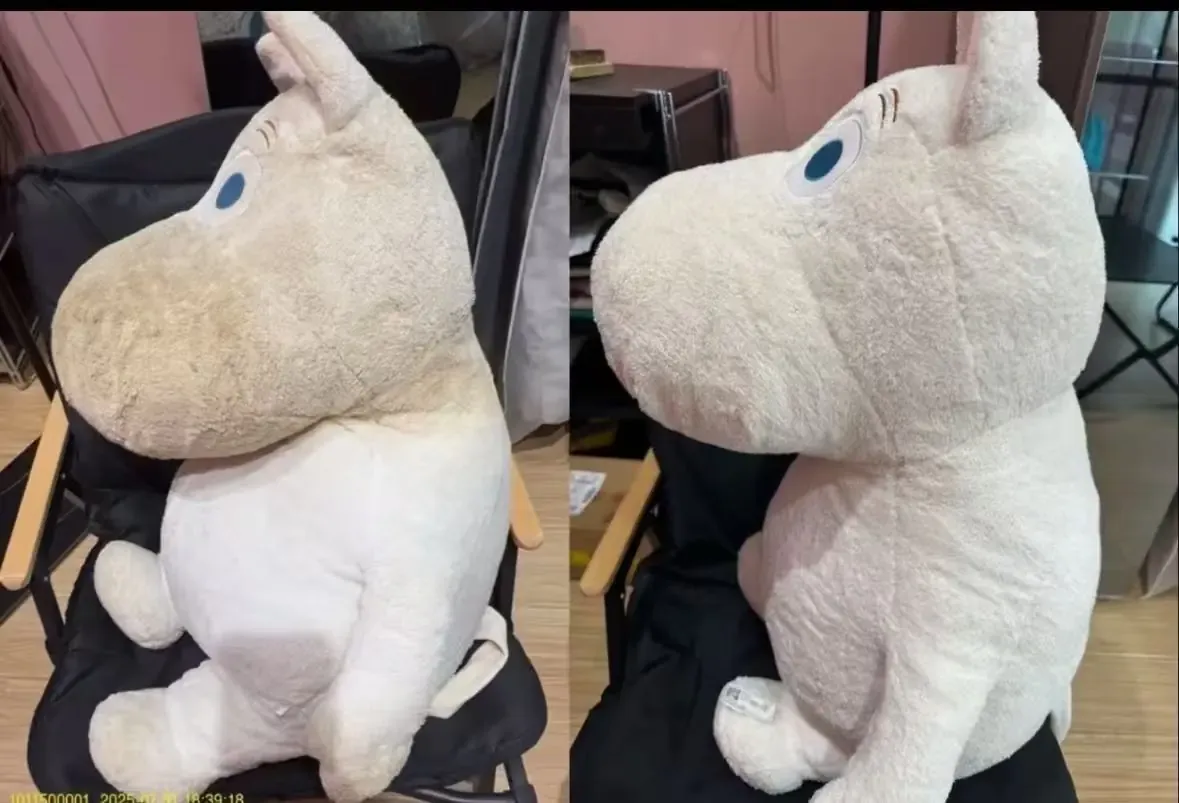
Wash a stuffed animal every 3 to 6 months if a child sleeps with it every night. That range covers the normal case: daily handling, a bedroom, no illness in the house. A toy that sits on a shelf needs a wash only once a year, or when dust is visible on the fur.
Two things move that number most. The first is who uses it — a toy carried everywhere, dropped on floors, and taken outside gets dirty in weeks, not months. The second is allergies or asthma in the household. Dust mites live in soft filling, and the Asthma and Allergy Foundation of America recommends washing bedding in hot water weekly for allergy sufferers, so a favorite plush deserves a wash at least monthly in that home.
Between washes, a 10-minute vacuum and a 2-hour baking soda soak keep the toy fresh. Sunlight helps too — an hour in indirect sun airs the toy out and helps it dry without fading most dyes.
Frequently asked questions
Can you put a stuffed animal in the washing machine?
Yes, if the care tag says machine washable and the toy has no electronics, glue, or foam. Use a mesh bag, cold water, gentle cycle, and low spin. Toys without a tag should be hand-washed or surface-cleaned only. A machine wash on a glued-eye toy can loosen the parts, and small pieces are a choking risk for young children.
Why did my stuffed animal’s fur get crunchy after washing?
Leftover detergent is the cause, not the water. One teaspoon per gallon is enough, and it takes two or three rinses to get it all out. If the fur is already stiff, dampen the toy and rinse in clean cool water again, then air-dry fully. Brushing the fur while it’s slightly damp helps it separate.
How long does a stuffed animal take to dry?
24 to 48 hours in a ventilated room, depending on filling thickness. A small thin toy dries in about a day. A large dense one takes two days. Never use a dryer on high heat — it melts synthetic filling and shrinks fabric. A fan pointed at the toy speeds drying.
Is it safe to wash a stuffed animal with a voice box?
No — a voice box, sound chip, or battery compartment should never go in water. Remove the electronic unit if it has a velcro opening, then surface-clean the fabric with a damp cloth and a drop of detergent. If the unit is sewn in permanently, surface-clean only and let the toy air out instead of washing.
What happens if you wash a stuffed animal in hot water?
Hot water shrinks filling, fades dye, and softens the glue on eyes and noses. Keep water under 86°F (30°C) — cool to the touch. If a toy already went through hot water, stretch it gently while damp and air-dry it flat. Glue that has softened usually re-sets, but check the eyes before giving the toy back to a child.
Does it matter what detergent you use on plush toys?
Yes — use mild, dye-free liquid detergent, not powder. Powder leaves grains in the filling that are hard to rinse out and feel gritty later. One teaspoon per gallon is plenty. Harsh or bleach-based cleaners strip color and break down the fabric fibers over time.
How do you clean a stuffed animal you can’t wash?
Vacuum it with a brush tool on low suction, then rub 2 tablespoons of baking soda into the fur and leave it for 2 hours. Brush or vacuum it out. For spots, dab with a damp cloth and 1 drop of mild detergent, then blot dry. This handles dust and light marks but won’t remove deep stains or odor inside the filling.
Can you clean a stuffed animal with a steamer?
Yes, a handheld garment steamer can loosen surface dust on the outer fabric, but keep the nozzle moving and never soak the toy. Steam doesn’t clean inside the filling, so a steamer is a between-wash freshener, not a replacement for washing. Test one hidden seam first to make sure the fabric doesn’t pucker.
Conclusion
Once your toy is fully dry, give it a gentle fluff and a quick sniff before it goes back on the shelf. If any musty smell lingers, set it outside in fresh air for a few hours. Then snap a photo of the care tag and keep it with your laundry notes, so you’ll know exactly what to do next time.