
A new tattoo is an open wound, so how to clean tattoo aftercare works is simple: wash it 2-3 times a day with fragrance-free soap and lukewarm water, then pat it dry with a clean paper towel. That’s the whole method. The first wash happens 2-4 hours after the artist finishes, once the bandage comes off.
The job takes about 2 minutes per wash, and you’ll repeat it for 2-3 weeks. Cost is low — a mild soap and paper towels are it, unless your artist sold you a specific aftercare product.
Difficulty is easy, but it needs care: dirty hands or a soaked tattoo can cause an infection. Before you start, you need clean hands and a fresh bandage or wrap from your artist. Your artist’s own written aftercare sheet beats any general guide, so read it first.
What you need to clean a tattoo
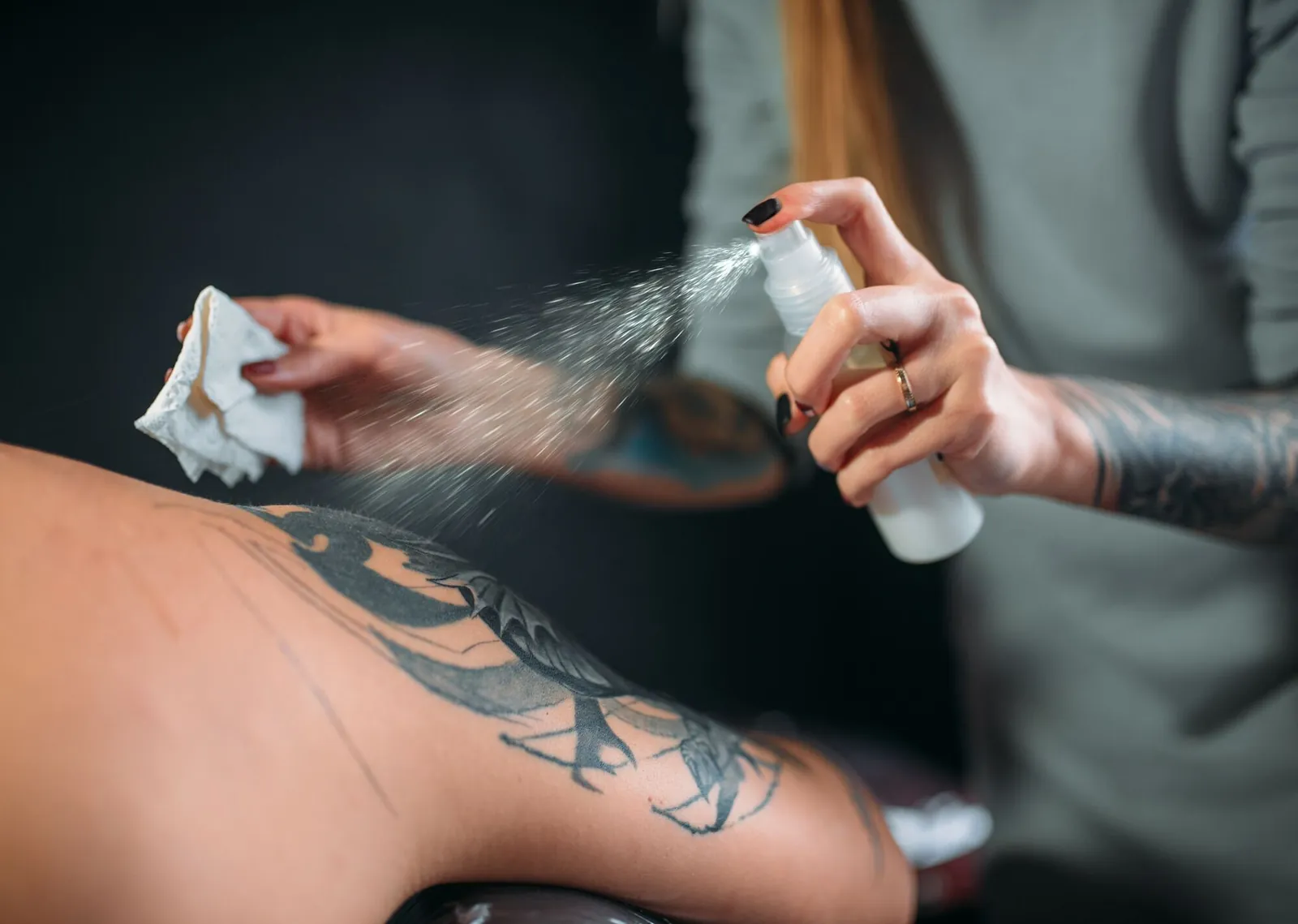
Keep the list small. Every extra product is one more thing that can irritate a healing tattoo.
The soap is the item worth spending a minute on. It has to be liquid and fragrance-free, because fragrance is the most common cause of a reaction on fresh ink. A pump bottle is easier than a bar, which can pick up bacteria from the sink.
If your artist sent you home with a specific aftercare product, use that instead of building your own kit. Their instructions come from how they worked on your skin, and they will want to see how it heals at the follow-up.
A pea-sized drop goes a long way. More soap means more rinsing, and more rinsing means more chances to leave the tattoo damp.
Paper towels aren’t fussiness. Cloth towels carry lint and bacteria, and a tattoo is an open wound for the first few days. If you run out, let the tattoo air-dry rather than reaching for a bath towel.
The ointment is where most people overdo it. A rice-grain amount is enough for a palm-sized area of tattoo.
A substitute is only a substitute. Cool water instead of lukewarm is fine when the skin feels hot. Loose clean clothing instead of a bandage works once the wrap is off for good.
Before you start cleaning a tattoo
Wash your hands first. Twenty seconds with soap, then dry them on a paper towel. Dirty hands are the number one way a fresh tattoo gets infected. If you’re washing at a public sink, use a paper towel to turn the faucet off, not your clean hand.
Take the bandage off as your artist told you. Some wraps stay on for 24 hours, some for 3-5 days. If you’re not sure, check the sheet your artist gave you or call the shop. Don’t improvise because a friend’s tattoo was wrapped differently; your artist chose yours for a reason.
Clear the sink area. Move sponges, dishcloths and anything that touches raw food away from where you’ll wash. A bathroom sink shared with a kitchen sponge is the usual culprit.
Don’t share towels. Use paper towels, not the family bath towel, for the first 2 weeks. Pat dry, don’t rub.
Know where to stop. If the skin is hot, spreading red, or oozing pus, that’s a doctor’s job, not a cleaning job. See a healthcare provider the same day.
The preparation people skip is the hand wash. It costs nothing and prevents most problems.
How to clean a tattoo step by step
- Wash your hands for 20 seconds. Use soap and warm water, then dry on a paper towel. Don’t touch the tattoo until your hands are dry. You’ll know it worked because your hands feel clean and don’t smell of food or chemicals.
- Remove the bandage slowly. Peel it from one corner, pulling parallel to the skin, not upward. If it sticks, wet the edge with lukewarm water for 10 seconds. The tattoo should look wet and may have some ink and plasma on the wrap — that’s normal.
- Rinse with lukewarm water for 10-15 seconds. Let the water run over the tattoo without rubbing. Warm water loosens the dried plasma. If the water stings sharply, turn the temperature down.
- Apply a pea-sized drop of fragrance-free soap. Spread it over the whole tattoo with your fingertips in gentle circles for about 10 seconds. Don’t use a washcloth, sponge or loofah — they trap bacteria.
- Rinse until the water runs clear. This usually takes 15-20 seconds. No soap should stay on the skin. Soap left behind dries the tattoo and causes cracking.
- Pat dry with a clean paper towel. Press, don’t rub. Use a fresh sheet if the first one gets wet. The skin should feel dry to the touch before you add anything.
- Apply a thin layer of ointment. Use a rice-grain amount for a palm-sized tattoo, 2-3 times a day. More than that traps moisture and can clog pores and irritate the healing skin. The layer should look barely there.
- Let it air dry for 5-10 minutes. This gives the skin time to absorb the product before you cover it. You’ll know it’s ready when the surface doesn’t feel tacky.
- Cover it only if needed. Loose clean clothing is enough at home. If you work in a dusty or greasy job, cover with a fresh bandage and change it every 4-6 hours.
- Repeat 2-3 times a day for 2-3 weeks. Wash more often if you sweat heavily or work with your hands. Stop the ointment once flaking starts and switch to a light, fragrance-free lotion.
The US Food and Drug Administration’s tattoo safety advice covers what to watch for and when to get medical help. It’s worth a read in week one.
How to tell your tattoo is healing well
The clearest sign is a change in the surface. In the first 3-5 days a fresh tattoo weeps clear plasma and looks slightly shiny. By day 5-7 it should look dry and start to feel tight. That’s the shift you’re watching for.
A healing tattoo itches, and light flaking starts around day 7-14. Small, thin flakes that come off on their own are normal. Picking them off is where people lose ink.
Check the edges too. The linework should stay crisp as the skin settles. If a line looks blurry in week 2, it’s usually plasma crusting, not lost ink. Wait until week 4 before you judge it.
Signs it needs another round of cleaning:
- The skin feels slick or smells after 2 hours, not 8.
- You see yellow or green fluid on the paper towel.
- Redness spreads more than a finger-width past the tattoo edge.
- The tattoo feels hotter than the skin beside it.
If any of those appear with a fever, stop cleaning at home and see a doctor. A tattoo infection can spread fast, and antibiotics are the fix — not more soap.
Healing isn’t a straight line, and the timeline shifts with where the tattoo sits. A piece on your ribs or the back of your calf gets stretched every time you move, so it may flake later than one on your forearm.
Color and blackwork also read differently. Solid black can look dull and gray for a week or two before it settles, which is normal. Dense color may look patchy at the edges while the top layer sheds.
The test is whether the tattoo is moving forward. Compare it every few days rather than every hour. If it looked drier on Tuesday than it did on Saturday, you’re on track even if the calendar says otherwise.
One more thing worth knowing: a tattoo can heal well on the surface and still be irritated underneath. If the skin calms but stays raised along a single line for weeks, mention it at your next session rather than scrubbing at it.
Your artist is the best judge of your specific piece. A quick photo sent at the two-week mark catches most problems early, and it costs nothing.
When cleaning a tattoo goes wrong
| What happened | Why | What to do |
|---|---|---|
| Ink looks faded in week 2 | Scabs picked or scratched off early | Let it heal, then ask artist about a touch-up |
| Red, itchy bumps on colored areas | Allergy to a specific ink pigment | See a dermatologist, don’t scrub it |
| Yellow or green discharge | Bacterial infection | See a doctor the same day |
| Skin cracked and dry | Too much soap or ointment | Cut to 2 washes a day, thin layer only |
| Tattoo stays wet under wrap | Sweat trapped by a tight bandage | Remove wrap, air dry 10 minutes, re-cover loose |
The two rows that need a doctor aren’t the same kind of problem, and the difference matters. Yellow or green discharge means bacteria are in the skin, so it’s a same-day call.
Red, itchy bumps on colored areas are an allergy to one pigment, and they can appear after a tattoo that looked fine for weeks. A dermatologist can confirm which color is responsible.
Don’t scrub either one, and don’t treat the bumps with the ointment you used in week one.
Fading in week two is the mildest case on the table. Scabs you picked took ink with them, and no product brings it back. Wait until the skin is fully closed before you ask your artist about a touch-up.
Cracked, dry skin usually means too much product, not too little. Cut back to 2 washes a day and a thin layer only.
If the tattoo stays wet under a wrap, the bandage is trapping sweat. Remove it, air dry 10 minutes, and re-cover it loose rather than tight.
How often to clean a tattoo
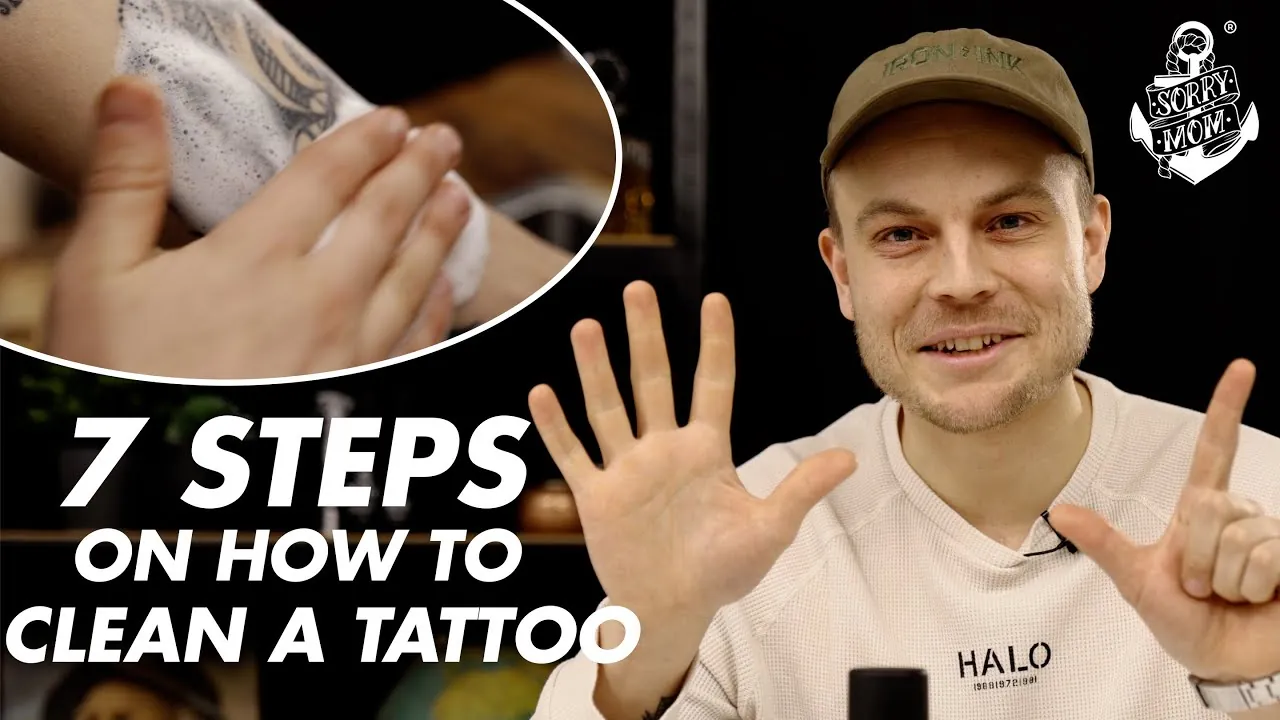
Wash a new tattoo 2-3 times a day for the first 2 weeks, then once or twice a day until the flaking stops, usually by week 3. That’s the baseline for a tattoo on an arm or leg that heals without trouble.
Two things move that number. The first is sweat: if you work out, do physical work, or live somewhere hot, add one wash right after you sweat. Salt and bacteria sit on the skin and irritate the fresh lines.
The second is placement. A tattoo on your hands, feet, or anywhere that rubs on clothing needs more attention — wash it after every contact with a dirty surface, and keep it covered at work. A tattoo under tight clothing needs fewer washes but more air time.
Count a wash as one full pass with your cleanser and water, not a quick wipe. Three proper washes beat six half ones, and the skin gets less handling.
If your artist gave you a different schedule, follow theirs. Your artist knows your skin, the size of the piece and how much you bled during the session — this guide doesn’t.
Frequently asked questions
Can I use regular bar soap on a new tattoo?
No — use fragrance-free liquid soap instead. Bar soap sits in water, collects bacteria, and many bars contain perfume that stings open skin. A mild, unscented liquid soap is the safe choice for the first 2-3 weeks. If you only have bar soap, use a fresh bar and rinse it well first.
Why is my tattoo weeping clear fluid?
It’s normal for 2-5 days — that fluid is plasma, part of your body’s healing response. Wash it off gently 2-3 times a day and pat dry. If the fluid turns yellow, green, or smells bad after day 5, that’s a sign of infection and you should see a doctor.
How long until I can stop cleaning my tattoo?
About 2-3 weeks for most tattoos, once flaking has stopped and the skin looks like normal skin again. Larger pieces or tattoos on joints can take 4 weeks. Keep washing once a day until the surface is smooth.
Is it safe to shower with a new tattoo?
Yes, a quick shower is safe — just don’t let the water hit the tattoo directly for long. Keep the shower lukewarm, not hot, and pat the tattoo dry with a paper towel right after. No baths, hot tubs, pools, or lakes for at least 2 weeks, because standing water carries bacteria.
What happens if I skip cleaning for a day?
One missed day usually causes no harm if the tattoo is already past week one. In the first 3 days, skipping lets plasma and bacteria sit on an open wound, which raises infection risk and can cause thicker scabbing. Wash as soon as you remember, then go back to your normal 2-3 times a day.
Does it matter which ointment I use?
Yes — a thin layer of a plain, fragrance-free ointment or lotion matters more than the brand. Heavy petroleum layers used thickly can clog pores and irritate the healing skin. Your artist’s recommendation is the safest guide, since they know how your skin reacted during the session.
Can I exercise after getting a tattoo?
Light movement is fine after 24 hours, but avoid heavy sweating and gym equipment for the first 3-5 days. Sweat and shared surfaces both raise infection risk. If you do train, wash the tattoo right after and cover it with a fresh bandage while you work out.
How do I clean a tattoo without a bandage on it?
Wash your hands, rinse with lukewarm water, use a pea-sized drop of fragrance-free soap, and pat dry with a paper towel. Leave it uncovered at home in loose clothing, and cover it only when outside, at work, or sleeping on shared bedding.
Conclusion
If you notice spreading redness, pus, or a fever in the days ahead, call your artist or a doctor rather than waiting it out. Otherwise, let yourself enjoy it—snap a photo once it settles, and start planning the next one.