
Cleaning a horse’s sheath takes about 15 to 20 minutes once your horse is relaxed, and it’s a medium-difficulty job that needs care rather than strength. You need one thing before you start: a veterinarian’s okay, or at least a plan to call one, because a swollen or painful sheath is a medical problem and not a cleaning job. The cost is small — a gentle cleanser, warm water, and disposable gloves. Most of the time goes into waiting for your horse to drop and relax, not into the cleaning itself.
What you need for sheath cleaning
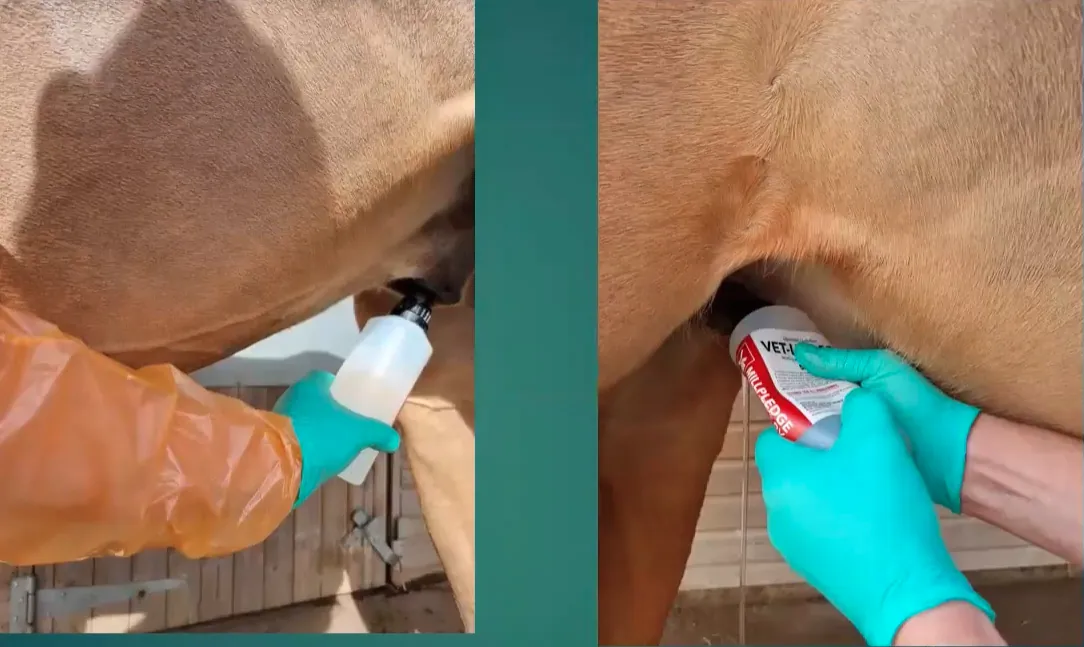
| Item | How much | Why it’s needed | A substitute |
|---|---|---|---|
| Latex or nitrile gloves | 2 pairs, one spare | Keeps your hand clean and protects a sensitive area | none — don’t swap this |
| Warm water | 2–3 quarts, about 100°F (38°C) | Softens the smegma so it lifts off | none — cold water makes the job harder |
| Mild cleanser | A capful in 1 quart of water | Lifts grease without stripping skin | plain warm water for light buildup |
| Soft sponge or cloth | 2 pieces | Wipes the outside and the folds | clean rags you throw away after |
| Paper towels | A full roll | Dries the area and cleans your hands | none — don’t swap this |
| Exam gloves for the inside | 1 long glove | Reaches the bean safely | none — don’t swap this |
| A helper | 1 person | Holds the horse and keeps you safe | a safe tie ring, if your horse stands well |
The mild cleanser is the one item worth thinking about before you buy. A gentle horse shampoo or a plain mild soap is what you want. Skip anything medicated, perfumed or labeled for heavy grease, because those strip the skin and leave it sore.
If your horse has only light buildup, plain warm water on a soft cloth does the job and you can leave the cleanser in the bucket. Save the capful for a horse that has gone a long time between cleanings.
Two pairs of gloves isn’t a suggestion. The outer pair gets dirty fast, and you don’t want to pull a soiled glove back on with bare hands. Peel the first pair off inside out and drop them straight into a bag.
The long exam glove matters for reach, not for size. A standard glove rides up and slips when your arm is in past the wrist. Buy the long ones and keep a spare in the kit, since they tear.
Keep the whole kit in one bucket with a lid. A closed bucket means you aren’t hunting for a glove in the dark with a horse tied in the aisle.
Getting the horse ready before you touch the sheath
Pick a calm time, not feeding time or turnout time. A relaxed horse drops and lets you work; a tense one kicks.
Tie the horse in a safe, level spot with a quick-release knot, or have a helper hold him. Never work alone with a horse that has kicked before.
Put on gloves and wash the outside of the sheath with warm water and a sponge first. Dirt on the outside gets pushed inside if you skip this.
Empty your horse’s bladder first if you can. Some horses urinate when they relax, and that’s normal.
The step people skip: checking for swelling, heat or pain before you start. If the sheath is puffy, hot, or the horse flinches when you touch it, stop. That’s a vet’s job, not yours.
A horse that’s relaxed but not drugged is the safest horse to work with. If he is dancing on his feet or clamping his tail, give him a few minutes and try again.
A hay net within reach gives him something to do and keeps him from turning his head to watch you. Keep your shoulder against his flank so he feels where you are.
Cleaning the inside of the sheath — especially reaching for the bean — carries a real risk of kick injury and of pushing bacteria into the urethra. If your horse has never been cleaned, or he resists, ask your veterinarian to do the first one and show you how.
How to clean a horse’s sheath, step by step
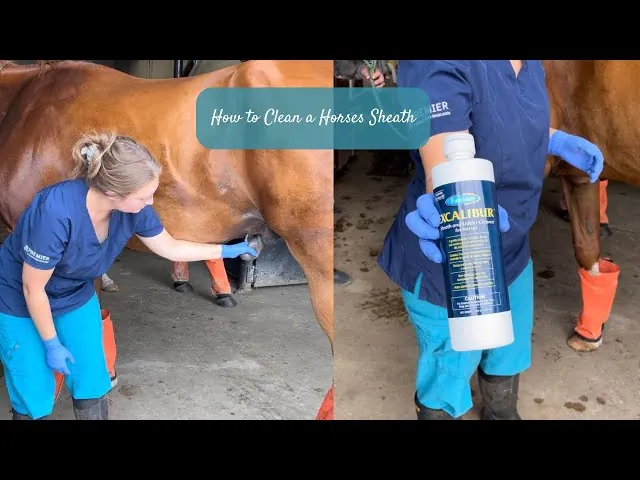
Wash your hands and put on gloves. Use a fresh pair for the outside and keep a long glove for the inside. This takes 1 minute. You’ll know it worked when your hands are covered and you have everything within reach — no walking away mid-job with a dirty glove.
Wet the outside with warm water. Use your sponge and 1 quart of warm water at about 100°F. Work gently around the opening and the folds. The step worked when the loose dirt and crust are soft, not flaking off dry.
Apply a small amount of mild cleanser. Use about a capful in 1 quart of water, or a pea-sized drop of sheath cleaner on the sponge. Too much soap irritates the skin. You’ll know it worked when you see light suds, not a thick lather.
Wipe the outside folds clean. Move the sponge in gentle circles over the outer skin, 2 to 3 passes. Don’t scrub hard. The step worked when the sponge comes away with no more brown smegma on it.
Rinse with clean warm water. Use fresh water and a clean sponge. Soap left behind causes irritation. You’ll know it worked when the water runs clear and there’s no slippery feel on your fingers.
Let the horse relax and drop. Wait 1 to 2 minutes and stay calm. Most horses drop when they relax. The step worked when the penis is visible and the horse isn’t tense or stepping away.
Check for the bean. The bean is a small waxy lump in a pocket near the tip. With a gloved finger, feel gently for it — don’t dig. If you feel a firm lump and your horse stands quietly, you can ease it out. If he pulls away, leave it for the vet.
Rinse the inside gently with warm water. Use a low-pressure squeeze of water or a soft cloth, never a strong stream. The step worked when the area is clean and the horse is still relaxed.
Dry the area with paper towels. Pat, don’t rub. Damp skin left in the folds can get sore. You’ll know it worked when the skin feels dry to your gloved hand.
Wash your hands and clean your tools. Throw away the gloves and sponges, or wash them with hot water. This takes 2 minutes. The job is done when your tools are clean and your horse is settled.
Signs the sheath cleaning worked
A clean sheath looks dry and pinkish-grey inside the folds, with no brown crust and no strong smell. Your horse should stand normally, urinate without straining, and show no heat or swelling the next day. Check again 24 hours later — that’s when irritation shows up if soap was left behind.
The signs it needs another round are simple. If you still see brown smegma on a fresh sponge after rinsing, or the folds feel greasy, do one more gentle wash — but wait at least a few days, because scrubbing twice in one day irritates the skin. If your horse keeps dropping and rubbing his tail, that’s not a cleaning problem; it’s a reason to call the vet.
A little brown smegma the day after a clean is normal, especially on a gelding. What you’re looking for is the trend, not a spotless sheath. If the same amount builds back within a week, he’s a heavy producer and a longer gap between full cleans won’t help him.
How much smegma a horse makes varies a lot with age, diet and how much he’s exercised, and geldings often make more than mares or stallions. You can read your own horse’s pattern by checking the outside of the sheath every couple of weeks with a gloved hand — if it stays clean, he doesn’t need a full clean yet.
When sheath cleaning goes wrong
| What happened | Why | What to do |
|---|---|---|
| Horse kicked or pulled away | He wasn’t relaxed or was in pain | Stop, calm him, try another day |
| Sheath is swollen or hot | Possible infection or injury | Call your vet the same day |
| Skin looks red and sore | Too much soap or scrubbing | Rinse well, skip cleaning for 2 weeks |
| Can’t find the bean | It’s small or deep in the pocket | Leave it — let the vet check |
| Horse strains to urinate | Blockage or irritation inside | Call your vet right away |
| Bad smell that won’t go | Buildup or infection | Have your vet examine him |
A horse who kicks or pulls away is telling you he isn’t ready, and forcing it teaches him that handling means pain. End the session on a calm note and come back another day.
Swelling and heat are the two signs to take most seriously. A sheath that’s puffy, warm to the touch, or leaking pus points to infection or injury, and waiting a few days rarely helps.
Red, sore skin usually means too much soap or too much scrubbing. Rinse until the water runs clear, then leave the sheath alone for two weeks so the skin can recover.
If you can’t find the bean, don’t dig for it. It sits deep in the pocket and probing with a finger can push it further in or tear the tissue. Let your vet check at the next visit.
Straining to urinate is different from all of these. It can mean a blockage, and a horse who can’t pass urine needs a vet right away, not tomorrow.
How often to clean a horse’s sheath
Most horses need a full sheath cleaning about every 6 to 12 months, and some need it only once a year. Geldings often need it more often than mares or stallions because they tend to build up more smegma. The 6-month end suits horses that get greasy fast; the 12-month end suits horses that stay clean.
Two things move that interval most. The first is how much smegma your horse makes, which you can check with a gloved hand every 2 to 4 weeks. The second is his living situation — a horse on rich feed or in a dusty, muddy paddock picks up more dirt than one on plain forage and clean ground.
Age and work can shift it too. An older gelding who has been left longer between cleanings often builds smegma faster once you start again. A horse in hard work that sweats heavily through the summer may need checking sooner than in winter.
If you’re not sure, check the outside every 2 weeks for a month and note what you find. A horse that stays clean at 4 weeks can wait longer; one that’s crusty at 2 weeks needs the shorter end of the range. Write the date on a calendar or in your phone, because the interval is easy to lose track of across a year.
The American Association of Equine Practitioners has owner guidance on routine care if you want a vet’s view on what’s normal.
Frequently asked questions
How long does it take to clean a horse’s sheath?
About 15 to 20 minutes for a relaxed horse, assuming you have everything ready before you start. Most of that time is waiting for him to drop and relax, not scrubbing. A tense horse can take 30 minutes or more, and it’s fine to stop and try another day rather than rush him.
Can I clean my horse’s sheath myself?
Yes, for a healthy horse that stands quietly and has no swelling, heat or pain. Use gloves, warm water and a mild cleanser, and never force your hand inside. If your horse has never been cleaned, resists, or shows any sign of soreness, have your veterinarian do the first one and show you the safe way.
Why does my horse’s sheath get so dirty?
Smegma is a normal mix of skin oils, dead cells and dirt, and some horses simply make more of it. Age, diet and how much your horse exercises all play a part, and geldings often build up more than mares or stallions. A sudden increase in buildup, especially with swelling or a bad smell, is worth a vet check.
Is it safe to clean the inside of a horse’s sheath?
It’s safe when done gently on a relaxed horse, but it carries a real risk of kick injury and of pushing bacteria into the urethra. Never use a strong water stream or scrub hard. If your horse is young, nervous or has a history of kicking, leave the inside work to your veterinarian.
What happens if I never clean my horse’s sheath?
Smegma can build into a hard bean and cause discomfort, and some horses develop irritation or infection. Not every horse needs frequent cleaning, but skipping it completely for years can lead to problems your vet has to treat. A yearly check with a gloved hand tells you whether your horse needs it.
Does it matter what soap I use on a horse’s sheath?
Yes — use a mild sheath cleaner or plain warm water, never harsh shampoo or dish soap. Strong soap strips the skin’s natural oils and causes soreness. Use about a capful in 1 quart of water, and rinse until the water runs clear.
Can I use baby wipes on a horse’s sheath?
No — baby wipes leave residue and don’t rinse away, and some contain fragrances that irritate sensitive skin. Warm water, a soft sponge and a mild cleanser do the job better. Save the wipes for your hands afterward.
How do I know if my horse has a bean?
A bean feels like a small firm lump in a pocket near the tip of the penis, about the size of a pea to a small bean. You can only feel it when your horse is relaxed and dropped. If you can’t find it or he pulls away, leave it — your vet can check and remove it safely.
Conclusion
If your horse seems sore, swollen, or just won’t relax, call your vet before trying again — that’s a sign something else is going on. Otherwise, put a note on your calendar to check him every few weeks, and you’ll get quicker and calmer each time.