
Suede is leather with a brushed, velvety surface, and you clean it dry — a soft brush, a suede eraser, and a little patience. A full clean of a suede bag takes about 30 to 45 minutes of hands-on work, plus drying time between steps. The job is medium difficulty: easy on a flat panel, needs care around stitching, corners and hardware.
Cost is small: a suede brush and eraser set is cheap, and most people already own a clean toothbrush and a towel. Prices vary by country and brand, so check a local shop or the maker’s site rather than trusting a figure here. The real cost is time and nerve, not money.
What you need to clean a suede bag
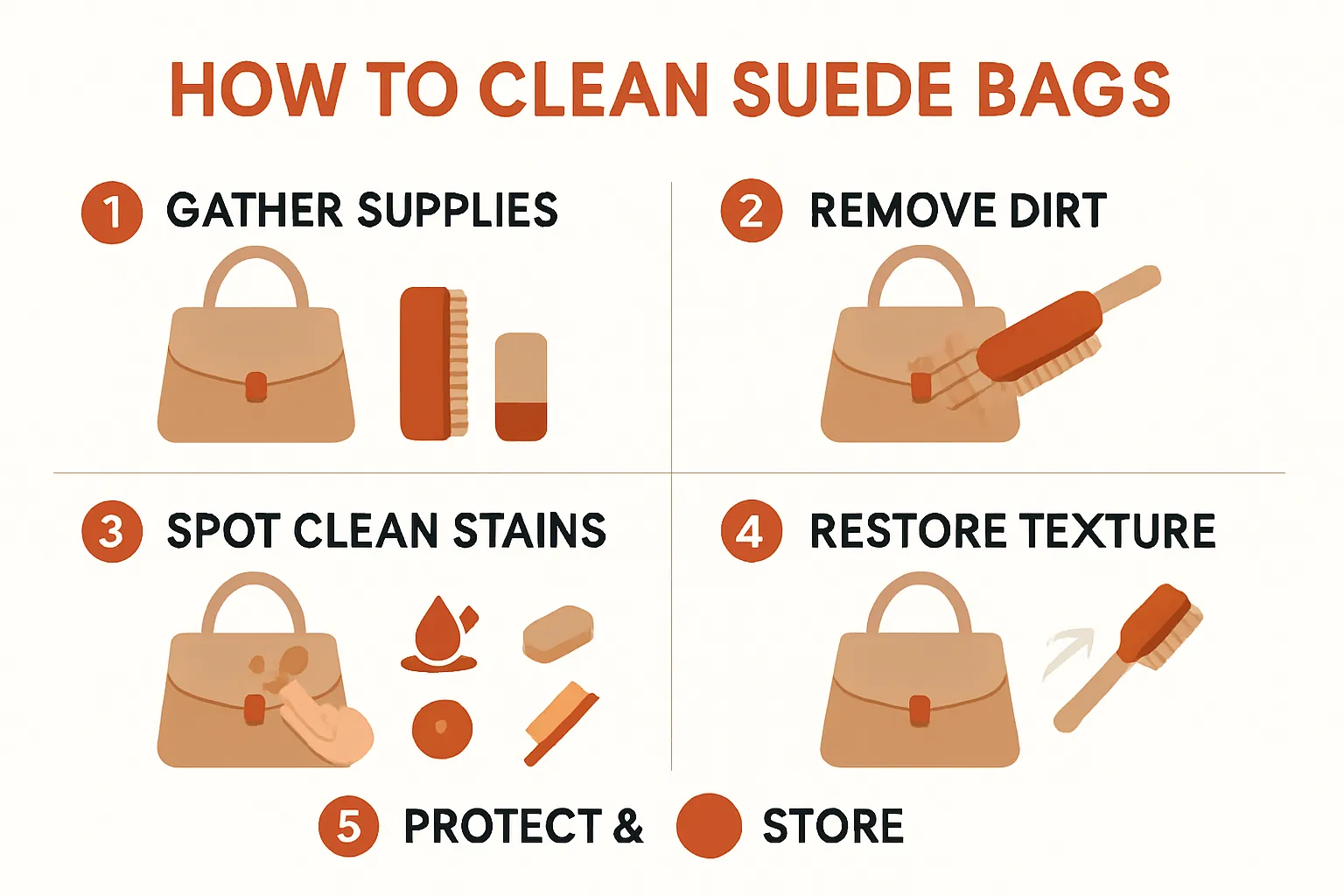
| Item | How much | Why it’s needed | A substitute |
|---|---|---|---|
| Soft suede brush | 1, soft nylon or natural bristles | Lifts dirt and revives the nap | Clean dry toothbrush, soft bristles |
| Suede eraser | 1 block | Rubs out dry marks and scuffs | None — don’t swap this |
| Clean dry cloth | 2 pieces | Wipes dust and blots foam | Old cotton T-shirt |
| Suede shampoo | A pea-sized amount per patch | Lifts oil and deep grime | None — don’t swap this |
| White vinegar | 1 part to 4 parts water | Targets salt stains only | None — don’t swap this |
| Plain paper | 2-3 sheets | Stuffs the bag to hold its shape | Acid-free tissue paper |
| Waterproofing spray | 1 can, made for suede | Guards against rain after cleaning | None — don’t swap this |
Before you start on a suede bag
- Empty it completely. Turn it upside down and shake. Coins, pens and crumbs scratch the lining and can leak ink through to the suede.
- Check the care label first. If it says “don’t clean” or names a professional, stop here. That’s your answer.
- Test one hidden patch. Put a drop of your shampoo mix on the inside of a strap or the base. Wait 10 minutes. If the color lifts or the nap goes flat, don’t use it.
- Brush off loose dust outside or over a bin. Dry dirt brushed indoors just settles back into the bag.
- The step most people skip: stuffing the bag. An unstuffed bag folds while you scrub, and creases set into suede. Stuff it firmly with paper before you touch it.
One limit up front. If the bag has a deep oil stain, a burn, or suede that has gone hard and shiny across a large area, this isn’t a home job. Take it to a leather or suede specialist. The same goes for any bag with a glued-on trim or a delicate designer finish — a professional cleaner carries the insurance, and you don’t.
How to clean a suede bag, step by step
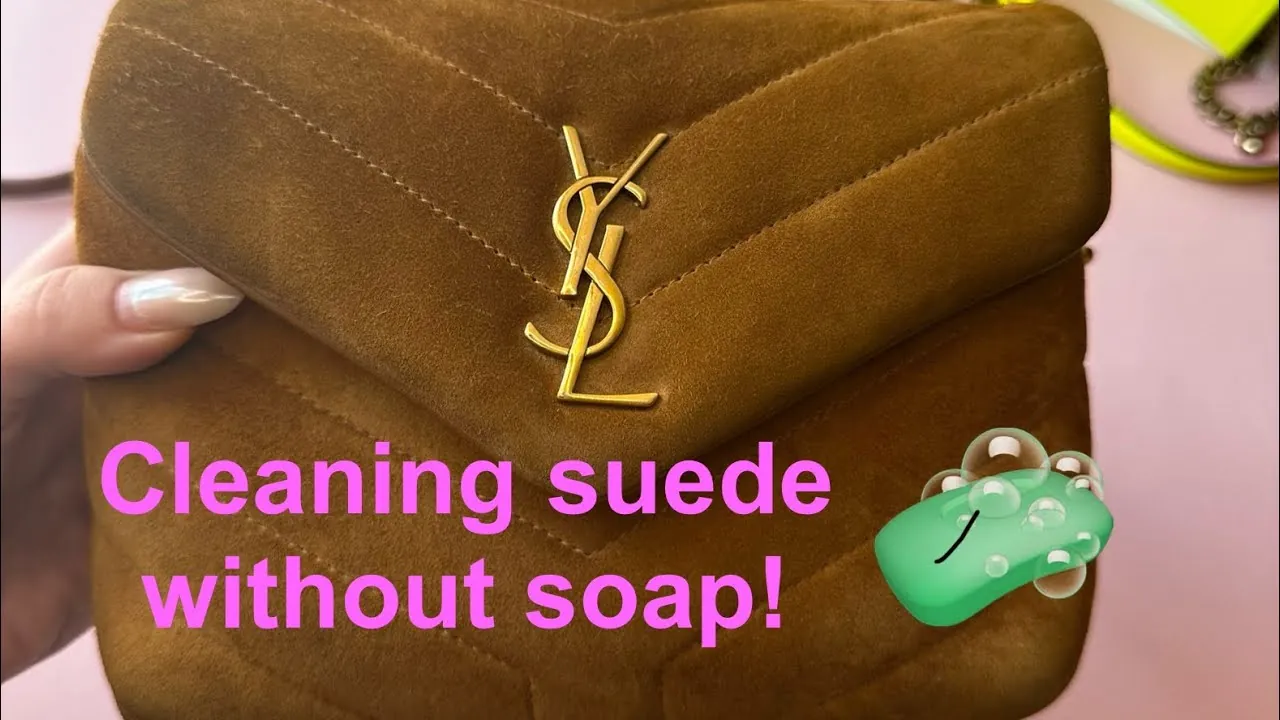
Stuff the bag and close it. Use 2-3 sheets of plain paper, pushed into the corners so the panels stay flat. Close zips and buckle straps. You’ll know it worked when the bag holds its shape on its own when you press a panel. Takes about 2 minutes.
Brush the whole surface one way. Use short strokes in one direction, following the nap, not against it. Work in sections about the size of your hand. You’ll know it worked when the surface looks even and slightly lighter in color. Takes 5-8 minutes for a medium bag.
Rub out dry scuffs with the eraser. Press the eraser onto the mark and rub in short back-and-forth strokes, like a pencil eraser. Stop when the mark fades or the nap starts to lift. Brush the crumbs away after. One scuff usually takes 30 seconds to 1 minute.
Treat salt stains with the vinegar mix, if you have them. Mix 1 part white vinegar with 4 parts water. Dab — don’t soak — with a cloth, only on the white tide marks. Blot dry with a second cloth. You’ll know it worked when the white line fades. Wait 30 minutes before the next step.
Apply suede shampoo to grimy patches only. Use a pea-sized amount on a damp cloth, not directly on the bag. Work it in small circles over one patch at a time. You’ll know it worked when the cloth comes away grey-brown — that’s lifted dirt. Wipe the foam off with a clean damp cloth straight away. Don’t let it dry on the suede.
Wipe the whole bag with a clean damp cloth. Rinse the cloth, wring it out until it stops dripping, and go over the surface once. This lifts leftover shampoo. You’ll know it worked when the cloth comes away clean. Takes 3-5 minutes.
Stuff again and dry it away from heat. Put fresh paper inside and stand the bag in a room with moving air. Keep it at least 1 meter from radiators, hairdryers and direct sun. Suede dries in roughly 12 to 24 hours; humid weather pushes it longer. It’s done when the surface feels dry and cool, not damp.
Brush the nap back up. Once fully dry, brush again in one direction. This is what brings the soft, even look back. You’ll know it worked when the surface has a slight sheen and no flat patches. Takes 3-5 minutes.
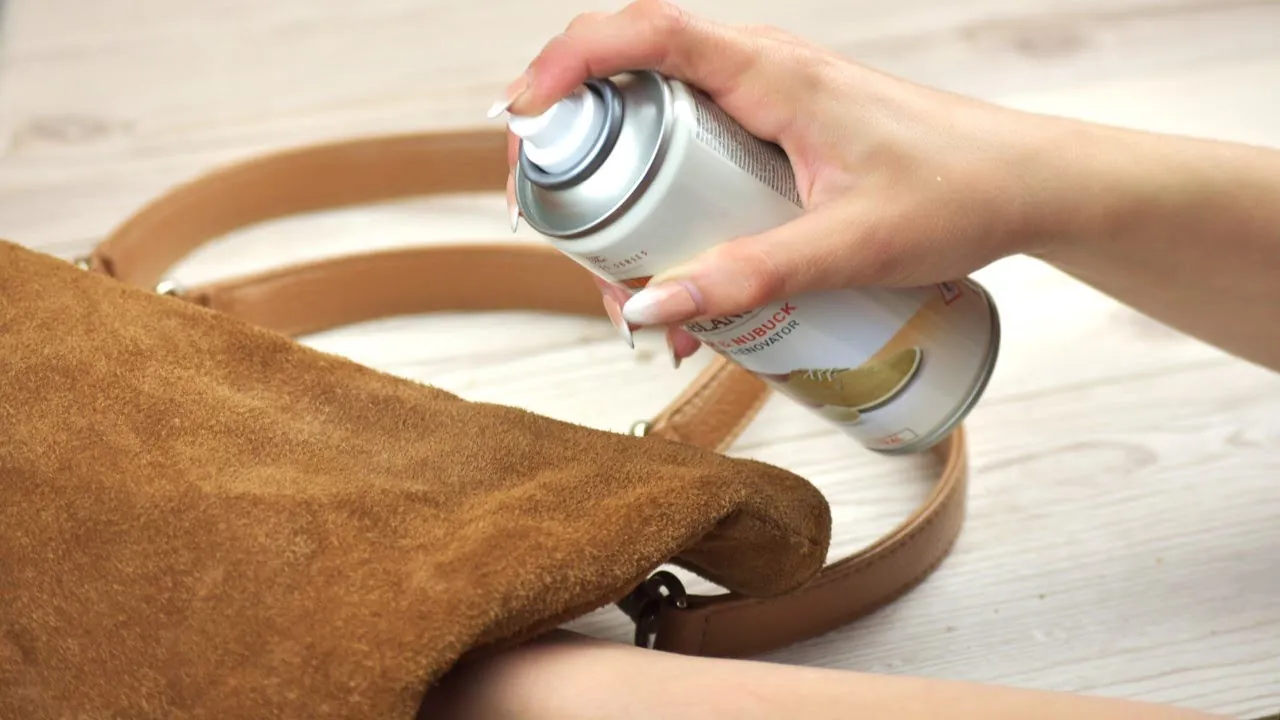
Spray waterproofing from 20-30 cm away. Hold the can about 20-30 cm from the bag and spray in light, even passes. One thin coat is enough; two coats can darken the color. Let it dry for the time the can states — usually a few hours.
Store it stuffed and in a dust bag. Keep the paper inside so the shape holds. Store it away from sunlight and damp. You’ll know it’s right when the bag stands up on its own and the surface feels soft, not stiff.
How to know the suede bag is clean
The clearest sign is the nap. Brush a finger across the surface: clean, healthy suede lifts back up and feels soft and slightly rough. Flat, shiny patches mean dirt is still pressed in, or the shampoo wasn’t rinsed off. Go back to the brush and eraser on those spots.
Color is the second check. Clean suede looks even across the whole panel. Darker patches usually mean moisture is still inside — not dirt. Give it more drying time before you judge it. Don’t brush damp suede; it can mat and crush the nap and leave marks.
The third check is the cloth. After your final wipe, a white cloth should come away with no grey or brown tint. If it still picks up color, there’s shampoo residue left, and that dries into a stiff, dull patch. Wipe once more with a clean damp cloth and let it dry again.
Signs it needs a second round: the bag still looks dull after brushing, scuffs are still visible, or the surface feels stiff when you press it. Repeat steps 2, 3 and 5 on those areas only — not the whole bag. A second full wash in one day is too much for the leather underneath.
How much suede you’re working with changes the timing, not the method. A small clutch takes maybe 15 minutes of hands-on work; a large tote with folds and straps can take an hour. Read your own bag’s size and structure before you plan the job.
If something goes wrong with your suede bag
| What happened | Why | What to do |
|---|---|---|
| Dark water marks after drying | Too much water, dried too fast | Dampen the whole panel evenly, dry slowly |
| Suede feels stiff and hard | Shampoo residue left in | Wipe with clean damp cloth, dry again |
| Color looks patchy | Uneven brushing or spray | Brush the whole panel one direction |
| Nap gone flat and shiny | Rubbed too hard or wrong brush | Light brush strokes, then suede eraser |
| White tide lines came back | Salt still in the leather | Repeat vinegar dab, blot, dry fully |
| Bag smells musty | Stored damp or too long in a bag | Air it outside in shade for a day |
Most of these are fixable, but the fix depends on which one you have. Two look alike and are not.
Dark water marks and white tide lines both show up after drying, and both look like the bag is ruined. They’re opposites. Dark marks mean water sat in one spot. White lines mean salt dried on the surface.
So don’t treat them the same way. Dampening the whole panel evenly is what lifts a white tide line, not spot-treating it. Vinegar is for salt tide lines only; on a dark water mark it does nothing to lift it.
If you aren’t sure which you have, look at the edge of the mark. A dark water mark has a soft, diffuse edge. A salt tide line has a crisp, pale rim.
The musty smell is the one case where cleaning is the wrong first move. Air the bag in shade before you touch it with anything. If the smell stays after a day outside, the damp has gone deeper than the surface.
How often to clean a suede bag
Clean the surface every 2 to 3 months with a brush alone — no shampoo, no water. That’s enough to keep dust and light marks from working into the nap. A full wash with shampoo is a once-a-year job for most bags, or after a real spill.
Two things move that schedule most. The first is how often you carry it: a daily bag picks up more hand oil and grime than one used twice a month, so brush it monthly instead of every 2-3 months.
The second is the weather where you live. Rain, snow and road salt are the worst enemies of suede, so in a wet or snowy season, brush and re-spray more often — check the spray can for how long one coat is meant to last, since products differ.
A quick test tells you when it’s due: brush a small area. If the nap lifts easily and looks even, wait. If it stays flat or the brush pulls up grey dust, it’s time.
Related guides
- How to Clean Suede Coach Bag: Expert Tips for Pristine Results
- How to Clean Golf Bag
- How to Clean Bean Bag Chair
Frequently asked questions
Can you clean a suede bag with water?
Only a little, and only as a damp cloth — never soak it. Plain water on suede can leave tide marks and stiffen the leather. Use a wrung-out cloth for wiping, and a vinegar-and-water mix only for salt stains. For deep grime, use a suede shampoo made for the job, then wipe it off straight away. If the bag gets fully wet, stuff it and let it dry slowly away from heat.
Why did my suede bag go hard after cleaning?
Shampoo or soap left inside the leather dried and stiffened it. The fix is to wipe the whole panel with a clean, damp cloth, then dry it slowly away from heat. Once dry, brush the nap up. If it’s still hard after that, the leather underneath may have been soaked too long, and a professional cleaner is the next step.
How long does it take to clean a suede bag?
About 30 to 45 minutes of hands-on work for a medium bag, plus 12 to 24 hours of drying. A small clutch takes around 15 minutes; a large tote with straps and folds can take an hour. Humid weather stretches drying time. The work itself is quick — the waiting is what makes it feel long.
Is it safe to use vinegar on suede?
Yes, for salt stains only, mixed 1 part white vinegar to 4 parts water and dabbed on with a cloth. Don’t pour it on and don’t use it on the whole bag. Vinegar is acidic, and repeated use can dull the finish. Test it on a hidden patch first, wait 10 minutes, and check the color before you touch the visible panels.
What happens if I brush suede the wrong way?
Nothing permanent — the nap just lies flat and the bag looks dull or shiny in patches. Brush it back in one direction, following the natural lie of the fibers, and it recovers. The real damage comes from brushing too hard or with stiff bristles, which can scratch the surface. Use light strokes and a soft suede brush.
Can I use a normal towel to dry a wet suede bag?
No — blot gently with a clean cloth, then let it air dry. Rubbing with a towel pushes fibers the wrong way and can leave lint stuck in the nap. Stuff the bag with plain paper to hold its shape and stand it in a room with moving air, at least 1 meter from any heat source. Heat is what cracks suede.
Does waterproofing spray really protect a suede bag?
It helps against light rain and splashes, but it isn’t a shield. A treated bag still marks in heavy rain or a puddle. Spray from 20-30 cm in thin, even coats, and check the can for how long one coat lasts — products differ. Re-spray more often in wet seasons. Never spray indoors in a closed room; follow the can’s safety note.
Is it worth cleaning a suede bag at home or should I take it to a pro?
Home cleaning handles dust, light scuffs and small marks fine. Take it to a professional for deep oil stains, burns, large hard patches, or any bag with glued trim or a delicate designer finish. Those need solvents and equipment most people don’t have, and a wrong move can’t be undone. If you’re unsure, the care label or the maker’s own cleaning note is the place to check.
Conclusion
Once your bag is dry and brushed, give it a protective spray made for suede so future marks lift off more easily, and reapply it every few months. Store it in a dust bag away from damp, and you’ll keep that soft finish looking good for years.