
Cat urine on a mattress is fixable, but only if you treat it as a two-part job: flush out the urine that has soaked into the foam, then break down the uric acid crystals that keep releasing smell. Most of the how to clean mattress cat urine work happens in the first 24 hours, and the cleaning itself takes about 30-45 minutes plus drying time.
Plan on a medium-difficulty job that needs care rather than speed. You’ll spend a modest amount on supplies if you buy an enzyme cleaner; a homemade vinegar and baking soda mix is inexpensive relative to the alternative. The one thing you must have before starting is an enzyme-based cleaner labeled for urine, because soap and vinegar alone don’t remove the crystals.
Drying is the long part. A mattress needs 6-12 hours of air with a fan, longer in a humid room or a cool bedroom. Check your mattress tag for the manufacturer’s cleaning guidance, since some foam and memory-foam models limit how wet you can get them.
What you need for cat urine on a mattress
| Item | How much | Why it’s needed | A substitute |
|---|---|---|---|
| Enzyme cleaner for urine | 8-16 oz per spot | Breaks down uric acid crystals | none — don’t swap this |
| White vinegar | 1 cup mixed with 2 cups water | Neutralizes surface ammonia | none — don’t swap this |
| Baking soda | 1/2 cup per spot | Pulls moisture and odor from foam | none — don’t swap this |
| Clean white towels | 4-6 | Blots liquid without spreading it | Paper towels, more of them |
| Spray bottle | 1 | Applies liquid evenly | Clean sponge |
| Plastic sheet or tarp | 1, larger than the stain | Protects the floor below | Old shower curtain |
| Fan or open window | 1 | Cuts drying time to 6-12 hours | Hair dryer on cool, held far away |
The three items marked “don’t swap this” are the ones that decide whether the job works. An all-purpose or “oxy” cleaner can lift the visible stain and still leave the uric acid crystals in the foam, which is what the cat keeps smelling.
Buy the enzyme cleaner sized to the spot, not the bottle. A small spot takes the low end of 8-16 oz; a soaked corner of foam takes the high end, and you may need a second application once the first has fully dried.
The plastic sheet goes under the mattress, not over it. Urine wicks down through the foam, and the tarp catches what comes out the bottom so the box spring or floor doesn’t take the hit.
Keep the towels white. Dye from a colored towel can transfer onto a light mattress cover while the fabric is wet, and you won’t see it until the cover dries.
Before you start on a cat urine mattress
- Strip the bed completely. Remove sheets, mattress pad, and pillows. Wash them separately — they hold smell too and will recontaminate a clean mattress.
- Find every spot with a UV or blacklight in a dark room. Cat urine glows yellow-green. Old spots you can’t smell still need treatment, so mark each one with tape.
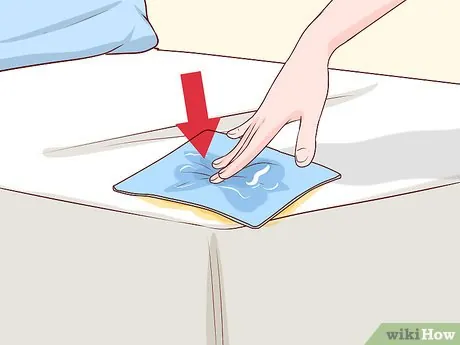
- Blot fresh urine first, don’t rub. Press towels down hard for 30 seconds and repeat until no more transfers. Rubbing pushes urine deeper into the foam.
- Move the mattress to a hard floor and lay a plastic sheet under it. Cleaning liquid will pass through the bottom fabric and mark carpet or wood.
- The step people skip: reading the mattress tag. “Dry clean only” or “no liquid” means you shouldn’t soak it. Call a professional cleaner instead of risking a ruined mattress.
Stop here if the stain is larger than your hand or the urine has been there for weeks. A soaked mattress may need a professional, and if it smells of mold or has visible dark patches, replacing it’s safer than cleaning.
Step-by-step cleaning for cat urine on a mattress
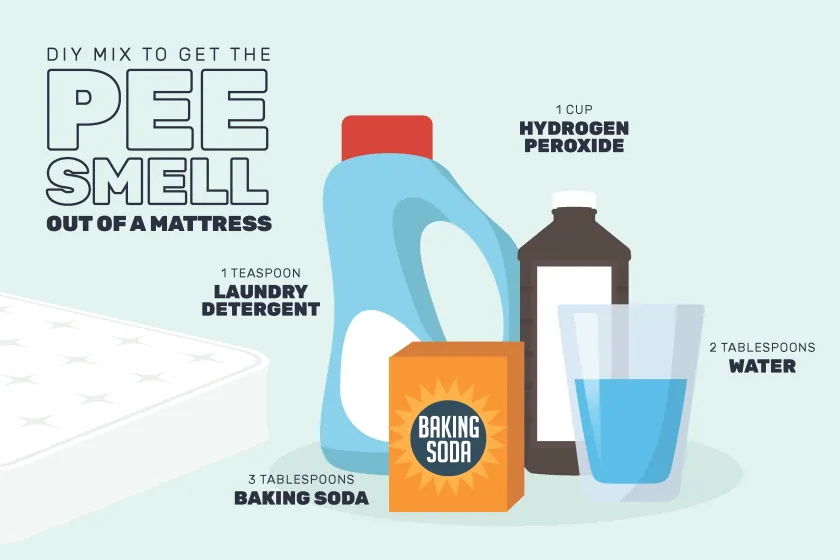
Blot up all wet urine with towels. Press firmly for 30 seconds per section and swap to a dry towel when it stops absorbing. Work until the towel comes away dry. This takes 5-10 minutes for a fresh spot and protects the foam from spreading liquid.
Spray the vinegar mix onto the stain. Use 1 cup white vinegar to 2 cups water in a spray bottle. Spray until the area is damp, not soaked — about 3-4 pumps for a spot the size of your palm. Wait 5 minutes. The spot should smell of vinegar, not ammonia.
Blot the vinegar out with a dry towel. Press down hard for 30 seconds, then repeat with a second towel. You want the surface nearly dry again. If the towel still smells strongly of urine, go back to step 2 once more.
Apply the enzyme cleaner and let it sit. Follow the bottle’s dilution — most brands use 1 part cleaner to 1 part water, but check your label. Spray enough to dampen the stain. Leave it for 10-15 minutes so the enzymes can work.
Blot again, then check the smell at nose level. Press a clean towel on the spot and smell the towel, not the mattress. A faint vinegar smell is fine; a urine smell means the crystals are still there. Repeat step 4 once if needed.
Sprinkle baking soda over the damp spot. Use about 1/2 cup for a palm-sized stain, more for a larger area. Press it lightly into the surface with your hand. Leave it for at least 2 hours, or overnight, so it pulls moisture from the foam.
Vacuum the baking soda off completely. Use a brush attachment and go over the area twice. You should see no white powder left. Leftover powder clogs the mattress fabric and feels gritty.
Dry the mattress flat with a fan for 6-12 hours. Prop it on its side or lay it flat near an open window. Flip it after 3 hours so both sides dry. In a humid room, allow up to 24 hours. Feel the spot with your hand — it should feel dry and cool, not cold and damp.
Smell-test after drying, not before. Wet enzyme cleaner masks the smell. Once dry, press your nose close to the spot. A clean mattress smells of nothing. Any urine smell at this stage means one more enzyme round.
Put a waterproof mattress protector back on. This stops the next accident from reaching the foam. Wash it with the sheets at the same time. The mattress must be fully dry before the protector goes on, or you trap moisture inside.
How to tell the cat urine is really gone
The clearest sign is a smell test done after the mattress is fully dry, with your nose about 2 inches from the spot. A clean mattress smells of nothing at all. A faint vinegar smell fades in a day or two. Any urine smell means the uric acid crystals survived, and they will release odor again when the room gets humid.
A second check is the towel test. Press a clean, dry white towel onto the spot for 30 seconds. If it comes away clean and smells neutral, the surface is clear. If it smells, the liquid is still moving up from the foam.
Watch the drying time too. A spot that stays damp after 12 hours with a fan on it’s holding too much liquid. That’s a sign you used too much cleaner, or the foam is thick and needs longer. Memory foam holds water longer than standard foam, so allow up to 24 hours for those.
For old stains, the UV light gives you the final answer. In a dark room, shine the blacklight on the treated area. Old urine glows yellow-green. If the glow is gone, you’ve removed it. If it still glows, the crystals are inside the foam and need another enzyme soak.
How deep the urine went depends on how long the cat sat there and how thick your mattress is. You can’t see that from the surface. Read it off the blacklight and the towel test instead of guessing.
What to do when cat urine cleaning goes wrong
| What happened | Why | What to do |
|---|---|---|
| Smell comes back after a week | Uric acid crystals still in foam | Reapply enzyme cleaner, leave 15 minutes |
| Dark ring or mold spots appear | Mattress stayed wet too long | Stop using it; replace or call a pro |
| Vinegar smell won’t leave | Too much vinegar used | Air it out 24 hours with a fan |
| Stain spread wider | Rubbed instead of blotting | Blot from the edge inward next time |
| Mattress fabric puckered | Too much liquid soaked in | Dry flat, don’t use heat |
| Cat keeps returning to the spot | Scent marker left behind | Clean again and use a waterproof cover |
Most of these are fixable. The one that isn’t is mold. A dark ring that keeps spreading, or a musty smell that sits on top of the urine smell, means the foam never dried. No cleaner reaches the inside of a mattress, so replacing it’s the honest answer.
The returning smell is usually a dosing problem, not a lost cause. Enzyme cleaners need contact time to break the crystals down, so reapply and actually wait the 15 minutes rather than blotting straight away. Work it into the spot rather than pouring.
If the cat keeps going back, the cover matters more than the cleaner. A waterproof cover traps future accidents at the surface, where you can wash them. Without one, every clean is a fresh soak into foam.
How often you should clean a cat urine spot
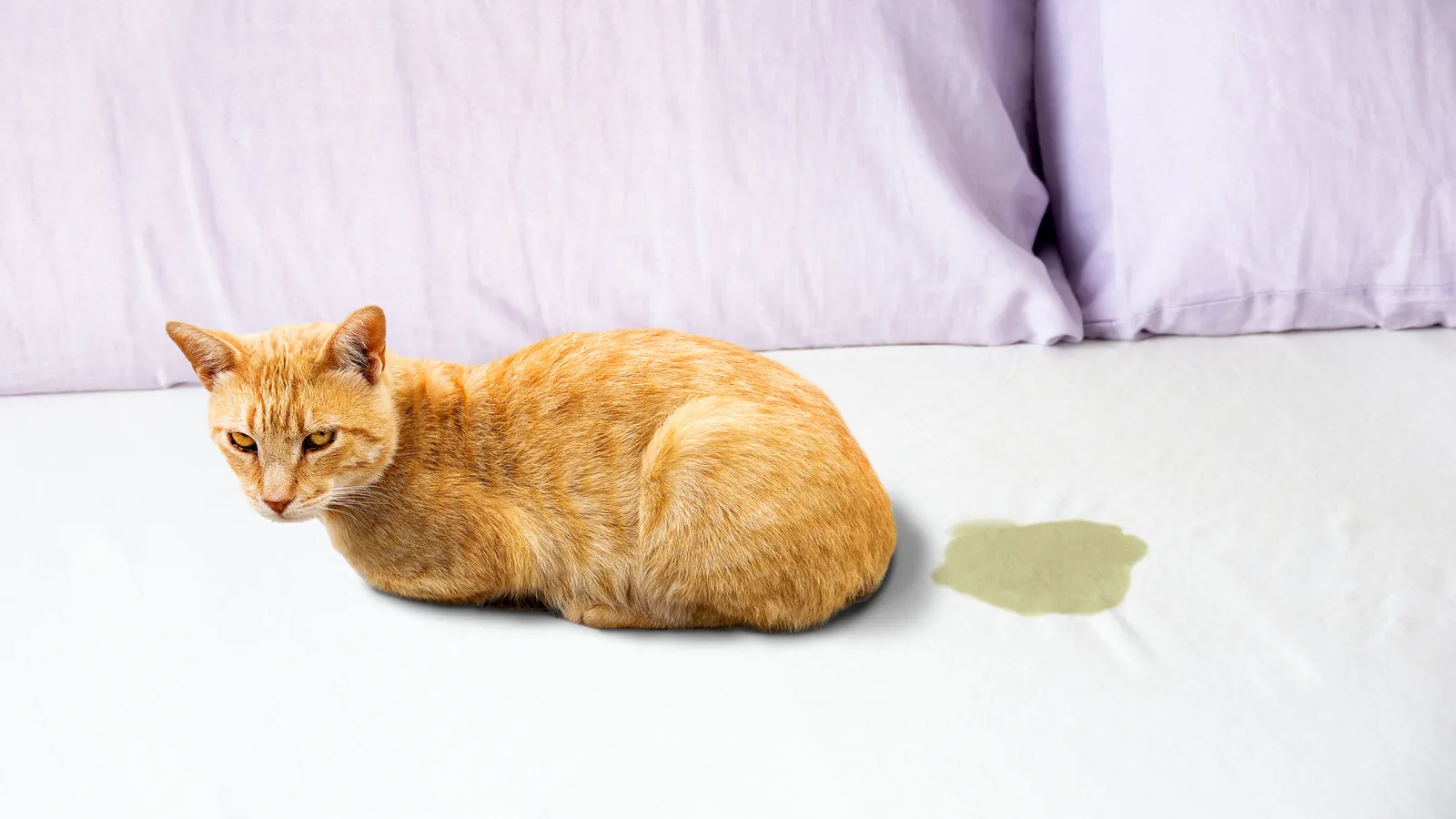
Treat every fresh accident within 24 hours, and repeat the enzyme step once if the smell survives the first dry. That timing matters more than any schedule, because uric acid crystals bond to foam as they dry. The longer you wait, the more rounds it takes.
Two things change the interval. The first is your cat: a cat with a urinary problem may urinate in the same place repeatedly, so the mattress gets hit again before it’s fully clean. The ASPCA’s advice on cat urine points to medical checks when a cat stops using the litter box, and that’s worth doing before you clean a third time.
The second is your room. A humid bathroom or a warm bedroom keeps foam damp longer, so smell returns faster and you’ll clean more often. Check the spot with your nose after every humid spell. If your cat keeps marking the same corner, a waterproof mattress protector cuts cleaning down to washing a cover instead of soaking foam.
Related guides
- How to Clean Cat Litter Dust from Floor: Quick Tips
- How to Clean Cat Urine from Leather Couch: Ultimate Guide
- How to Clean a Hydro Flask to Remove Mold Odors and Stains
Frequently asked questions
Can you get cat urine out of a mattress completely?
Yes, in most cases, if you use an enzyme cleaner and the urine hasn’t soaked through to the other side. Surface stains come out in one round of 30-45 minutes plus drying. Deep stains that have sat for weeks may need 2-3 enzyme rounds. If the foam itself is soaked through, replacement is often the only full fix.
How long does it take for the smell to go away?
The smell should be gone once the mattress is fully dry, which takes 6-12 hours with a fan in a normal room and up to 24 hours in a humid one. If you still smell urine after the first full dry, the crystals survived and you need another enzyme round. Don’t judge the smell while the mattress is still damp.
Is it safe to sleep on a mattress after cleaning it with vinegar and baking soda?
Yes, once it’s completely dry. Vinegar and baking soda are both food-safe, and the residue is vacuumed off. The real risk is moisture, not the cleaners — a damp mattress grows mold. Wait until the spot feels dry and cool to the touch, and air the room well before bed.
What happens if you use bleach on cat urine?
Don’t. Bleach reacts with ammonia in urine and releases chloramine gas, which irritates your lungs. It also damages mattress fabric and doesn’t remove the uric acid crystals, so the smell returns. Stick to enzyme cleaner, vinegar, and baking soda, and keep the room ventilated while you work.
Does baking soda really remove cat urine smell?
It removes the surface odor and pulls moisture out of the foam, but it doesn’t break down uric acid. Baking soda alone will make the mattress smell better for a few days, then the smell comes back. Use it after the enzyme cleaner, not instead of it, and leave it on for at least 2 hours.
Why does my mattress still smell after cleaning?
The urine reached foam the cleaner didn’t touch, or the mattress is still damp. Press a dry towel on the spot — if it smells, liquid is still coming up. Reapply enzyme cleaner, leave it 15 minutes, and dry with a fan for a full 12 hours. Old stains may need 2-3 rounds.
How much does it cost to clean cat urine from a mattress?
A modest amount in supplies if you buy an enzyme cleaner, vinegar, and baking soda. A homemade vinegar and baking soda mix is inexpensive relative to the alternative but works less well on old stains. Professional mattress cleaning varies by city, so call two local cleaners for a quote rather than guessing.
Does cat urine damage a mattress permanently?
Sometimes. Fresh urine cleaned within 24 hours rarely causes lasting damage. Urine that sits for weeks can break down foam, leave a permanent stain, and grow mold in a humid room. Check for dark patches and a musty smell — if either is there, the mattress is past cleaning and should be replaced.
Conclusion
If the smell lingers after everything dries, don’t panic—it often means a bit more soaked deeper than you thought. Try one more enzyme soak, or call a professional if it’s an old set-in stain. Either way, you’ve got a fresher bed ahead.