
Cleaning fresh pee out of carpet takes about 15 minutes of work, then 24 to 48 hours of drying. Urine that has soaked into the pad or dried for days takes longer — often two or three rounds over a week. The job is medium difficulty: easy on the surface, but it needs care because urine reaches the backing and the pad underneath. You’ll need one thing before you start: a way to pull liquid out, meaning a wet/dry vacuum or a stack of clean white towels. Without that, the cleaner just pushes urine deeper.
What you need to clean pee out of carpet
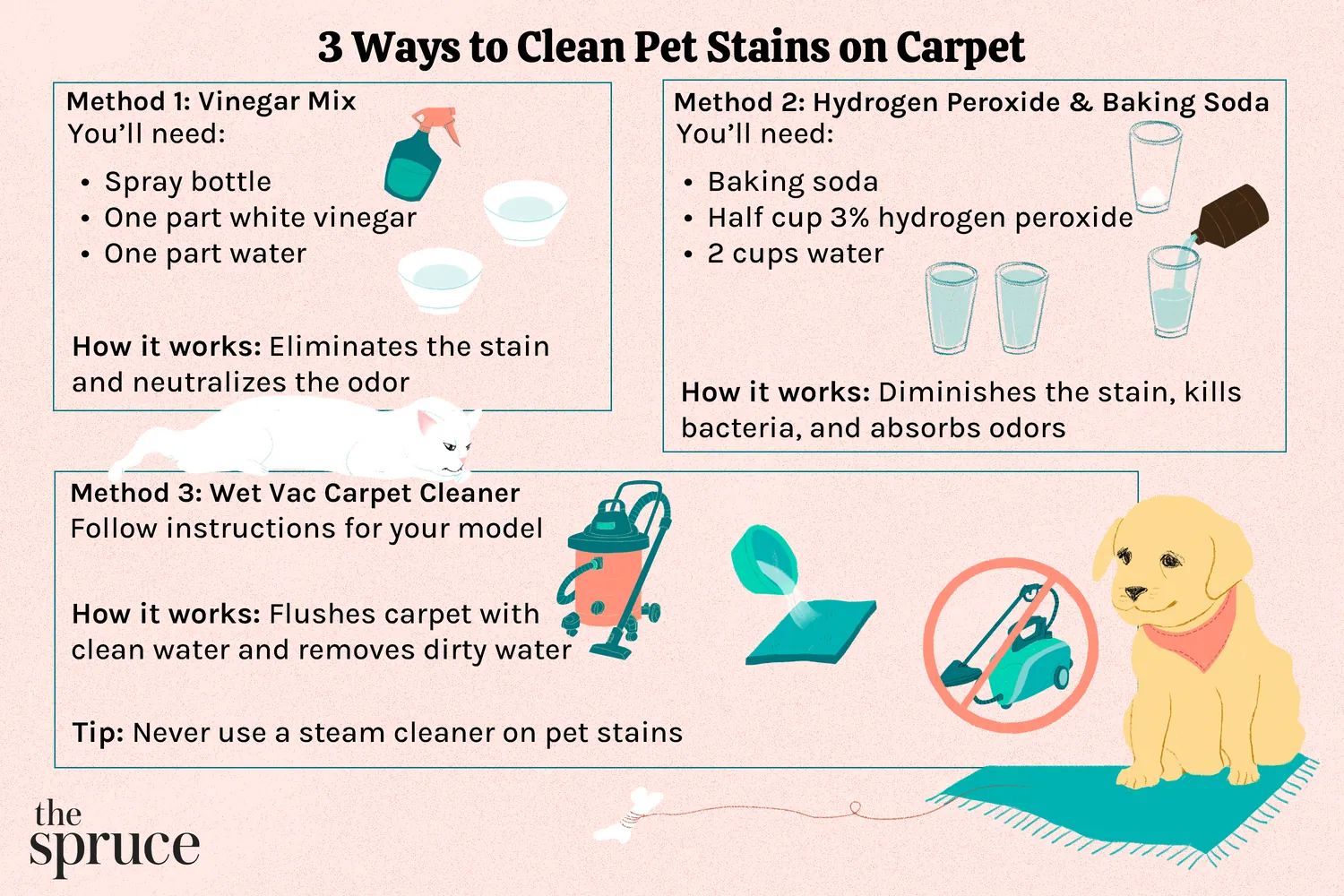
The list is short, and most of it’s already in your kitchen or laundry room. The one item worth buying is an enzyme cleaner made for pet urine — it digests the uric acid crystals that cause the smell, which soap and vinegar can’t remove.
| Item | How much | Why it’s needed | A substitute |
|---|---|---|---|
| Enzyme cleaner for pet urine | 1 bottle, enough for 2–3 rounds | Breaks down uric acid crystals | none — don’t swap this |
| Clean white towels | 4–6, thick and dry | Absorbs liquid, shows the stain | paper towels, less effective |
| Wet/dry vacuum | 1, if you own one | Pulls urine from pad | none — towels only |
| White vinegar | 1 cup mixed with 2 cups water | Rinses residue and dampens surface odor | none — don’t swap this |
| Spray bottle | 1, clean | Applies liquid evenly | watering can, hard to control |
| Rubber gloves | 1 pair | Keeps hands off waste | none — don’t swap this |
| Plastic sheet or foil | 1 piece, bigger than the spot | Blocks smell during drying | none — don’t swap this |
Before you start on a pee stain
- Blot first, don’t scrub. Scrubbing pushes urine into the backing and spreads the stain sideways. Press straight down with a towel and hold for 10 seconds.
- Move furniture and plants off the spot. Urine wicks into wood legs and pots, and you’ll get a second stain you didn’t plan for.
- Check the carpet type. Wool and natural fibers can react badly to strong vinegar; test any mix on a hidden corner first and wait 10 minutes.
- Ventilate the room. Open a window or run a fan — the ammonia smell builds up while the carpet is wet.
- The step people skip: finding the full edge of the stain. Urine spreads wider than the visible mark. Press a dry towel around the edge; where it comes up damp, the stain is bigger than you think.
One limit: if the spot is more than a day old or the carpet is glued directly to a concrete floor, the urine has likely reached the subfloor. That’s a job for a professional carpet cleaner, not a bottle of enzyme spray.
How to clean pee out of carpet
- Blot up all the liquid you can. Press dry white towels onto the spot and hold each one for 10 seconds. Repeat with fresh towels until no more moisture comes up — usually 3 to 5 towels for a small spot, more for a large one. You’ll know it worked when a fresh towel stays dry.
- Test your cleaner on a hidden corner. Spray a small amount of enzyme cleaner on carpet under a sofa or in a closet. Wait 10 minutes and check for color change. If the carpet lightens, stop and use plain water instead.
- Apply the enzyme cleaner. Spray enough to wet the spot but not flood it — the carpet should feel damp, not soaked. The carpet should feel damp, not soaked. Let it sit for the time on the bottle label, usually 10 to 15 minutes.
- Press the cleaner into the pad. Step on the spot with a clean towel under your shoe, or use a wet/dry vacuum to pull liquid up. Hold for 5 seconds per press. You’ll see dirty water rise into the towel — that’s the urine coming out.
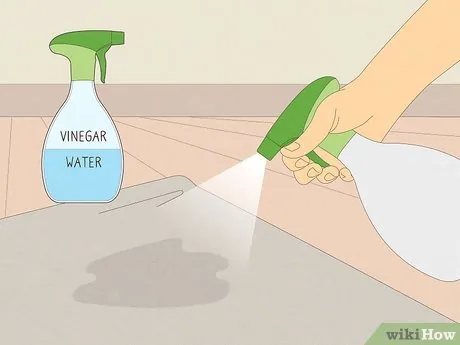
- Rinse with the vinegar mix. Mix 1 cup white vinegar with 2 cups cool water in the spray bottle. Spray lightly over the spot and blot again with a dry towel. Vinegar helps rinse away residue and dampens the surface odor.
- Pull the last of the moisture out. Run the wet/dry vacuum over the spot for 30 to 60 seconds, or press dry towels until they come up dry. Skip this and the carpet stays damp for days, which is where mildew starts.
- Cover the spot while it dries. Place a plastic sheet or foil over the damp area and weigh it down with a book. This keeps pets and kids off the damp spot while it dries.
- Dry the carpet fully. Lift the cover after 6 to 8 hours and let air reach the spot. Run a fan or open a window. Full drying takes 24 to 48 hours depending on humidity and carpet thickness.
- Check for smell after the carpet is dry. Get down close and sniff the spot, or press a dry towel and smell it. No smell means the job is done. Any smell left means the urine reached deeper — repeat steps 3 to 8.
- Treat the pad if the smell returns. Pull up a corner of carpet if it lifts easily and spray enzyme cleaner directly onto the pad. Don’t do this on glued-down carpet — call a professional instead.
How to tell the pee stain is really gone
The test is simple: the carpet must be completely dry, then you check it. Damp carpet hides smell, so a spot that seems fixed while wet can smell again two days later. Wait the full 24 to 48 hours before you judge it.
Signs it worked: the spot feels dry to the touch, the color matches the carpet around it, and a dry white towel pressed on the spot comes up with no smell and no yellow tint. Another check — hold your nose about 6 inches from the spot in a closed room. If you smell nothing, the odor source is no longer detectable by smell.
Signs it needs another round: a faint ammonia smell when the room warms up, a yellow ring that comes back after drying, or a damp feeling that won’t leave after 48 hours. The yellow ring is the clearest sign — it means urine is still wicking up through the backing.
One more check: shine a blacklight (UV flashlight) on the spot in a dark room after it dries. Urine crystals glow yellow-green under UV. No glow means the crystals are gone. You can buy a small UV flashlight at most hardware stores for a few dollars.
If two full rounds leave the smell, stop repeating the same steps. The urine is in the pad or subfloor, and no surface cleaner will reach it. That’s when a professional with a sub-surface extractor is cheaper than a third bottle of spray.
When the pee stain doesn’t come out
Most failures come from one of a few causes, and each has a fix. The biggest mistake is scrubbing instead of blotting — it pushes urine into the pad and doubles the area you have to treat. The second is skipping the drying step, which leaves the carpet damp and lets bacteria grow.
| What happened | Why | What to do |
|---|---|---|
| Smell comes back after 2 days | Urine reached the pad | Pull carpet corner, treat pad |
| Yellow ring returns | Cleaner didn’t reach the backing | Repeat enzyme soak, press deeper |
| Carpet color lightened | Vinegar too strong for wool | Rinse with cool water, dry fast |
| Spot still damp after 48 hours | No airflow under the cover | Remove cover, run a fan |
| Pet pees on the same spot | Smell still there, pet marks it | Blacklight check, full re-treat |
| Stain spread wider | Scrubbing pushed it outward | Blot only, never rub sideways |
If a stain still won’t lift after a second enzyme treatment, stop and check the carpet type before trying anything stronger. Wool and other natural fibers react badly to repeated vinegar, and the lightening may not show until the carpet dries.
On a wool rug, switch to a pH-neutral carpet cleaner and test it on a hidden corner first. On synthetic carpet, a fresh enzyme soak is usually safe to repeat.
The one case that needs a different approach is urine that has soaked into the pad and dried there. No amount of surface cleaning will reach it. Pull up a corner of the carpet at the nearest tack strip, treat the pad directly, and let both sides dry before pressing the carpet back down.
How often to clean a pee stain
Treat every new pee spot within 24 hours if you can. Fresh urine is mostly water and comes out in one round; urine left for 3 days or more soaks into the pad and often needs two or three rounds. That 24-hour window is the single biggest thing that changes the result.
Two things move the timing most. The first is the surface under the carpet — a spot on a wood floor or a carpet with a thick pad holds urine longer than a thin carpet on concrete, so check it again after a week. The second is your pet: if one animal keeps returning to the same corner, the smell is still there even if you can’t detect it, so run the blacklight check monthly until it stops.
For old stains you inherited with a new home or a rental, plan on treating the spot once a week for 2 to 3 weeks rather than one big session. Each round pulls a little more uric acid out.
One more thing sets the pace: how warm and humid the room stays. A spot in a steamy bathroom or a carpet near a radiator dries slowly, and slow drying gives the urine more time to settle into the pad. In a cool, dry bedroom the same spill may come up in a single round.
That’s why a fixed schedule only gets you so far. Judge by the spot, not the calendar. If the area still smells faintly when it’s dry, or the blacklight shows a glow, it needs another round — whatever the date says.
Frequently asked questions
Can you clean pee out of carpet with vinegar only?
Vinegar alone removes the surface smell but not the uric acid crystals underneath, so the smell usually returns within a few days. Use vinegar as a rinse after an enzyme cleaner, not as the main treatment. For a fresh spot on a thin carpet, vinegar and water in a 1-to-2 mix can hold for a short time, but enzyme cleaner is the reliable fix.
Why does my carpet still smell after cleaning?
The urine reached the pad or the subfloor, and surface cleaner can’t get that deep. Press a dry towel on the spot — if it comes up damp or yellow after the carpet feels dry, the liquid is still below. Treat the pad directly, or call a professional with a sub-surface extractor.
How long does it take for the pee smell to go away?
The smell fades in 24 to 48 hours after a correct enzyme treatment, once the carpet dries fully. If a faint ammonia smell is still there after 48 hours, the treatment didn’t reach the source. Damp carpet holds smell longer, so run a fan and don’t judge the result until the fibers are dry.
Is it safe to use enzyme cleaner around pets and kids?
Yes, once it has dried. Keep pets and children off the treated spot until the carpet is fully dry, which takes 24 to 48 hours. Enzyme cleaners contain enzymes that break down the components of urine, and they’re not meant to be swallowed. Store the bottle out of reach and wash your hands after use.
What happens if you don’t clean pee out of carpet right away?
Urine soaks into the pad within a few hours and into the subfloor within a day or two. After that, the smell sets in and one round of cleaner won’t fix it. Old stains also attract pets back to the same spot, because the scent markers stay even when human noses can’t detect them.
Does baking soda help with pee stains?
Baking soda absorbs moisture and surface odor but doesn’t break down uric acid. Sprinkle a thin layer — about 2 tablespoons per spot — on the carpet after it dries, leave it 4 to 6 hours, then vacuum. It’s a good final step, not a replacement for enzyme cleaner.
How much does it cost to clean pee out of carpet?
A bottle of enzyme cleaner is inexpensive at most pet or hardware stores, enough for a couple of spots. Doing it yourself costs very little in most cases. A professional carpet cleaning for pet stains is far pricier depending on room size and how deep the urine went — check local prices, since they vary by city.
Is it safe to clean pee out of carpet yourself?
Yes for fresh spots on the surface — blotting, enzyme spray and drying are safe for most people. Stop and call a professional if the carpet is glued down, the spot sits over a concrete floor, or the stain is more than a few days old. Those cases need equipment most homes don’t have, and pulling up glued carpet yourself can damage it beyond repair.
Conclusion
If the smell lingers after everything dries, check the pad underneath by pulling up a corner of carpet. A black light can show any spots you missed. For old or large stains, calling a professional is often cheaper than replacing the carpet yourself.