
A coffee pot comes clean in about 15 minutes with white vinegar and water, or 5 minutes with a store-bought descaler. The job is easy to medium — easy for a glass carafe, medium for a stainless or thermal pot with a narrow neck. The one thing you need before you start is a pot you can actually reach inside, or a brush long enough to reach the bottom.
You don’t need to take anything apart. The cleaning happens in the machine itself, then by hand on the parts you can lift out. Vinegar costs a few dollars; a descaler sachet costs a little more. Check the price on the shelf or the maker’s own page — it moves by brand and by country.
What you need to clean a coffee pot
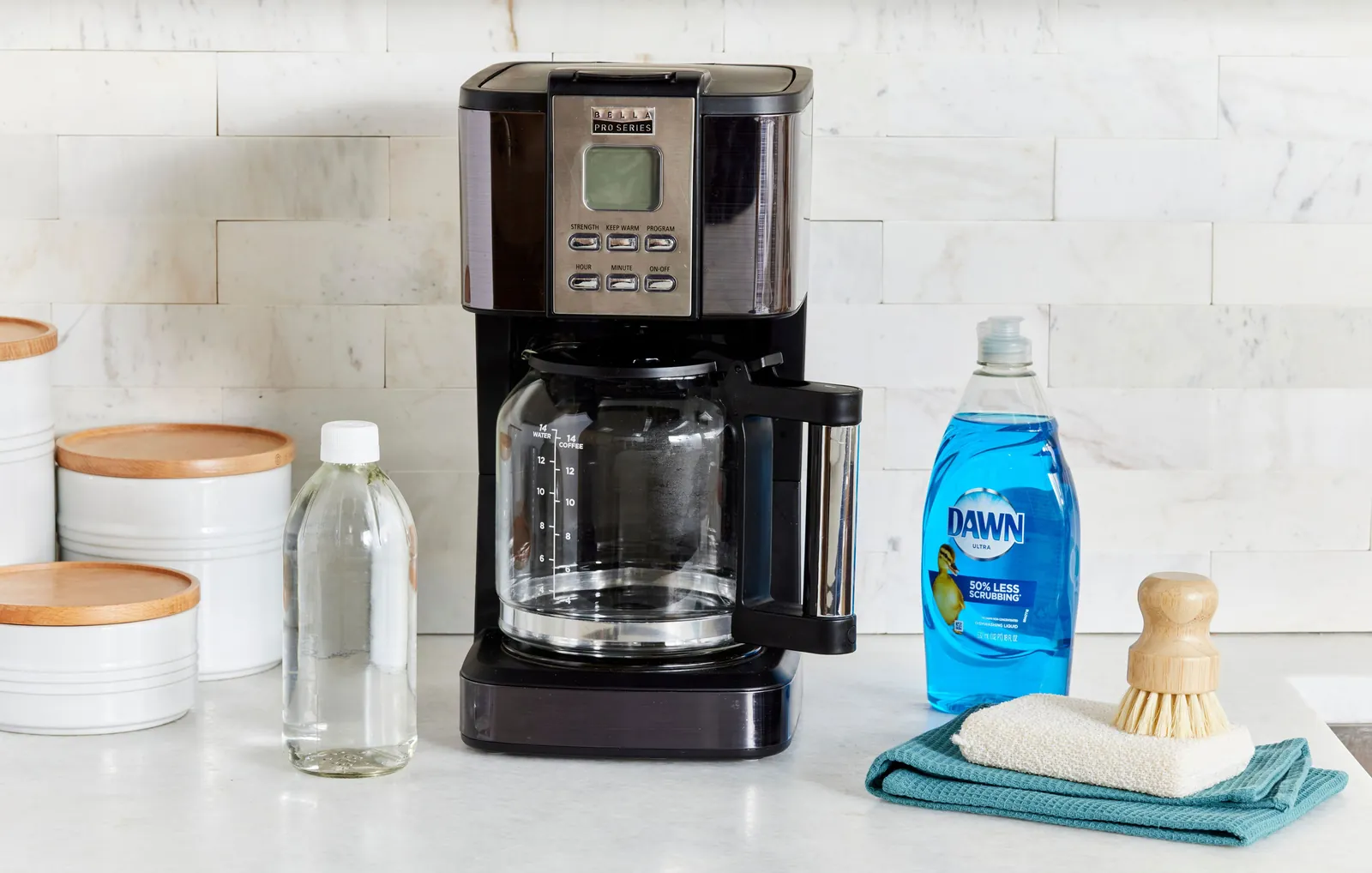
| Item | How much | Why it’s needed | A substitute |
|---|---|---|---|
| White vinegar | 1 part vinegar to 1 part water | Dissolves mineral scale inside | Citric acid powder in water |
| Cold water | Same amount as vinegar | Dilutes the acid to a safe strength | None — don’t swap this |
| Long-handled bottle brush | One, reaching the pot’s base | Scrubs the bottom and walls | Soft sponge on a stick |
| Mild dish soap | A few drops | Lifts old coffee oils | None — don’t swap this |
| Clean cloth | Two | Wipes the outside and dries parts | Paper towels |
| Baking soda | 2 tablespoons | Lifts brown stains and smell | None — don’t swap this |
| Rubber gloves | One pair | Protects hands from hot vinegar | None — don’t swap this |
Vinegar strength matters. Standard household white vinegar is usually around 5% acid, which is what most maker manuals assume. If your bottle says a higher number, dilute it more. Read the label on the bottle itself — that’s the only figure you can trust for your own kitchen.
Get the coffee pot ready before you clean it
- Switch off and unplug the machine. Let it cool for at least 20 minutes. Hot water plus vinegar in a sealed pot can spit when you open it.
- Empty every drop of old coffee. Tip the pot out and rinse it once with warm water. Old grounds left in the bottom turn into grit that scratches the inside.
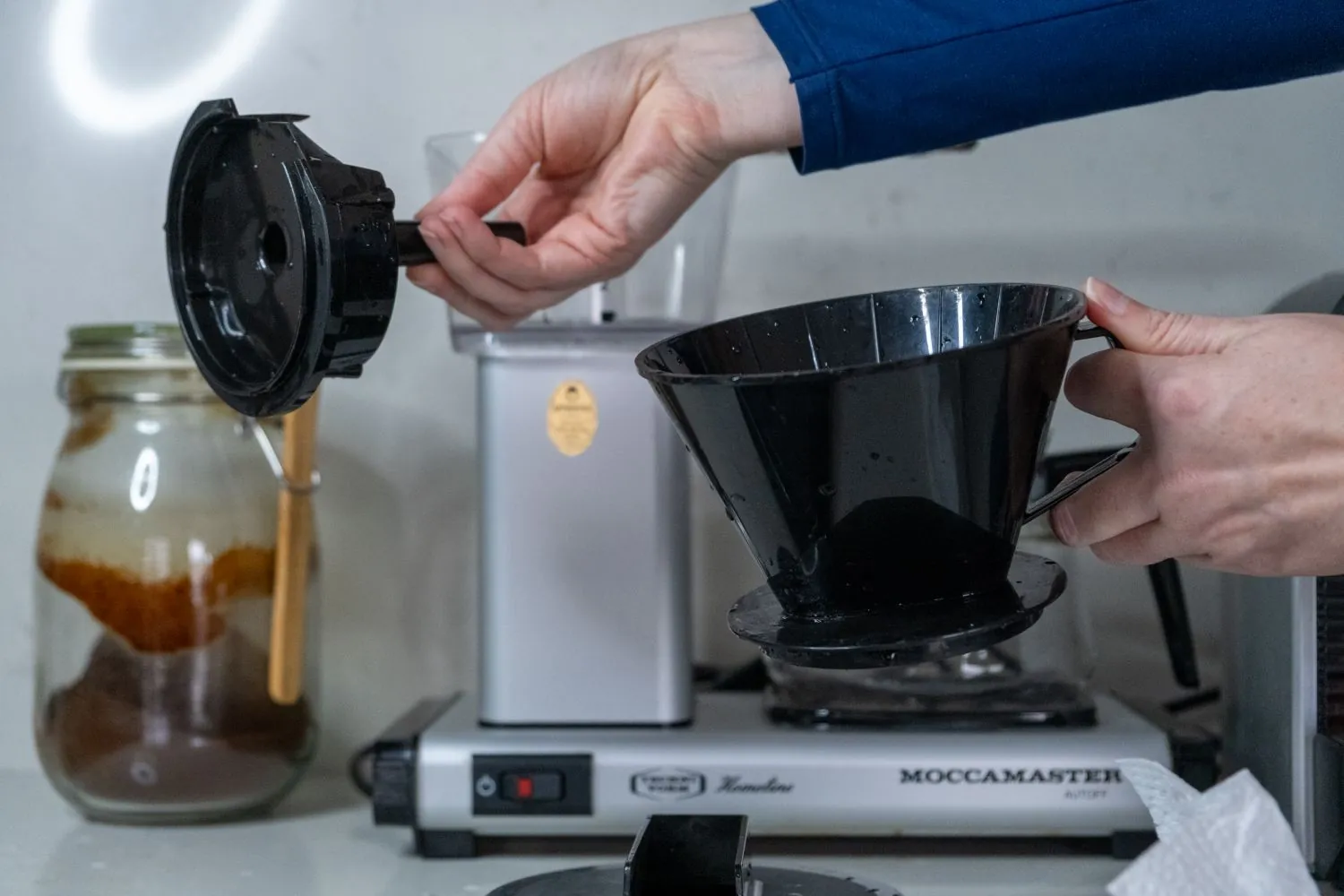
- Take out the filter basket and the carafe. Wash them separately in warm soapy water. If your machine has a reusable mesh filter, rinse it under running water until no grounds sit in the mesh.
- Move it to a sink with room around it. Vinegar smells strong for the whole cycle, so open a window or turn on the extractor fan.
- Check the maker’s manual first. Some makers say plainly not to use vinegar, and using it can void the warranty. If the manual names a descaler, use that instead.
The preparation people skip is the manual check. A warranty claim refused over the wrong cleaner costs more than the cleaner ever would. If your machine is under warranty, follow the maker’s own descaling page — not a general guide.
Step by step: how to clean a coffee pot
- Mix the solution. Pour 1 part white vinegar and 1 part cold water into the water reservoir. For a standard 12-cup machine that’s about 2 cups of each; for a 4-cup machine, use 1 cup of each. Fill to the line your manual gives if it names one. You’ll know it’s right when the reservoir is full but not over the max mark.
- Start a brew cycle with no coffee. Put the empty carafe on the plate and switch on. Let the whole cycle run through. The machine will push the vinegar mix into the pot. It worked if the liquid coming out is warm and the cycle finishes on its own.
- Switch off and let it sit. Leave the hot vinegar in the pot for 20 minutes for light scale, or up to 1 hour for heavy white crust. Don’t leave it overnight in a thermal pot — the acid can dull the inside lining. The pot is ready when the white crust looks soft.
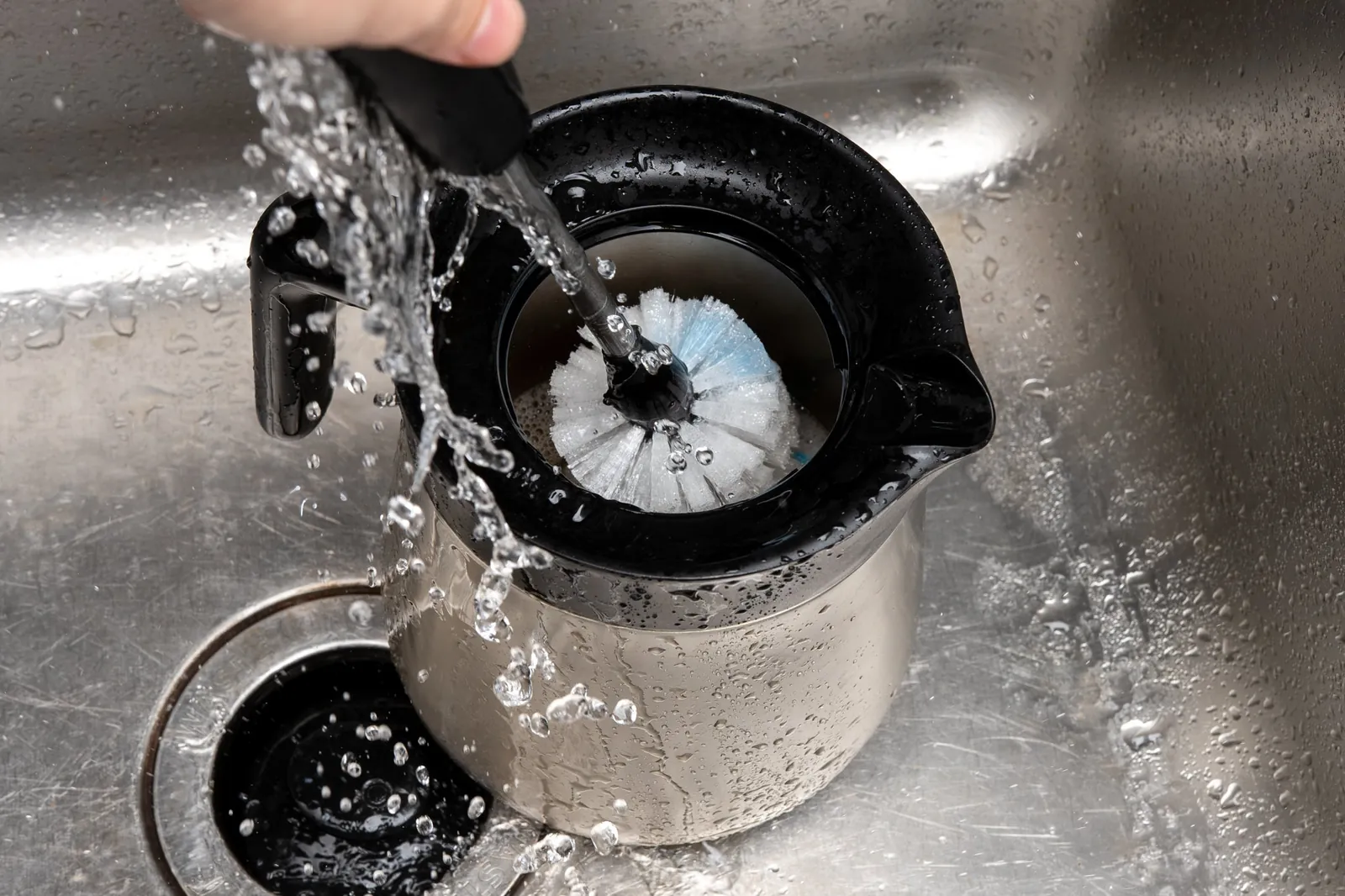
- Pour it out and scrub the pot. Wearing gloves, tip the vinegar into the sink. Use the bottle brush with a few drops of dish soap to scrub the bottom and walls. Work in circles for about 2 minutes. You’ll know it worked when the bottom feels smooth under the brush, not gritty.
- Run a plain water cycle. Fill the reservoir with clean cold water only and run a full cycle. Pour it away. This isn’t optional — it flushes the acid out of the tubes.
- Run a second water cycle. Repeat step 5 with fresh water. Two rinses is the minimum for a 12-cup machine; do three if you still smell vinegar. The pot is clean when the rinse water smells of nothing at all.
- Tackle brown stains with baking soda. Put 2 tablespoons of baking soda in the pot, add 1 cup of warm water, and let it stand for 15 minutes. Wipe with a soft cloth. Don’t use a metal scouring pad on a thermal pot — it leaves scratches that hold onto stains.
- Wash the removable parts. Wash the filter basket, carafe lid and any mesh filter in warm soapy water. Rinse well. Set them on a rack to air-dry fully before they go back.
- Wipe the outside and the plate. Unplug the machine first. Wipe the body and the warming plate with a damp cloth. Never put the machine itself in water — that’s how people destroy one.
- Reassemble and run one plain brew. Put everything back and brew a full pot of water only. Taste a spoonful once it’s cool. If you can taste vinegar, run one more water cycle before you trust it with coffee.
How to tell the coffee pot is really clean
The clearest sign is a full water cycle that comes out clear, with no white flakes and no vinegar smell when you sniff the pot once it’s cool. A second sign is the brew time. If your machine used to take 8 minutes for a full pot and now takes 5 or 6, the scale is gone and water flows freely again.
Look inside the pot under a bright light. A clean pot has an even surface with no white ring at the water line and no brown film on the walls. Run a finger along the bottom — it should feel smooth, not chalky.
Your machine tells you too. If the descale light is still on after the cycles, most makers want you to hold the descale button for a few seconds to reset it. Check your own model’s manual for the exact press, because it differs between brands.
If you still see white crust after one round, it needs a second. Repeat steps 1 to 6 with fresh vinegar. Heavy scale from hard water often takes two rounds, and a third is normal if the machine sat unused for months. Don’t scrub harder — scrub longer with a fresh soak instead.
One thing to watch: a thermal pot with a narrow neck hides its bottom. Shine a phone light down the neck. If you can’t see the base, the pot needs a brush made for thermal carafes, not a sponge.
When cleaning the coffee pot goes wrong
| What happened | Why | What to do |
|---|---|---|
| Coffee still tastes of vinegar | Too few rinse cycles | Run 2 more plain water cycles |
| White flakes in the pot | Loose scale broke off | Rinse, then repeat the vinegar soak |
| Machine won’t start after cleaning | Water got into the electrics | Unplug it and let it dry 24 hours |
| Pot cracked after hot vinegar | Cold pot hit hot liquid | Let the pot warm with tap water first |
| Brown stains stay after vinegar | Old coffee oils, not scale | Use the baking soda soak from step 7 |
| Vinegar smell won’t leave the room | Acid vapor in still air | Open a window and run the fan |
A cracked glass carafe is the one that costs real money. Never pour hot vinegar into a cold glass pot — warm the pot with tap water first, then add the hot mix. And never pour cold water into a hot pot straight off the plate.
If the machine won’t start, resist the urge to switch it on again to “check.” Water inside the electrics can cause a short or a shock. Unplug it, empty the reservoir, and leave the lid open somewhere air moves.
The flakes are the reassuring failure. They mean the vinegar loosened scale that had built up in layers. Rinse them out over the sink, not into the machine, so they don’t settle in the spray head.
Brown stains that survive vinegar are usually tannin and oils baked onto the glass, and acid alone won’t lift them. The baking soda soak works because it’s mildly abrasive and alkaline.
One case looks like a fault but isn’t: a faint vinegar tang on the first pot after cleaning. That’s residue in the lid and gasket, not the carafe.
How often to clean a coffee pot
Clean the pot with vinegar every 1 to 3 months, and wash the removable parts in soapy water every day you use them. That range assumes average tap water. Two things move it most: how hard your water is, and how many pots you brew a day.
Hard water leaves scale fast. If you see white crust on your kettle, your water is hard, and your coffee pot needs the vinegar cycle every month. Soft water can stretch it to 3 months. Your water supplier publishes a hardness figure for your area — that’s the number to check, not a guess.
Use counts more than calendars. Brewing 2 or more pots a day doubles the mineral load, so halve the interval. If the machine takes longer to brew than it used to, or the coffee tastes flat, clean it now whatever the calendar says.
For a full machine descaling, follow the maker’s own interval. Many manuals name a number of cycles or months, and that figure beats any general rule. Brewed coffee is a food, and leftovers kept in the pot can grow bacteria, so don’t store coffee in the pot overnight.
Frequently asked questions
Can I clean a coffee pot with baking soda and vinegar?
Yes, and it works well for brown stains. Put 2 tablespoons of baking soda in the pot, then add 1 cup of white vinegar slowly — it will fizz. Let it stand 15 minutes, then scrub and rinse. Use this for stains on the pot itself, not inside the machine’s reservoir, where the fizz can push grit into the tubes.
Why does my coffee taste bitter after cleaning?
Bitter taste after cleaning usually means vinegar or descaler is still in the tubes. Run 2 more plain water cycles and taste a spoonful of the water once it’s cool. If it still tastes sharp, run a third. Never skip the rinse cycles — they’re the step that makes the whole job safe to drink from.
How long does it take to clean a coffee pot?
About 15 minutes of hands-on work, spread over roughly 1 hour of waiting. The vinegar soak takes 20 minutes for light scale or up to 1 hour for heavy crust, and the rinse cycles add about 10 minutes. A store-bought descaler cuts the soak to the time its own packet states.
Is it safe to use vinegar in a coffee maker?
It’s safe for most machines, but check your manual first. Some makers say plainly not to use vinegar, and doing it anyway can void the warranty. Use standard white vinegar around 5% strength, always mixed 1 part vinegar to 1 part water. Never use cleaning vinegar at higher strength undiluted.
What happens if I don’t clean my coffee pot?
Scale builds up and the machine brews slower and cooler, so coffee tastes flat. Leftover coffee oils turn rancid and give a bitter edge. In hard-water areas the crust can block the flow entirely within a few months. The fix is the same vinegar cycle — it just takes longer once the scale is thick.
Can I put the glass carafe in the dishwasher?
Only if the maker says so. Many glass carafes are dishwasher-safe on the top rack, but thermal pots and pots with painted markings usually aren’t. Check the base of the pot or the manual. Hand washing in warm soapy water is always safe and takes about 2 minutes.
Does it matter which vinegar I use?
Yes — use plain white distilled vinegar, not apple cider or cleaning vinegar. White vinegar is clear, so it leaves no residue or smell behind, and its strength is predictable. Cleaning vinegar is stronger and needs more dilution. Never use undiluted cleaning vinegar in a coffee maker.
How do I clean a coffee pot without vinegar?
Use citric acid powder or a descaler made for coffee machines. Mix the descaler to the strength on its packet, run it through a full cycle, then rinse twice with plain water. Citric acid works at about 1 tablespoon per cup of water. Follow the packet over any general guide — the maker’s dose is the one that’s tested.
Conclusion
Once your pot’s clean, keep it that way by rinsing it with hot water after every use and leaving the lid off to dry. If you brew daily, run a vinegar cycle once a month so minerals don’t build up again. You’ll taste the difference in your next cup.