
Cleaning a glass pipe takes about 15 to 30 minutes for a light to medium build-up, and 45 to 60 minutes if the resin is thick and old. You can do it with things already in your kitchen. The one thing you need before you start is 90% isopropyl alcohol, not 70%.
What you need for cleaning a glass pipe

| Item | How much | Why it’s needed | A substitute |
|---|---|---|---|
| Isopropyl alcohol, 90% or higher | 1 cup (240 ml) | Dissolves sticky resin | none — don’t swap this |
| Coarse salt | 2 tablespoons | Scours the inside walls | uncooked rice, same amount |
| Zip-top bag | 1 quart size | Holds pipe and liquid together | small glass jar with lid |
| Pipe cleaners | 2 to 3 | Reaches the stem and bowl hole | none — don’t swap this |
| Paper towels | 4 to 5 sheets | Catches resin and dries parts | clean cotton cloth |
| Warm water | 2 cups (480 ml) | Rinses salt and alcohol away | none — don’t swap this |
| Small bowl | 1, wide enough to soak | Soaks the bowl end | mug, if the pipe fits |
Coarse salt matters more than people think. Table salt dissolves too fast in alcohol and stops scrubbing after a minute or two. Coarse crystals keep their edges and do the work.
Before you start cleaning your glass pipe
- Empty the pipe completely. Tap out loose ash into a trash can, not a sink. Ash and resin together block drains, and a blocked drain is a plumber’s bill, not a cleaning problem.
- Work near an open window or outside. Isopropyl alcohol gives off strong fumes. Keep it away from any flame, pilot light or lit cigarette — the vapor catches fire easily.
- Put on old clothes and clear a flat surface. Resin stains fabric and it doesn’t come out. Lay down paper towels before anything touches the table.
- Check the pipe for cracks first. Run your fingernail along the bowl and stem. A cracked pipe can split under warm water, and hot liquid plus glass shards is how people get hurt.
The preparation most people skip is the crack check. It takes 10 seconds and it’s the step that keeps glass out of your hands.
Do it in good light, because a hairline crack in clear glass can be nearly invisible under a lamp. Turn the pipe slowly and feel for a spot that catches your nail. A chip at the rim of the bowl counts too, since that edge is where the glass is thinnest.
If you find one, set the pipe aside. A cracked piece isn’t a cleaning job, and no soak or scrub makes it safe to use again. Many smoke shops will look at a piece and tell you whether it can be repaired or should be retired.
- Skip this job entirely if the pipe has metal, wood or electronic parts. Alcohol and soaking damage them. Take those to a shop that services them.
Step-by-step glass pipe cleaning
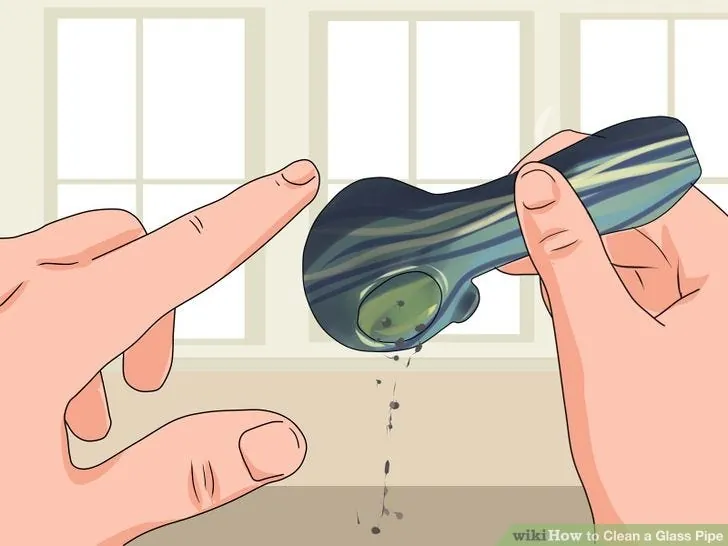
Tap out the loose material. Hold the pipe over a trash can and tap the bowl gently against the rim. Give it 30 seconds. You’re done when nothing more falls out. Don’t bang it hard — glass chips at the bowl edge, and a chip becomes a crack.
Take the pipe apart, if it comes apart. Many glass pipes have a removable bowl or stem. Twist gently, never force it. If a piece won’t move after light pressure, leave it together and soak the whole pipe. Forcing a stuck joint is the most common way people break their own pipe.
Put the pipe in the zip-top bag. Slide it in so it lies flat. Pour in 1 cup (240 ml) of 90% isopropyl alcohol — enough to cover the pipe, so use more for a long pipe. Seal the bag and press out the extra air.
Add 2 tablespoons of coarse salt. Seal the bag again. The salt is the scrubber; the alcohol is the solvent. For a pipe longer than about 6 inches (15 cm), add 1 more tablespoon so the salt reaches the far end.
Shake the bag for 2 to 3 minutes. Hold the seal closed with one hand. Shake firmly, not wildly. You’ll see the alcohol turn brown or dark green — that’s the resin lifting off. Stop when the liquid stops getting darker.
Let it soak for 15 to 20 minutes. Set the bag down and wait. For heavy, old resin, leave it 45 to 60 minutes instead. Don’t leave glass in alcohol overnight — there’s no benefit, and the seal can leak.
Scrub the bowl and stem with a pipe cleaner. Bend the cleaner into a U-shape and push it through the stem from the mouthpiece end. Twist as you go. Use a second cleaner for the bowl hole. You’re done when the cleaner comes out clean.
Rinse with warm water for 1 full minute. Warm, not hot — sudden heat can crack room-temperature glass. Run water through both ends. Keep rinsing until you can’t smell alcohol anymore. That smell is your check, and it takes about a minute of steady rinsing.
Dry it completely before use. Shake out the water and stand the pipe upright on a paper towel for at least 1 hour. Air moves through the bowl and stem. A pipe that’s still wet inside won’t burn right, and trapped moisture can crack glass when it heats.
Wipe down your work area. Throw the bag away — don’t pour alcohol down the sink in a large amount. Wipe the table with a paper towel and wash your hands with soap and warm water for 20 seconds.
How to tell your glass pipe is really clean
A clean glass pipe looks clear when you hold it up to a light. Look through the stem from the mouthpiece end — you should see straight through to the bowl, with no dark patches on the walls. Run a dry pipe cleaner through it; if it comes out with any brown or black on it, the pipe needs another round.
The second check is your nose at arm’s length. After rinsing, the pipe should smell of nothing. A sharp alcohol smell means rinse again for another minute. A sweet, burnt smell means resin is still inside, and you’re back to step 3 for another 15-minute soak.
Feel the inside of the bowl with a clean finger. It should feel smooth, not tacky. Tacky means resin film is left, and it will taste burnt on the next use.
Signs it needs a second round: dark streaks you can still see, a pipe cleaner that comes out dirty, or water that beads on the inside walls instead of running off. One more 15-minute soak with fresh alcohol and salt usually finishes it.
A pipe that’s clean but still cloudy after drying usually has hard water spots, not resin. A 30-second rinse with distilled water clears those. That’s a different problem from resin, and it doesn’t need another soak.
Do the checks in that order, because each one catches something the others miss. Light shows streaks, the pipe cleaner shows what’s coating the stem, and your finger finds the film that dries invisible.
If the pipe passes all three but still tastes off on the first pull, the problem is usually the bowl screen or the downstem, not the pipe itself. Swap the screen and check again before you soak anything.
A pipe that fails the same check twice in a row is worth a longer soak rather than a third quick one. Let it sit for 45 to 60 minutes in fresh alcohol and salt, then run the full check again from the top.
When cleaning a glass pipe goes wrong
| What happened | Why | What to do |
|---|---|---|
| Pipe cracked in warm water | Glass went from cold to hot too fast | Stop, don’t use it, replace it |
| Resin won’t come off after soaking | Alcohol was 70%, not 90% | Buy 90% or higher, soak 20 more minutes |
| Pipe still smells after rinsing | Resin left in the stem bend | Soak again 15 minutes, scrub with cleaner |
| Salt stuck inside the pipe | Rinse was too short | Run warm water 1 more minute, shake out |
| Bowl broke while twisting it apart | Joint was stuck, force was used | Don’t repair it — glass shards cut |
| Alcohol fumes made you dizzy | No airflow in the room | Stop, open windows, go outside |
The 70% alcohol problem catches a lot of people. Lower-strength alcohol is mostly water, and water doesn’t dissolve resin. If your bottle says 70%, the soak will take much longer and still leave film behind.
How often to clean a glass pipe

Clean a glass pipe every 3 to 7 days if you use it daily. That range moves with two things: how much resin your material leaves, and how hot you burn it. Sticky material and low heat both build resin faster, so a daily user with those habits sits at the 3-day end.
If you use it a few times a week, every 2 to 3 weeks is enough. A pipe used once a month needs cleaning after each session, because resin that sits for weeks hardens into a layer that takes a full 60-minute soak to shift.
The check that settles it: look through the stem. When you can’t see clear glass from end to end, it’s time. That check works for any pipe, any material, any schedule — it reads your own build-up instead of a calendar.
Waiting too long costs you more than time. Hard, baked-on resin takes two or three soaks instead of one, and the pipe tastes burnt for days before you notice.
The schedule also depends on how many people share the pipe. A piece passed around a group collects resin from every session, not just yours, so it reaches the stem check faster than the calendar suggests. Go by the glass in that case, not the date.
Keep the same rule when you switch material. A pipe that stayed clear for a week on dry herb can clog in days on anything stickier, and the 3-to-7-day range no longer fits. Watch the first week after any change and reset your timing from what you actually see.
One more thing worth knowing: a pipe you clean on schedule stays easy to clean. Resin that never gets a chance to bake hard wipes out with a short soak, so the routine pays for itself twice.
Related guides
Frequently asked questions
Can I clean a glass pipe with just hot water?
No — hot water alone won’t remove resin. Resin is oily and doesn’t dissolve in water. You need 90% isopropyl alcohol to break it down, plus coarse salt to scrub the walls. Hot water only rinses at the end. Using water first also wastes time, because it does nothing to the sticky layer inside.
Why does my glass pipe still smell after cleaning?
Resin is still trapped in the stem bend or the bowl hole. Those are the two spots a quick rinse misses. Soak the pipe again for 15 minutes in fresh 90% alcohol with 2 tablespoons of salt, then push a pipe cleaner through the stem from the mouthpiece end. Rinse with warm water for a full minute after that.
How long should I soak a glass pipe in alcohol?
15 to 20 minutes for normal build-up, and 45 to 60 minutes for heavy, old resin. The strength of your alcohol moves that number: 90% or higher works in the shorter time, while 70% needs much longer and still leaves film. Don’t soak overnight — there’s no gain, and a leaking bag makes a mess.
Is it safe to clean a glass pipe with boiling water?
No. Boiling water on room-temperature glass can crack it from the sudden heat change. Use warm water from the tap instead — hot enough to feel comfortable on your wrist. Keep the pipe at room temperature before rinsing. If the pipe is already cracked, don’t put it near water at all; replace it.
What happens if I use 70% alcohol instead of 90%?
The soak takes much longer and often leaves a sticky film. The extra water in 70% alcohol dilutes the solvent and slows the breakdown of resin. You’ll likely need two or three rounds instead of one. Check the percentage printed on the bottle before you buy — it’s the single biggest factor in how fast this job goes.
Does it matter what salt I use?
Yes — use coarse salt, not fine table salt. Coarse crystals keep their sharp edges in alcohol for several minutes and scrub the glass walls. Fine salt dissolves within a minute or two and stops working. Uncooked rice works as a substitute at the same 2-tablespoon amount, though it’s slightly less abrasive.
Can I clean a glass pipe in the dishwasher?
No. Dishwasher heat and detergent can crack glass, and loose resin can clog the machine’s filter. Hand washing with alcohol and salt is the safe method for any glass pipe.
How do I stop resin from building up so fast?
Clean it every 3 to 7 days instead of waiting for it to look dirty, and empty the ash right after each session. Ash left in the bowl traps moisture and speeds up the sticky layer. A quick 5-minute alcohol rinse between full cleanings also keeps the build-up soft, so the deep clean stays short.
Conclusion
Once it’s dry and clear again, you’ll notice the difference in every draw. If you’re unsure whether a piece is safe for this method, check with the shop where you bought it before soaking. And if the resin keeps coming back fast, it’s probably a sign you’re due for a fresh screen or a smaller bowl pack.