
Black mold in a shower is a cleaning job you can do yourself in about 30–45 minutes with bleach or vinegar, a spray bottle, and a stiff brush. It’s medium-hard: the scrubbing is easy, but you must protect your eyes and lungs, and you must fix the moisture or the mold comes back in 2–4 weeks. Before you start, you need a way to run the exhaust fan or open a window for the whole job.
What you need for black mold in a shower
| Item | How much | Why it’s needed | A substitute |
|---|---|---|---|
| Rubber gloves | 1 pair, long cuff | Bleach burns skin | Dish gloves, if long |
| Safety glasses | 1 pair, sealed top | Stops splashes reaching eyes | None — don’t swap this |
| Household bleach | 1 cup per quart of water | Kills mold on grout and tile | None — don’t swap this |
| White vinegar | 1 spray bottle, undiluted | Works on caulk and grout | None — don’t swap this |
| Stiff brush | 1 small, 1 grout brush | Lifts mold from grout lines | Old toothbrush |
| Spray bottle | 1, labeled | Applies cleaner evenly | None — don’t swap this |
| Old towels | 2 | Soaks runoff, protects floor | Rag |
Don’t mix bleach and vinegar in one bottle. Together they make a gas that hurts your lungs. Use one, rinse, then use the other.
The vinegar bottle and the bleach bottle must look different at a glance. Write “VINEGAR” on one with a marker and keep it on a different shelf from the bleach. In a steamy shower it’s easy to grab the wrong one.
For the bleach mix, use cool water and make it fresh each time. Bleach loses strength once diluted, so a bottle mixed last month won’t do the job on grout.
A grout brush has stiff, narrow bristles that reach into the lines. A dish brush is too soft and just skims the surface.
Before you start cleaning the mold
Open up the room. Turn on the exhaust fan, or open the window and the bathroom door. Keep air moving for the whole job and 30 minutes after. If your bathroom has no fan and no window, run a fan from the doorway and leave the door propped open the entire time.
Move everything out. Take out bottles, soap, the shower curtain, and the bath mat. Mold hides behind them, and you need clear tile. Check the underside of each bottle and the hem of the curtain before you put anything back. If you find specks there, those items need cleaning too, not just the shower.
Cover your skin and eyes. Gloves and sealed glasses go on before the bottle comes out. Bleach splashes reach the eyes faster than you’d expect. Wear long sleeves and old clothes, and keep the bathroom door open so you can step out fast if fumes get strong.
Test one spot first. Put a little cleaner on a hidden tile for 5 minutes. If the color holds, go ahead; if it fades, use vinegar instead. Test grout as well as tile, since the two can react differently.
The step people skip: drying the shower after every use. Damp grout is why the mold came back.
A safety limit: if the black patches cover more than about 10 square feet (roughly a 3 ft × 3 ft area), or the mold sits inside the wall or ceiling, this isn’t a DIY job. Call a mold remediation company.
How to clean black mold in a shower, step by step
- Ventilate for 5 minutes before you spray. Fan on, window open, door open. You’ll know it worked when you feel air moving past your face at the shower door. If there’s no airflow at all, stop here.
- Dry the surface with an old towel. Press hard on grout lines and corners. Mold soaks into a wet surface and the cleaner gets diluted. The tile should look matte, not shiny, before you go on.
- Mix the bleach: 1 cup of household bleach to 1 quart of cool water. Make only what you’ll use in one session — it weakens after about 24 hours. Cool water matters; hot water makes the fumes stronger.
- Spray the moldy area and wait 10 minutes. Keep the room vented. Don’t scrub yet — the cleaner needs time to break the mold down. Set a timer, because 10 minutes is longer than it feels.
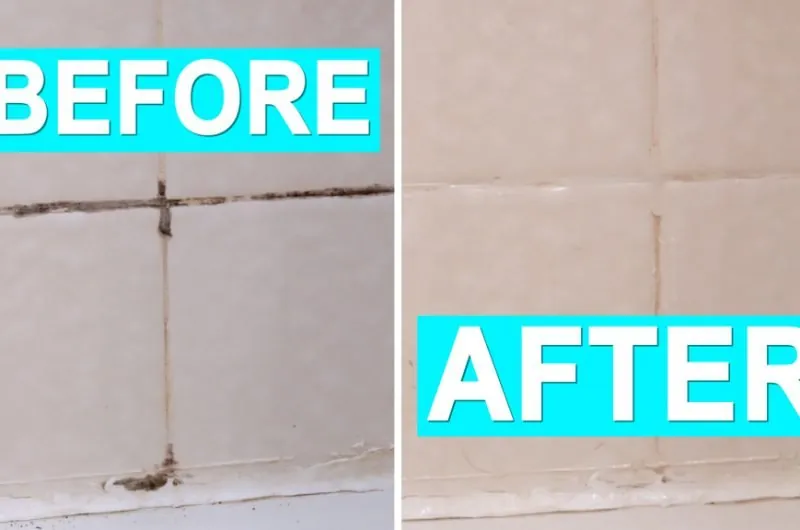
- Scrub the grout with the small brush in short strokes. Work one 2-foot section at a time, pressing into the lines. You’ll see the black lift and the grout turn back to its normal color.
- Rinse with clean water and a second towel. Wipe from the top down so dirty water doesn’t run over clean tile. Rinse the brush in the sink, not in the shower floor.
- Treat caulk with undiluted white vinegar. Spray, wait 15 minutes, then wipe. Vinegar is gentler on caulk than bleach, which dries it out and cracks it over time.
- Replace caulk that stays black after two rounds. Cut it out with a utility knife, clean the gap, and apply new mold-resistant silicone. Let it cure 24 hours before the shower is used again.
- Dry the whole shower with a squeegee. 30 seconds, top to bottom. This single habit does more than any cleaner to keep mold away.
- Leave the fan running 30 minutes after you finish. The room needs to dry out fully, not just stop dripping. Check the grout is dry to the touch before you close the door.
How to tell the shower mold is gone
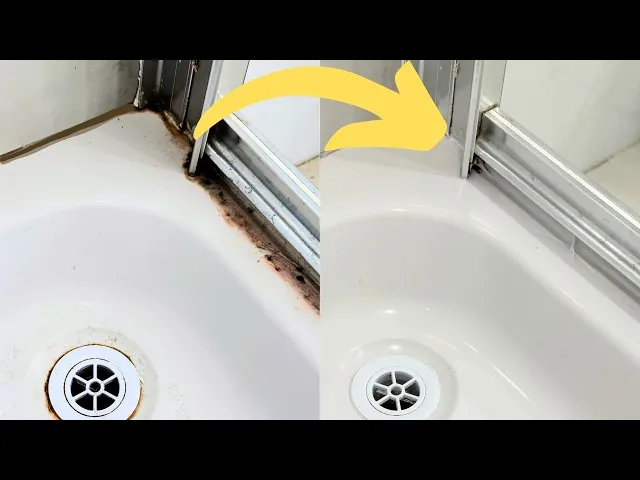
The mold is gone when the grout lines look even in color under bright light, with no dark dots left in the corners or along the caulk edge. Run your eye along each line at eye level — a phone flashlight helps. If you see a thin black line still sitting in the low spots, that’s a second round.
A second sign: the shower stays dry between uses. After 24 hours with the fan on and the door open, the grout should feel dry to the touch. If it’s still damp, the moisture source is the real problem, not the cleaner.
Watch for these signs it needs another round:
- Black dots return in the same spot within 2 weeks. The mold is deeper in the grout than the surface clean reached.
- Caulk feels soft or peels at the edge. Water is getting behind it. Replace it rather than clean it again.
- A musty smell stays after cleaning. That points to mold behind the tile or in the ceiling above — a job for a professional.
- The grout crumbles when you scrub. It’s worn out. Regrouting fixes it; more cleaner won’t.
How fast mold returns depends on your bathroom’s airflow and how many people share the shower. A fan rated for your room size clears the air in minutes; a weak one leaves moisture sitting for hours. Check your fan’s rating on its label or in its manual, and compare it to your bathroom’s cubic feet.
If something goes wrong
| What happened | Why | What to do |
|---|---|---|
| Headache or coughing while cleaning | Bleach fumes in a closed room | Stop, leave the room, get fresh air |
| Grout color faded or chalky | Bleach too strong or left too long | Rinse well, let dry, use vinegar next time |
| Cleaner splashed in your eye | No sealed glasses worn | Rinse eyes 15 minutes with water, call a doctor |
| Mold back in under 2 weeks | Shower stays damp between uses | Run the fan longer, squeegee after every use |
| Caulk cracked after cleaning | Bleach dried out the silicone | Cut out and replace with mold-resistant caulk |
| Black stains inside the wall | Water leak behind tile | Stop cleaning, call a mold professional |
If the headache or coughing doesn’t ease within a few minutes of fresh air, call poison control and have the cleaner’s label in front of you. The same goes for a splash in the eye: rinse the full 15 minutes before you call anyone.
Grout that turns chalky after one cleaning usually means the bleach sat too long, not that the grout is ruined. Rinse, let it dry a day, and check whether the color comes back before you assume the worst.
Caulk that cracks and pulls away from the tile edge is a spot mold will return to. Cut out the old bead fully, dry the joint, and use mold-resistant caulk rated for bathrooms.
The wall stain is the one to take seriously. If the paint or drywall above the shower is soft, bubbling, or stained, stop cleaning and call a mold professional.
How often to clean mold in a shower
Clean the visible mold every 2 weeks if your bathroom has no window and a weak fan, and every 4–6 weeks if it has good airflow and you squeegee after each shower. Those two things — airflow and drying — move the number more than anything else. A shared shower used by 3 or more people sits wet longer, so treat it like the 2-week case.
A deep clean of grout and caulk fits better at twice a year, in spring and fall. Between those, a 5-minute spray-and-wipe on the corners keeps it from growing back. If you find yourself cleaning the same corner every week, the interval isn’t the problem — the moisture is.
To set your own interval, check the shower at the end of a normal week rather than guessing now. Look at the caulk line along the tub or tray, the bottom row of grout, and the inside of the shower door track. A faint gray film in those spots means you can stretch the schedule. Dark speckling that has come back within days means you should shorten it.
Write the date on the wall tile with a pencil after each clean, or note it in your phone. Mold returns at a steady pace in a given bathroom, so two or three dates tell you the real rhythm better than any general rule.
Frequently asked questions
Can I use vinegar instead of bleach?
Yes, for light surface mold and for caulk, undiluted white vinegar works well and is safer for your lungs. For heavy black mold on grout, bleach is stronger. Use one or the other, never mixed. Vinegar needs about 15 minutes of contact time; bleach needs about 10. Both need ventilation.
Why does the black mold keep coming back?
Because the shower stays wet for hours after each use. Cleaner kills what’s on the surface, but mold spores grow again wherever moisture sits. Run the exhaust fan for 20–30 minutes after every shower, squeegee the walls, and leave the door open. If mold returns in under 2 weeks, the moisture source is still there.
How long does it take to clean black mold in a shower?
About 30–45 minutes for a standard shower stall, including the 10-minute wait for the bleach and the final dry. A tub-and-tile surround with heavy mold in the corners takes closer to 60–90 minutes, mostly scrubbing time. Caulk replacement adds 24 hours of cure time before the shower can be used again.
Is it safe to clean black mold myself?
Yes, for surface mold on tile and grout under about 10 square feet, if you wear gloves and sealed glasses and keep the room vented. It’s not safe to handle mold inside walls, on the ceiling, or spread over a large area — that needs a professional. Anyone with asthma or a weakened immune system should stay out of the room during cleaning.
What happens if I mix bleach and vinegar?
You get chlorine gas, which causes coughing, burning eyes, and trouble breathing. Never put them in the same bottle or spray one over the other. Use bleach, rinse the surface with water, let it dry, and only then use vinegar — or pick one and skip the other for that session.
Does black mold in a shower cause health problems?
It can trigger coughing, sneezing, and eye or skin irritation in some people, especially those with asthma or allergies. The U.S. Centers for Disease Control and Prevention notes that mold exposure can cause these symptoms. Most healthy people recover once the mold is removed and the room stays dry. See a doctor if symptoms continue.
How do I stop mold coming back after cleaning?
Keep the shower dry. Squeegee the walls after every use, run the fan 20–30 minutes, and leave the door open between showers. Wash the shower curtain once a month, and replace caulk when it cracks. Fix any drip or leak right away — a slow leak behind tile feeds mold you can’t see.
Does it matter which brush I use?
Yes. A stiff grout brush reaches into the lines where mold sits; a soft sponge only wipes the surface and leaves the roots. Use a small brush for corners and an old toothbrush for tight edges. Don’t use steel wool on tile — it scratches the glaze and gives mold a rougher surface to grip.
Conclusion
Once the surface is clean, keep the fan running for a while after every shower and wipe down wet walls. If you’re still seeing dark patches return, check for a leaky pipe or a clogged drain—that’s your next step, and it’ll save you a lot of repeat scrubbing.