
Cleaning a leather jacket takes about 30 to 60 minutes of hands-on work, plus 24 hours of drying time, and it’s a medium-difficulty job that needs care rather than strength. The one thing you must have before starting is the jacket’s care label — if it names a leather type or a cleaning method, follow it, and if there’s no label, treat the jacket as finished leather and test a hidden spot first.
Cost is low if you use what you likely already own: mild soap, distilled water, and microfiber cloths. A dedicated leather cleaner costs more but is safer on finished leather. Check the maker’s care page and the care label for your jacket before buying anything, since instructions vary between leathers.
The hardest part isn’t the wiping. It’s knowing when to stop and hand the jacket to a professional leather cleaner, which is the right call for suede, exotic skins, heavy mold, or any jacket with a lining you can’t remove.
What you need to clean a leather jacket
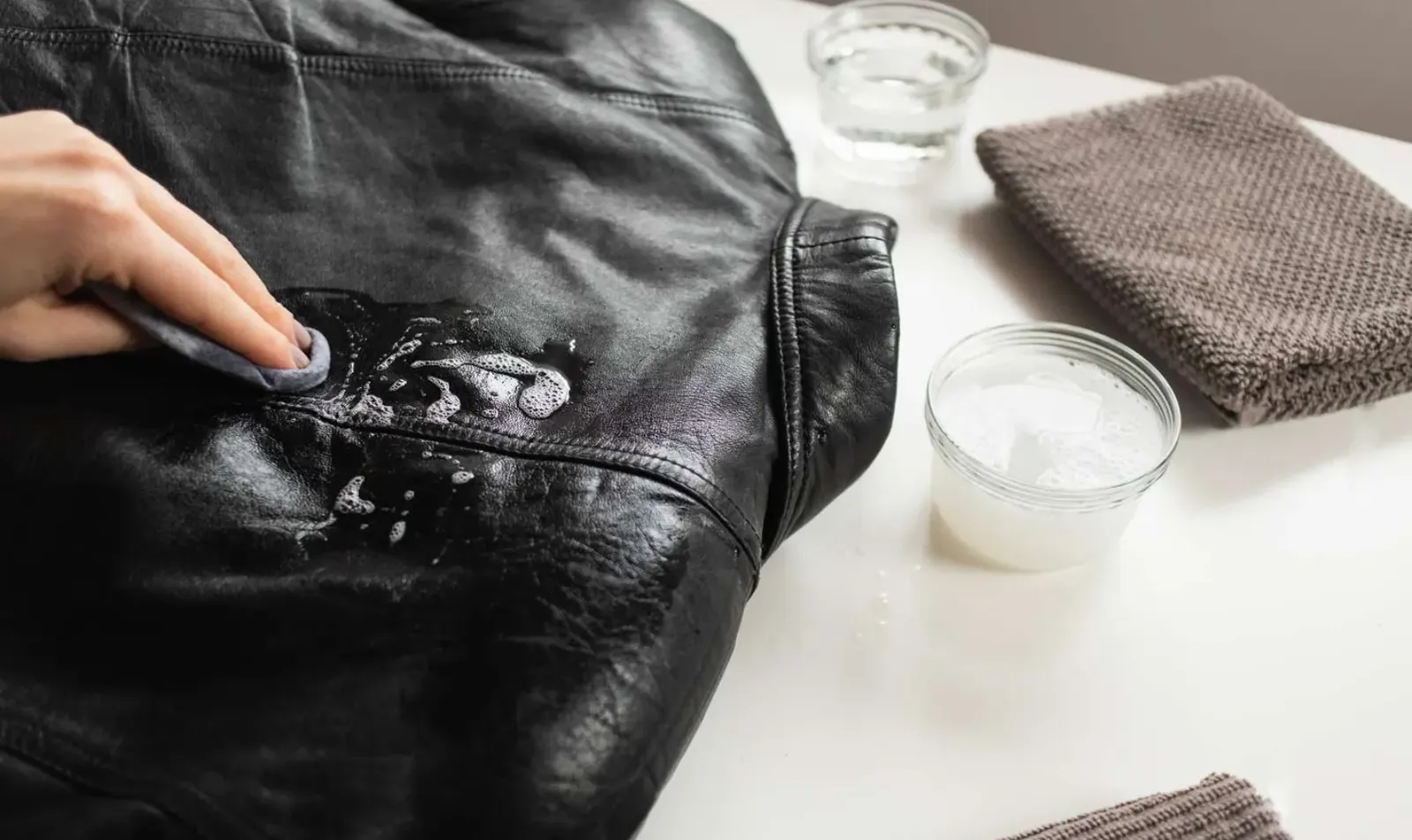
| Item | How much | Why it’s needed | A substitute |
|---|---|---|---|
| Mild soap | 2–3 drops per cup of water | Lifts surface dirt without stripping oils | Baby shampoo, same amount |
| Distilled water | 2 cups total | Tap minerals can leave marks on leather | Filtered water |
| Microfiber cloths | 3 clean cloths | One for washing, one for rinsing, one for drying | Soft cotton T-shirt, clean |
| Leather conditioner | 1 teaspoon per section | Restores oils after cleaning | none — don’t swap this |
| Soft horsehair brush | 1 brush | Removes loose dust from seams and grain | Soft toothbrush |
| Spray bottle | 1, small | Applies cleaner evenly, not in puddles | Damp cloth, wrung out |
| Padded hanger | 1 wide-shoulder hanger | Holds shape while drying | none — don’t swap this |
The two items marked “don’t swap” matter more than the rest. A conditioner meant for another material can sit on the surface or darken the leather, so use one made for the leather type on your label. The hanger matters too: a thin wire hanger can leave shoulder marks, so use a wide-shoulder hanger.
Buy the cloths in one pack and keep them apart. Fold or mark each one so the washing cloth never ends up doing the rinsing, and the drying cloth never touches soap. Mixing them up is how residue gets left behind.
If your jacket is a lighter color, test the soap mix on the inside of the hem first. Dark leather hides a lot; pale leather does not.
Check the leather type before you clean it
- Read the care label first. It names the leather type and any finish. If it says “don’t use water” or names a solvent, follow that — not this guide.
- Test one hidden spot. Put a drop of your soap mix on the inside hem and wait 15 minutes. If the color lifts onto the cloth or the leather darkens and stays dark, stop and take the jacket to a professional.
- Empty every pocket and close all zippers. A pen left inside will leak through the lining, and an open zipper can scratch the leather while you work.
- Move anything within a meter of where you’ll work. Wet leather picks up lint, pet hair, and dust from the air, and once it’s pressed in, it’s hard to lift out.
- The step people skip is the test patch. Skipping it’s how a jacket comes back with a pale patch on the shoulder that no conditioner will fix.
Suede, nubuck, and bonded leather aren’t jobs for a home wash. Take those to a leather specialist — the risk of a ruined finish is real, and no home method undoes it.
How to clean a leather jacket step by step
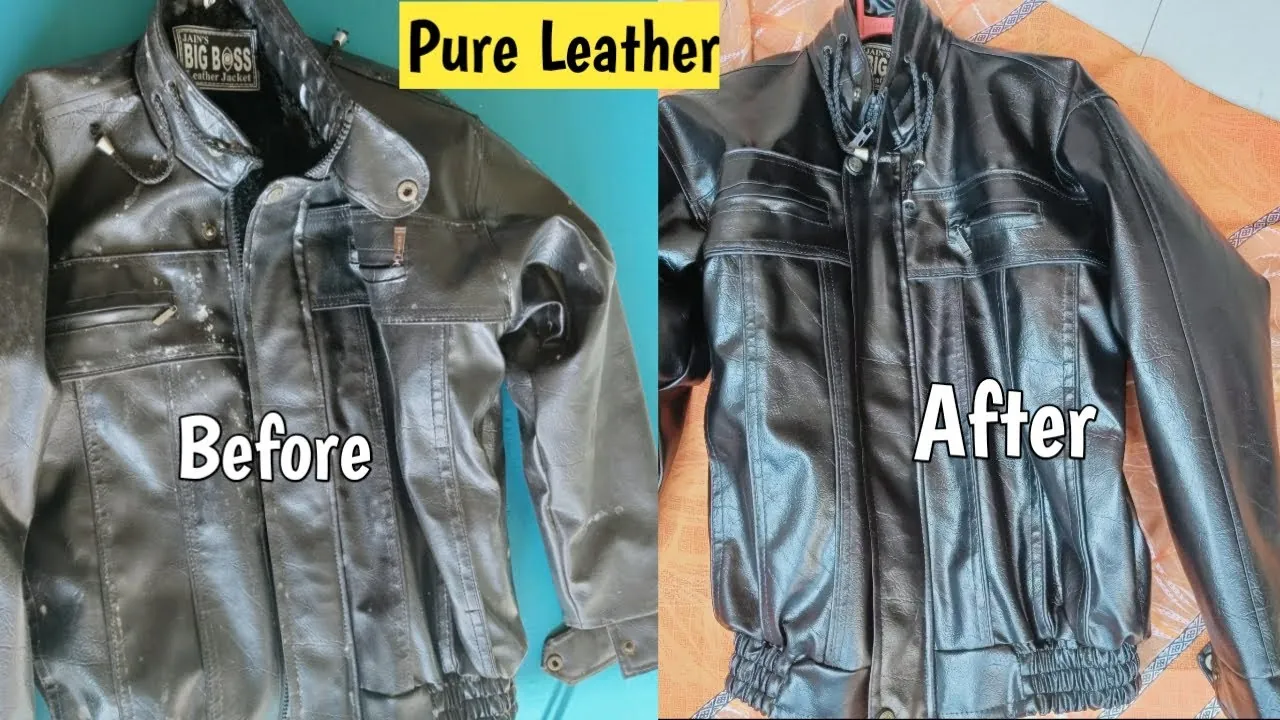
- Brush off loose dust. Use the horsehair brush in slow strokes over the whole jacket, paying attention to seams and cuffs. This takes about 5 minutes. You’ll know it worked when no dust falls from the cloth you wipe across it.
- Mix the cleaning solution. Add 2–3 drops of mild soap to 1 cup of distilled water in the spray bottle and shake gently. For a heavily soiled jacket, use 3 drops; for a light refresh, 2. The mix should look slightly cloudy, not foamy.
- Wipe with a damp cloth, not a wet one. Spray the microfiber cloth twice, wring it until it stops dripping, and wipe in small circles. Work one panel at a time — about 2 minutes per panel. The cloth should come away dirty, not soaked.
- Rinse with a clean damp cloth. Spray a second clean cloth once, wring it out, and wipe the same panel to lift soap residue. Soap left on leather dries dull and attracts dirt. Change to a fresh section of cloth when it starts looking gray.
- Dry the cloth before the leather. Press a dry microfiber cloth over the panel to pull off surface moisture. Do this within a minute of rinsing. The leather should feel cool and slightly tacky, not wet.
- Repeat on the next panel. Move from the back to the front, then sleeves, then collar. Keep the total washing time under 30 minutes so the leather never stays damp for long.
- Hang the jacket to dry. Use the padded hanger in a room at normal temperature, away from sunlight and radiators. Drying takes 12–24 hours depending on humidity. Never use a hairdryer — heat cracks the finish.
- Condition while slightly damp. After 12 hours, when the leather feels cool but no longer wet, apply 1 teaspoon of conditioner per panel with your fingers in thin circles. Let it sit 15 minutes.
- Buff off the extra conditioner. Use a dry microfiber cloth in light circles until the surface stops feeling greasy. Any conditioner left on the surface will pick up dust and turn dark.
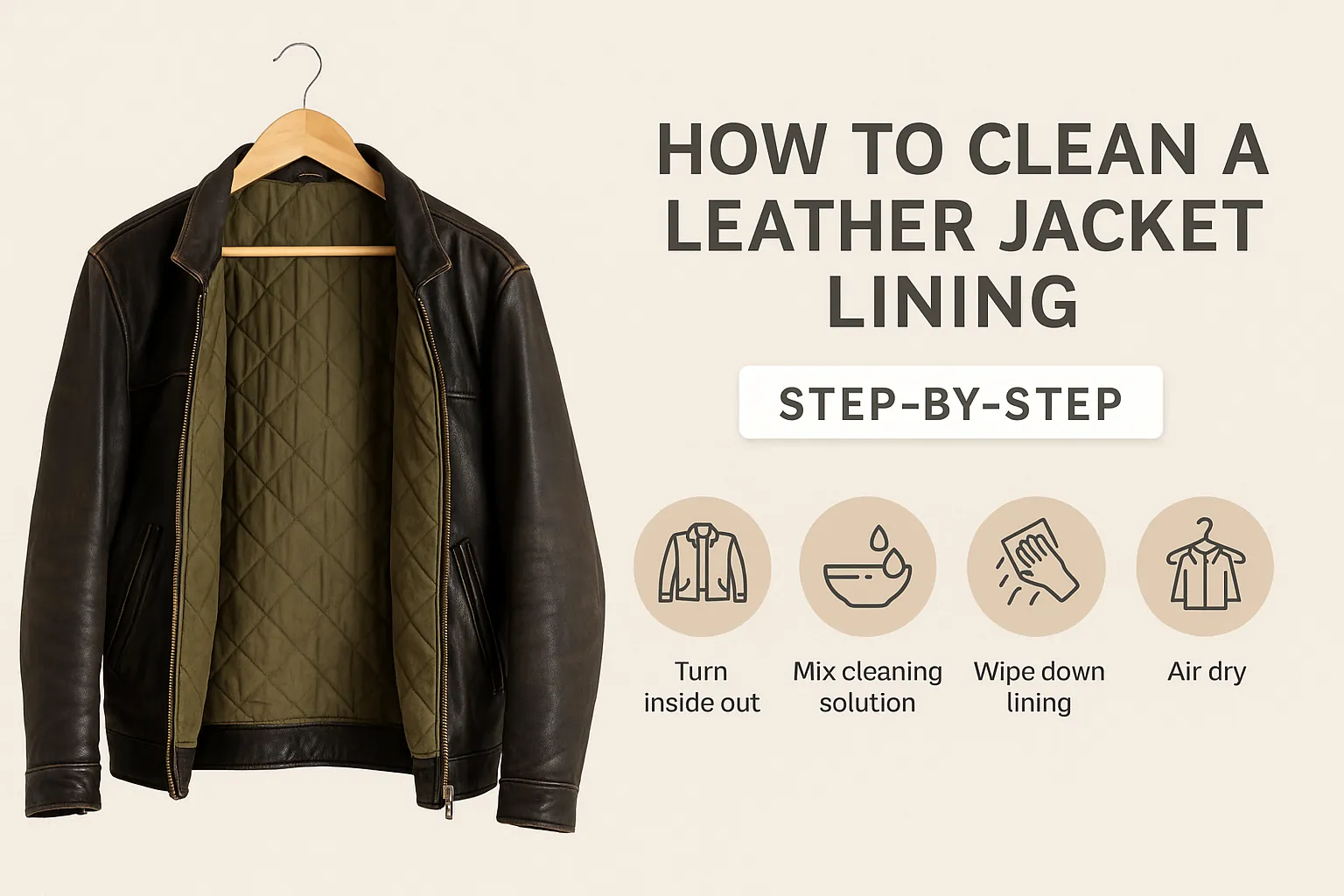
- Check the seams and lining. Run your fingers along every seam and inside the lining. If the lining is dirty, spot-clean it separately with the damp cloth — never soak it.
How to tell the cleaning worked
The clearest sign is the cloth. After step 4, the rinse cloth should come away nearly clean. If it’s still gray after a second pass on the same panel, the dirt is in the grain, not on it, and the jacket needs a professional clean rather than more scrubbing.
Look at the color under daylight, not indoor light. Clean leather looks even across panels, with no pale rings where you started and stopped. A slight darkening right after conditioning is normal and fades in about an hour.
Feel the surface after buffing. It should be smooth and dry to the touch, not sticky. Sticky means too much conditioner — buff again with a clean cloth.
Check the seams for stiffness. If a seam feels hard or crunchy when you bend it, soap residue is trapped in the stitching. Wipe that seam again with a barely damp cloth and let it dry.
The jacket needs a second round if:
- The rinse cloth still shows dirt after two passes on one panel.
- You can see a visible tide line where a wet patch dried.
- The leather feels rough or papery after drying.
Wait 24 hours between rounds. Cleaning damp leather twice in a row pulls out oils it needs.
One thing varies more than anything else: how much dirt sits in the grain. You can read your own jacket’s level by wiping one panel with a white cloth — the shade of gray on that cloth tells you whether one round is enough or you need a professional.
What can go wrong when cleaning leather
| What happened | Why | What to do |
|---|---|---|
| Leather turned dark and stayed dark | Water soaked past the finish | Stop cleaning, dry at room temperature, see a professional |
| Color came off on the cloth | Dye is surface-finished, not dyed through | Stop at once, don’t condition, take it to a leather specialist |
| White tide marks after drying | Soap residue or hard water left behind | Wipe with distilled water only, dry, then condition |
| Surface feels stiff and cracked | Oils stripped by too much soap | Condition in thin layers over 2 days |
| Mold spots appeared | Jacket stored damp in a dark closet | Isolate it, and let a professional treat it — spores spread |
| Lining shrank or wrinkled | Water reached a non-removable lining | Stop, air dry flat, have a tailor look at it |
Mold is the one to take seriously. The US Environmental Protection Agency explains in its mold cleanup guidance that porous materials with mold growth often can’t be cleaned fully and should be removed — leather is porous, so a jacket with spreading mold is a health question, not a stain question.
How often to clean a leather jacket
Clean a leather jacket 2 to 4 times a year if you wear it weekly, and once a year if you wear it a few times a month. Condition it every 3 to 6 months regardless, because conditioning is what keeps the leather from drying out between washes.
Two things move that number most. The first is how close the jacket gets to your skin — a jacket worn over a thin shirt picks up body oils faster than one worn over a sweater, so it needs cleaning nearer the 4-times end. The second is the climate you live in. Humid summers push sweat and moisture into the lining, while dry winters crack unfinished leather faster.
If you’re unsure, check the collar and cuffs every 2 months. When they look darker than the rest of the jacket, it’s time. Spot-clean those areas between full cleans rather than washing the whole jacket early — every full wash removes a little of the leather’s natural oil.
The count also depends on what the jacket is to you. A black biker jacket worn on weekends can go a year between cleans if you air it out after each wear. A tan or cream jacket shows grime long before it’s actually dirty, so you may clean it more often for looks alone.
Set a reminder for the start of each season. That way the cleaning lands before the humid months and after the dry ones, when the leather has taken the most wear.
Related guides
Frequently asked questions
Can you clean a leather jacket with just water?
Yes, plain distilled water on a damp cloth is safe for finished leather and lifts light dust. It won’t remove body oils or stains, though — for those you need 2–3 drops of mild soap per cup of water. Never soak the leather, and never use hot water, which can shrink and stiffen it.
Why did my leather jacket get hard after cleaning?
Too much soap stripped the oils out of the leather. Fix it by applying thin layers of leather conditioner — 1 teaspoon per panel — over 2 days, buffing between layers. If it’s still stiff after that, the finish is damaged and a leather specialist needs to look at it.
How long does it take to clean a leather jacket?
About 30 to 60 minutes of hands-on work, plus 12 to 24 hours of drying. The hands-on time depends on the jacket’s size and how dirty it is — a short jacket takes nearer 30 minutes, a long coat nearer 60. Drying time depends on room humidity, so a dry room dries faster than a bathroom.
Is it safe to put a leather jacket in the washing machine?
No. A washing machine soaks the leather, strips its oils, and can shrink or crack it beyond repair. The same goes for a tumble dryer, which uses heat that damages the finish. Hand-clean only, and air dry on a padded hanger away from direct heat.
What happens if you use regular household cleaner on leather?
It can strip the finish and leave permanent patches. Household cleaners often contain solvents or bleach that attack the leather’s surface coating. Stick to mild soap and distilled water, or a cleaner labeled for leather. If you’ve already used something harsh, rinse with distilled water and condition right away.
Does it matter which way you wipe leather?
Wipe gently with a damp cloth, using a fresh section of cloth as it gets dirty, and keep the cloth damp rather than wet. Use a fresh section of cloth as it gets dirty, and keep the cloth damp rather than wet.
Can you clean a leather jacket that has a lining?
Yes, if the lining isn’t glued in. Keep the cloth barely damp so water doesn’t reach the lining, and spot-clean the lining separately. If the lining is fixed and the jacket is heavily soiled, a professional leather cleaner is the safer choice — water trapped against a fixed lining can cause shrinkage and odor.
How do you store a leather jacket after cleaning?
Hang it on a wide padded hanger in a dry, dark closet with a little airflow. Never store it in a plastic bag, which traps moisture and invites mold. Leave some space around it so air can circulate, and keep it away from direct sunlight, which fades the color over time.
Conclusion
Once your jacket is dry and soft again, hang it on a wide wooden hanger in a spot with some airflow, and keep it away from radiators or direct sun. A little conditioner every few months will keep the leather supple, so it’s worth setting a reminder.