
Chocolate stains come out with cool water, a little liquid laundry detergent and 10-15 minutes of patience. Treat the stain before you do anything else: scrape off the solid chocolate, flush the back of the fabric with cool running water, then work in detergent and let it sit. Hot water is the one thing that sets the stain for good.
The whole job takes about 20-30 minutes of hands-on time, plus drying. Most chocolate stains land in the easy-to-medium range. Cost is small: detergent you already own, plus paper towels. The one thing you need before starting is the fabric’s care label, because it tells you the water temperature and whether the item can be washed at all.
What you need for a chocolate stain
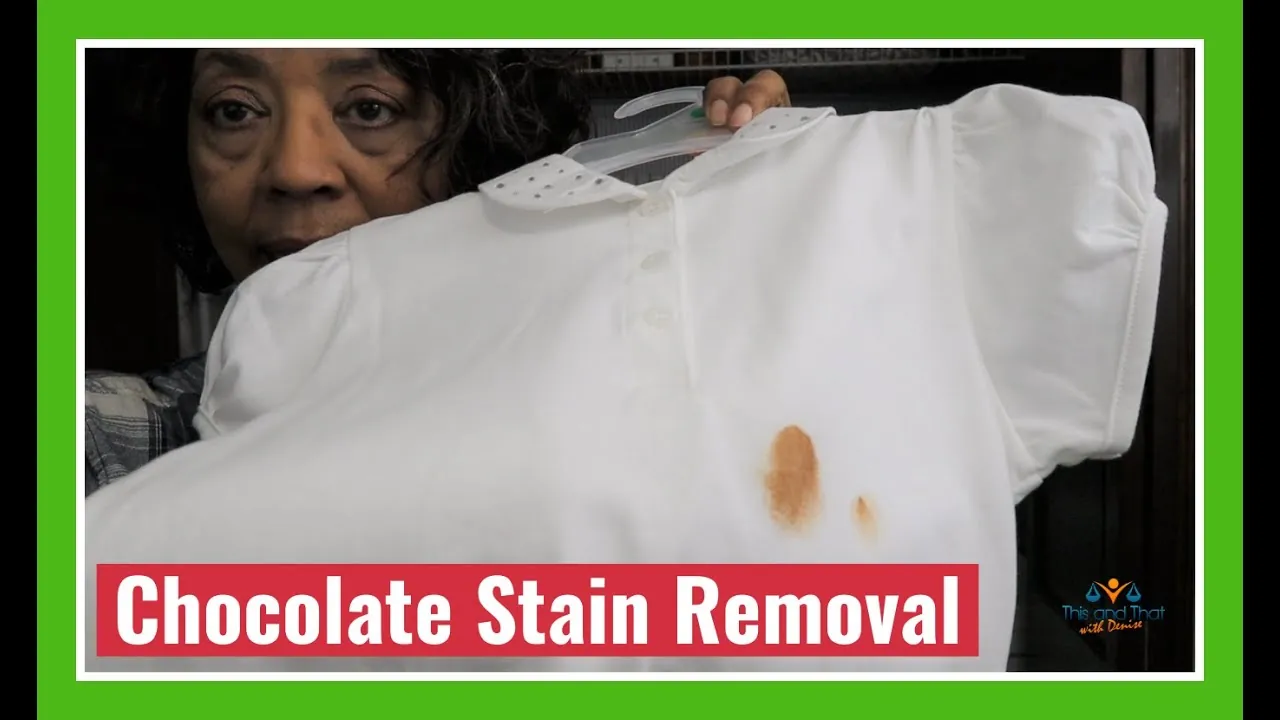
Every item below earns its place, and the table says what happens if you swap it. Read the care label first, since it overrides any advice here about temperature.
| Item | How much | Why it’s needed | A substitute |
|---|---|---|---|
| Cool water | Enough to flush the stain | Lifts loose chocolate without setting it | none — don’t swap this |
| Liquid laundry detergent | About 1/4 teaspoon | Breaks down the cocoa butter and sugar | Dish soap, plain and uncolored |
| Paper towels | 4-6 sheets | Blot and scrape without spreading | Clean white cloth |
| Old toothbrush | 1, soft bristles | Works detergent into the weave | Soft sponge |
| Color-safe bleach | 1 capful per wash load | Only for washable, colored fabric | Oxygen bleach powder |
| White vinegar | 1 tablespoon in 1 cup water | Rinses off detergent residue | none — don’t swap this |
The cool water is the one item with no substitute, so run the tap and let it settle before you touch the stain. Warm or hot water melts the cocoa butter further into the fibers.
Liquid detergent beats powder here because it dissolves in cool water without granules left to sit on the fabric. If you reach for dish soap instead, take the plain uncolored kind.
Skip anything with a scent or a dye, since both can mark a light-colored garment while you work.
The vinegar mix is for rinsing, not for the stain itself, and it’s the second item you can’t swap. Keep it in a cup, not poured straight on the fabric.
For a washable, colored item, the color-safe bleach goes in the machine drum with the load, never directly onto the chocolate. On an upholstery or a dry-clean-only piece, leave it in the cupboard.
Before you start on the chocolate stain
Read the care label and test first. Put a drop of detergent on a hidden seam and wait 5 minutes. If the color bleeds onto a white cloth, stop and take the item to a dry cleaner. On a dark or saturated fabric, a faint tint on the cloth can be normal dye release rather than damage. Test a second hidden spot before you decide.
Scrape off the solid chocolate. Use a dull knife or the edge of a spoon. Don’t rub — rubbing pushes cocoa butter deeper into the fibers. Work from the outside of the stain toward the middle so you don’t drag chocolate onto clean fabric. Let the flakes fall onto a paper towel instead of brushing them off with your hand, since warm fingers soften the chocolate again.
Turn the item inside out and lay it flat. This keeps the chocolate from spreading to clean areas of the fabric. On a couch cushion or a rug you can’t turn, blot from the outer edge inward and keep a dry towel under the spot if the cover lifts off.
Keep heat away. No hot water, no iron, no tumble dryer until the stain is gone. Heat sets the stain. Cool or lukewarm water only, and let the item air dry between attempts so you can see what is left.
Know where to stop. Silk, wool, suede, leather and anything labeled “dry clean only” aren’t a home job. Take those to a professional cleaner. The same goes for a chocolate stain on a mattress, a car seat or a piece of upholstery you can’t lift away from the filling. Point out the stain when you drop the item off, and say what you have already tried.
How to clean a chocolate stain, step by step
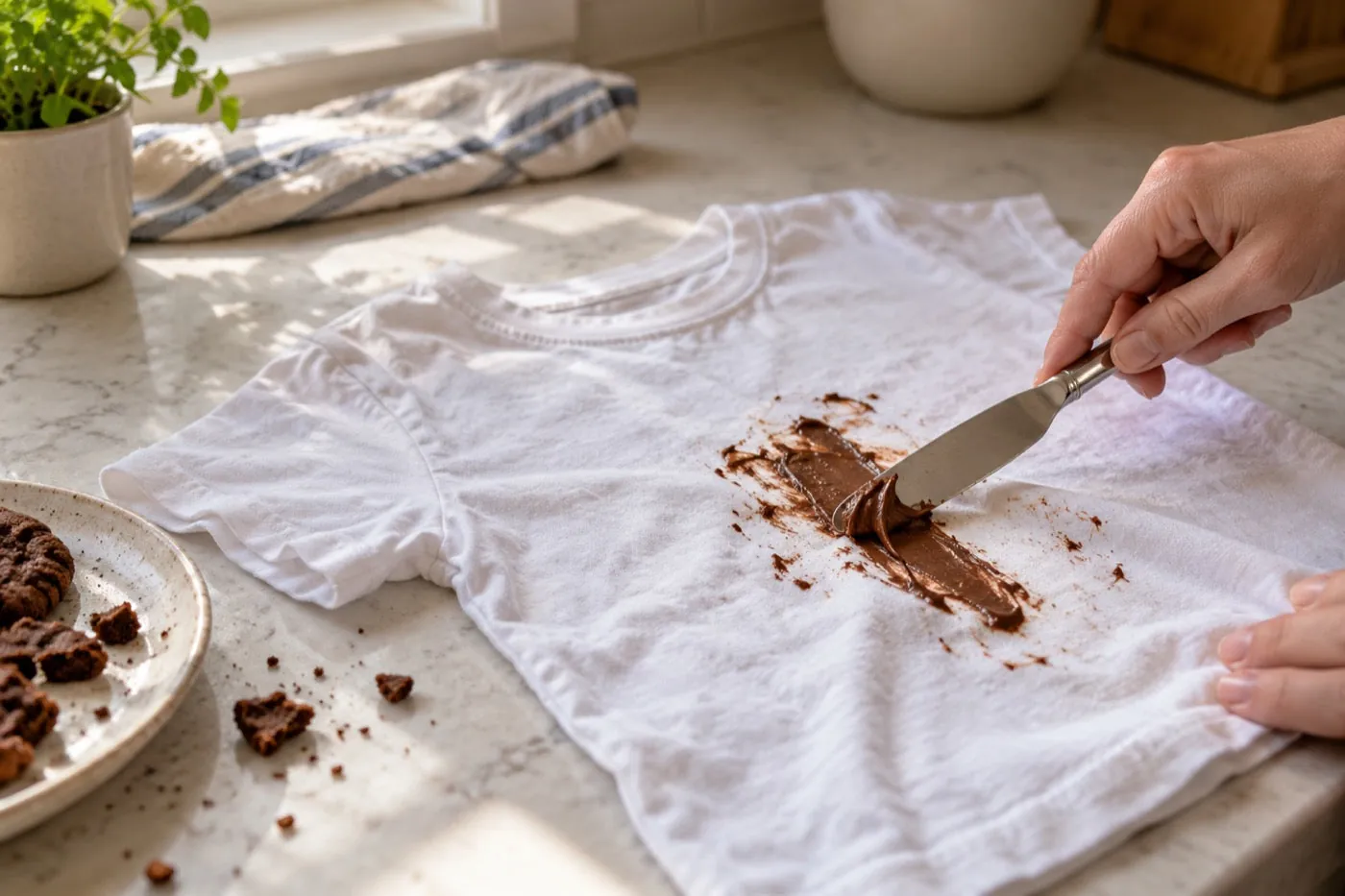
- Scrape off the excess. Hold the fabric flat and lift the solid chocolate with a dull knife or spoon edge. Work from the outside of the stain inward so you don’t spread it. You’re done when no more chocolate comes off. This takes about 2 minutes.
- Blot, don’t rub. Press a paper towel onto the stain for 10 seconds. Repeat with a clean section of towel until no more color transfers. Rubbing spreads the stain and can damage the weave.
- Flush from the back with cool water. Hold the stained side face down under a cool tap for 1-2 minutes. Water pushes the chocolate out the way it came in. You’ll see the runoff turn from brown to clear.
- Work in the detergent. Put about 1/4 teaspoon of liquid laundry detergent on the stain. Rub it in gently with a soft toothbrush in small circles for 30 seconds. Don’t scrub hard — you’ll fray the fibers.
- Let it sit. Wait 10-15 minutes. This gives the detergent time to lift the cocoa butter and sugar. Don’t let it dry out; add a drop of water if it starts to crust.
- Rinse with cool water. Hold the fabric under a cool tap until the water runs clear and no suds remain. Check the stain under good light. If you still see brown, repeat steps 4 and 5 once.
- Soak stubborn marks. Mix 1 tablespoon of white vinegar in 1 cup of cool water and soak the stained area for 15 minutes. Rinse well. This helps on older stains that have already dried.
- Wash as the label says. Use the warmest water the care label allows and add 1 capful of color-safe bleach for colored fabric. Check the stain before drying — heat sets anything left.
- Air dry. Hang the item or lay it flat away from direct sun. Once it’s fully dry, check the stain again in daylight. If any mark remains, repeat from step 4.
- Treat dried-in stains again. For chocolate you found days later, repeat steps 4 to 7 up to 3 times before giving up. Each round lifts a little more.
How to tell the chocolate stain is gone
Check the fabric while it’s still wet and again after it’s fully dry. Wet fabric hides faint marks, so the dry check is the one that counts. Hold the item up to a window in daylight — brown shadows show up clearly against the light, and indoor bulbs can hide them.
A clean result looks even in color with no darker patch. Run your finger across the spot: it should feel the same as the fabric around it. A stiff or slightly raised patch usually means cocoa butter is still in the fibers, even if you can’t see it.
If a faint ring is left after drying, the stain needs another round. Repeat the detergent step and the vinegar soak once more, then wash again. Two or three rounds is normal for a stain that sat for days. Most fresh stains come out in one round.
Watch for these signs it needs more work: a brown outline around the edge, a patch that looks darker when wet than dry, or a spot that still smells faintly of chocolate. Any of these means residue is left, and another wash won’t fix it — you need to treat the spot again first.
One more check: after washing, look at the inside of the garment. If the stain went through to the other side, treat that side too. Chocolate soaks through thin fabric fast.
If the chocolate stain doesn’t come out
| What happened | Why | What to do |
|---|---|---|
| Stain got darker after washing | Hot water or dryer heat set it | Soak in cool water and detergent overnight |
| Brown ring around the edge | Water spread the chocolate outward | Flush from the back, don’t rub the edge |
| Fabric color faded | Detergent too strong or bleach wrong | Stop, rinse well, take it to a cleaner |
| Stain still there after 2 washes | Cocoa butter soaked deep into fibers | Repeat detergent and vinegar up to 3 times |
| Fabric feels stiff at the spot | Cocoa butter residue left in the weave | Rewash with detergent, no heat |
| Stain spread to clean area | Rubbed instead of blotted | Rewash the whole item, check the label |
The darker stain is the one to take seriously. Once heat has set it, the mark is much harder to lift, so soaking may not be enough on its own. Soak overnight in cool water and detergent, then line dry and look before you go further.
A brown ring isn’t a worse stain. It’s chocolate that moved outward and dried at the edge. Flushing from the back pushes it off the fabric instead of through it.
Faded color is the one case where you stop. Rinse the item well and take it to a cleaner rather than trying another product.
If the stain survives two washes, the cocoa butter has gone deep into the fibers. Repeat the detergent and vinegar treatment up to three times, checking between rounds.
How often to treat chocolate stains
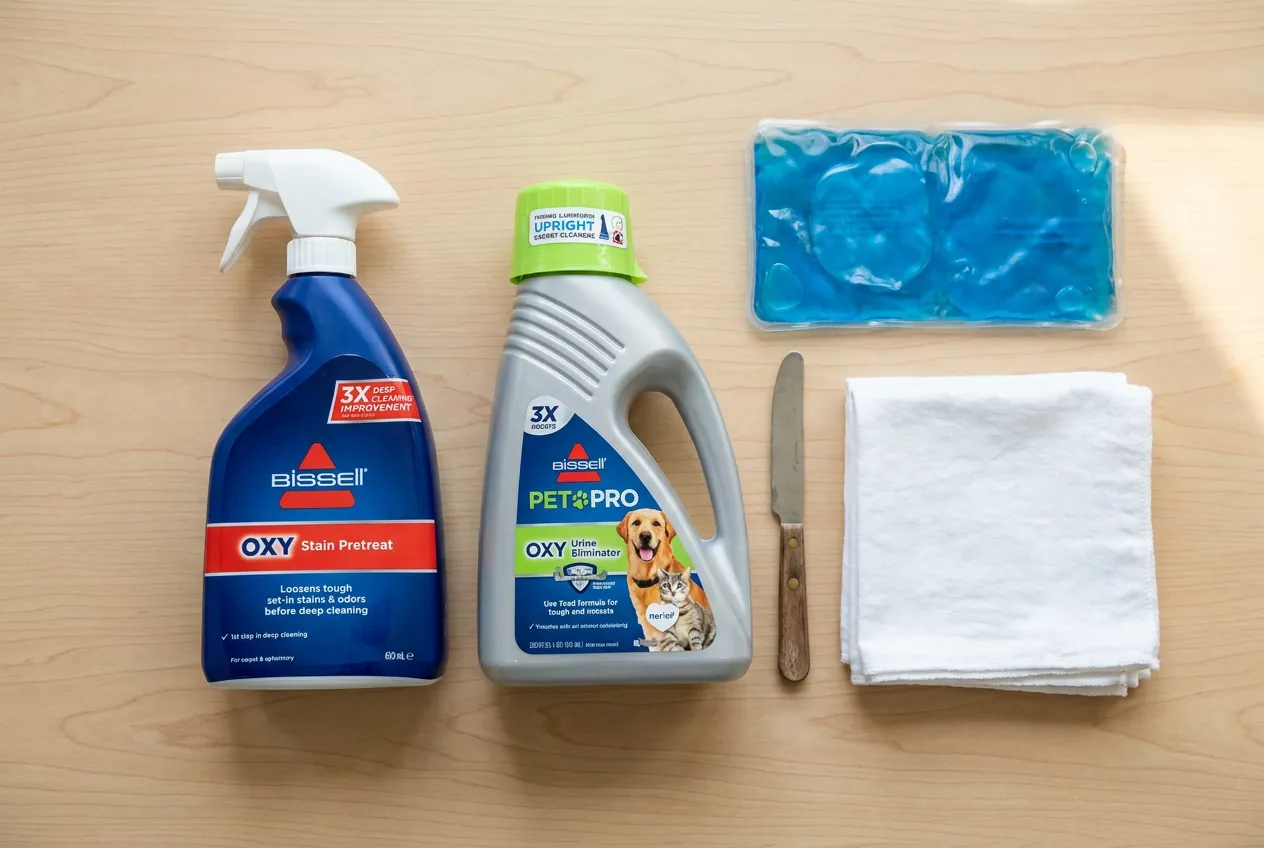
Treat a chocolate stain the same day you find it, if you can. Fresh stains come out in 1 round; stains left for a week often need 2 or 3. That’s the single biggest thing that changes the result.
The fabric type is the second. Cotton and polyester take repeated treatment well. Silk, wool and anything labeled dry clean only should go to a professional the same day — home treatment on those risks the whole item.
Check stored clothing before you put it away for the season. A stain you missed in winter shows up clearly months later, and by then it’s set. A quick look under daylight takes a minute.
If you can’t get to it the same day, don’t scrub at it dry and don’t iron or tumble dry the item to “see if it’s still there.” Heat sets chocolate, and a stain that would have lifted in 1 round can turn into one that needs 3.
A stain on a couch cushion or a car seat follows the same clock as one on a shirt. Treat it the day you notice it, and check the spot again the next morning before you sit on it.
Frequently asked questions
Can you get old chocolate stains out?
Yes, usually, with 2-3 rounds of treatment. Old stains need a longer soak: 30 minutes in cool water with detergent before you scrub. Cocoa butter hardens over time, so each round lifts a little more. If the stain has been through a hot dryer, it may not come out at all — check before you dry.
Why did my chocolate stain get darker after washing?
Heat set it. Hot water, or a tumble dryer, melts the cocoa butter into the fibers where detergent can’t reach it. Wash chocolate stains in cool water only, and always air dry until you’re sure the stain is gone. Once set, a stain may need a professional cleaner.
How long does it take to remove a chocolate stain?
About 20-30 minutes of hands-on time for a fresh stain, plus drying. That covers 2 minutes of scraping, 1-2 minutes of flushing, and 10-15 minutes of letting detergent sit. Old or dried stains take longer: plan on 2-3 rounds across a day or two.
Is it safe to use bleach on a chocolate stain?
Only color-safe bleach, and only on washable fabric. Check the care label first — regular chlorine bleach damages wool, silk and many synthetics. Add 1 capful per wash load with cool or warm water. If the label says no bleach, skip it and use detergent and vinegar instead.
What happens if I don’t rinse out the detergent?
A stiff patch and a faint ring can appear once the fabric dries. Detergent residue attracts dirt over time, so the spot may look dirty again within weeks. Rinse under cool water until the runoff runs clear and no suds remain. Then wash as normal.
Does it matter which detergent I use?
Liquid detergent works better than powder here. It penetrates the fibers faster and rinses out more cleanly, which matters on cocoa butter. Plain, uncolored dish soap is a fine substitute. Skip detergent with added bleach or fabric softener for the first treatment.
Can I clean a chocolate stain on a couch or car seat?
Yes, if the fabric is washable upholstery. Scrape off the solid chocolate, then blot with a cloth dampened with 1 cup cool water and 1/4 teaspoon dish soap. Press, don’t rub, and rinse with a clean damp cloth. Test on a hidden area first. Leather and suede need a professional.
How long can I wait before a chocolate stain sets?
About 24-48 hours before it starts to set, and heat speeds that up. A stain left a week is much harder to remove. If you can’t treat it right away, scrape off the solid chocolate and keep the item cool and dry. Never put it in the dryer first.
Conclusion
If a mark lingers after washing, don’t toss the shirt back in the hamper—let it air dry first, since heat from the dryer can lock in whatever’s left. Once it’s fully dry, check it in daylight and treat any faint shadow again before wearing.