
Cat pee on a mattress is fixable, but only if you flush the urine out of the foam instead of just wiping the surface. Cleaning cat pee from a mattress takes about 30 to 45 minutes of work, then 12 to 24 hours of drying, and it’s medium-hard — easy to start, easy to get wrong. You need a spray bottle of cool water and a way to dry the mattress fast, because the smell stays when the inside stays wet.
What you need for a cat pee mattress
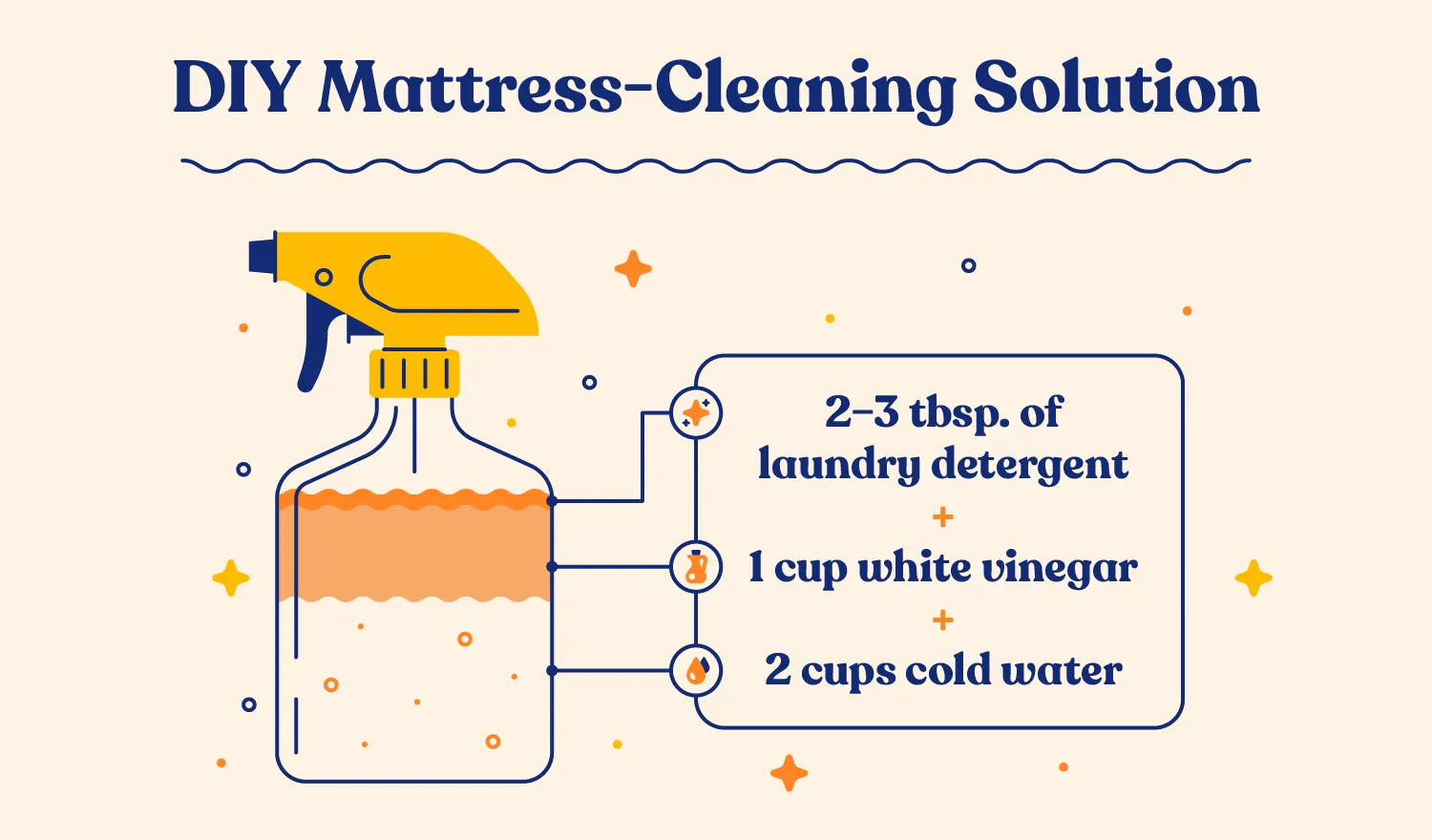
The enzyme cleaner is the one item you can’t fake. Regular soap and vinegar don’t break down the uric acid crystals that keep the smell alive, so the cat can still smell it weeks later.
| Item | How much | Why it’s needed | A substitute |
|---|---|---|---|
| Enzyme cleaner | 1 bottle, 250–500 ml | Breaks down uric acid crystals | none — don’t swap this |
| Spray bottle of cool water | 500 ml | Flushes urine out of foam | clean jug, poured slowly |
| White vinegar | 1 cup (240 ml) | Neutralizes surface salts | none — don’t swap this |
| Baking soda | 1 cup (240 ml) | Pulls moisture and odor | none — don’t swap this |
| Paper towels or old cloths | 6–8 sheets | Pressing out liquid | none — don’t swap this |
| Plastic sheet or bag | 1 large | Protects the floor below | none — don’t swap this |
| Fan or hairdryer | 1, cool setting | Dries the foam core | open window, dry day |
Buy the enzyme cleaner before you start, not halfway through. Once the mattress is wet, you can’t stop to shop, and a half-treated stain is harder to read later.
Look for a cleaner labeled for urine, not a general pet odor spray. Check that the bottle lists enzymes or bacteria on the label rather than just “enzymatic” in the name.
The amounts above suit one soaked patch about the size of a dinner plate. Two separate spots need two rounds, so buy a second bottle if your cat has marked more than once.
Skip the hairdryer substitute on a humid day. An open window only works when the air outside is drier than the foam, and a cool fan is the safer choice if you aren’t sure.
Before you start on the mattress
- Take the sheets, mattress pad and any cover off and wash them separately — the cover can hold most of the smell.
- Blot the wet spot with paper towels first, pressing down hard for 1–2 minutes. Don’t rub, or you push urine deeper.
- Move the mattress near a window or put a fan beside it. Airflow is the whole job later.
- Find the exact edge of the stain in daylight. Cat pee spreads wider than the dark mark, so treat 5–8 cm (2–3 inches) past it.
- The step people skip: testing the cleaner on a hidden corner. Some foams and glues mark or peel. Spray a small patch, wait 10 minutes, and check.
The daylight check is worth doing properly. Turn off the ceiling light and stand the mattress on its side by the window, because a soft overhead bulb flattens the stain and hides the pale outer ring.
If the mattress is too heavy to move alone, mark the outer edge with chalk while it’s still flat, then work to that line.
One limit. If the mattress has a memory foam core, a glued pillow-top, or a label that says “don’t wet”, stop here. Water can ruin the foam and void the warranty. Take it to a professional upholstery or mattress cleaner instead.
The same applies if the pee has soaked through to the box spring or the floor — that’s a job for a service, not a spray bottle. Press a dry paper towel against the underside of the mattress. If it comes up damp or smelling of ammonia, the urine has gone through and no surface treatment will reach it.
How to clean cat pee from a mattress, step by step
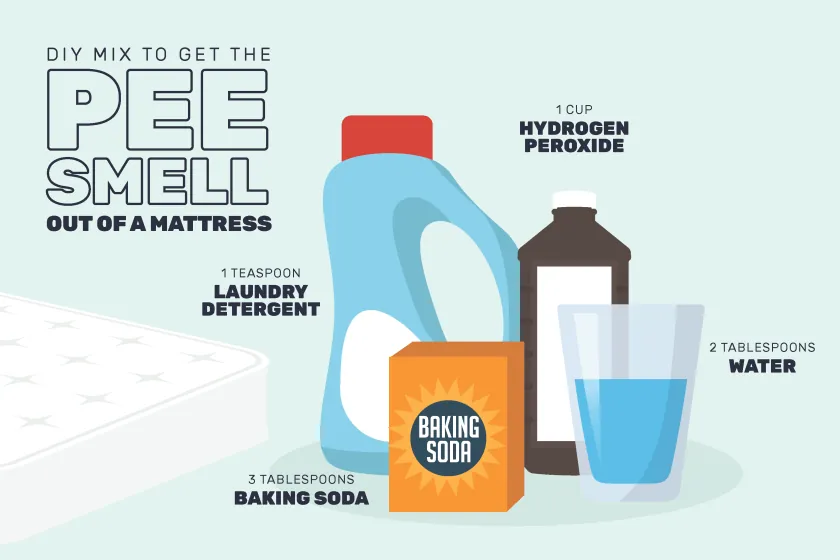
- Blot up the liquid. Press 6–8 paper towels onto the spot for 2 minutes. Change them when they stop soaking. You know it worked when a fresh towel comes up almost dry. This step takes about 5 minutes and removes the most urine with the least spread.
- Spray cool water into the foam. Fill the spray bottle with 500 ml of cool water and spray the whole stain plus 5 cm (2 inches) around it. Don’t soak it to the core. The water dilutes the urine so the next step can reach it.
- Press the water out. Blot again with dry towels for 2–3 minutes. Repeat spray-and-blot once more. You’re flushing, not scrubbing. Two rounds is enough for a fresh spot; for an old stain, do three.
- Apply the enzyme cleaner. Read the bottle for the dilution and dwell time — most say to leave it wet for 10–15 minutes. Spray enough to cover the stain evenly. The enzymes need that wet time to work, so don’t wipe it off early.
- Let it sit, then blot dry. After the dwell time on the label, press out the extra liquid with towels. Don’t rinse with more water here — you’d wash the enzymes away before they finish.
- Sprinkle baking soda over the spot. Use about 1 cup (240 ml) for a hand-sized stain, more for a big one. Pat it in gently. It pulls moisture up and holds the odor while the mattress dries.
- Leave it for 8–12 hours. Overnight is fine. The baking soda should feel dry and crusty when you come back. If it’s still damp, give it more time.
- Vacuum the powder off. Use the brush tool and go slowly over the area. You know it’s done when no white powder lifts and the surface feels dry to a light touch.
- Dry the mattress with air. Stand it on its side near an open window with a fan blowing across it for 12–24 hours. A cool hairdryer helps on the surface only — keep it moving and never hold it in one spot.
- Check before you remake the bed. Press a dry paper towel hard into the spot. If it comes up damp or smells, repeat steps 2–8 once. Don’t put sheets back on a damp mattress.
How to tell the cat pee cleanup worked
The check you can trust is a paper towel pressed hard into the foam, not your nose. A dry towel that comes up clean and odor-free after 24 hours of drying means the job is done. Smell near the surface fades fast, but urine deep in the foam keeps releasing odor for days — so judge after the mattress is fully dry, not before.
A second sign: the cat’s behavior. If your cat stops sniffing or scratching at that spot, the scent markers are gone. Cats return to old pee spots because they can still smell them, and a clean mattress breaks that loop.
Signs it needs another round: a faint smell that comes back when the room warms up, a ring mark that’s still visible after drying, or a paper towel that comes up damp after 24 hours. Any one of these means urine is still in the core. Repeat steps 2–8 once, then dry again.
If two full rounds leave a smell, the urine has gone too deep for surface cleaning. That’s the catch — foam thickness and how long the pee sat decide whether a home fix can reach it. A mattress soaked for more than a day usually needs a professional, or replacing the mattress.
When the cat pee cleanup goes wrong
| What happened | Why | What to do |
|---|---|---|
| Smell returns after a week | Urine still in the foam core | Repeat enzyme steps, dry longer |
| Dark ring stays on fabric | Water spread the stain wider | Blot drier, treat ring edge again |
| Foam feels stiff or crumbly | Too much water soaked in | Stop, dry fully, call a pro |
| Cat pees there again | Scent marker not fully gone | Enzyme clean again, use a cover |
| Cleaner bleached the fabric | Strong cleaner on a dyed cover | Test patch first time |
| Mattress still damp after 24 hours | No airflow, cool room | Fan plus open window, more time |
The dark ring is the one people misread. It isn’t a second stain sitting on top of the first. It’s the outer edge of the wet patch, where diluted urine dried and left its solids behind.
So treating the middle again does nothing. Work the edge instead, and keep the patch small so you don’t push a new ring outward.
The stiff, crumbly foam row is the one to take seriously. That texture means the foam itself is breaking down, not just staying wet. More cleaner won’t bring it back.
If the mattress is under warranty, check the terms before you call anyone. Some policies exclude damage from liquids, and you want to know that before a technician visits.
One more case worth knowing: if the smell is only at the seams and never in the middle, the urine likely ran down rather than soaked in. Treat the seam line and the edge, and skip the full-surface soak.
How often to clean a cat pee mattress
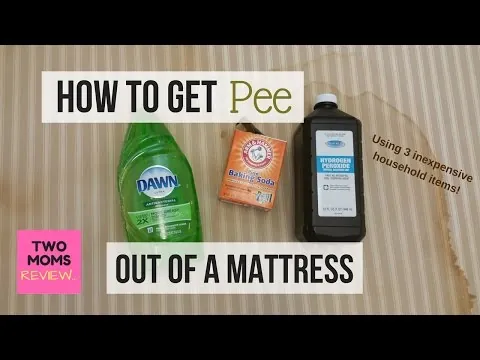
Clean a fresh spot the same day you find it — waiting even 24 hours lets urine reach deeper foam and makes the job twice as hard. After that, do a full enzyme clean once a month only if your cat keeps returning to the same spot. A one-time accident needs one clean, not a schedule.
Two things change the timing most. First, how wet the mattress got: a small spray dries in 12 hours, a soaked corner needs 24. Second, the room: a warm, dry room with airflow halves the drying time compared with a cool, closed bedroom. If you can’t dry it in a day, don’t start — a damp mattress grows mildew, and that smell is harder to remove than the pee.
The monthly rhythm is for a cat that has picked one corner and keeps going back to it. If the returns stop for a few weeks, drop the schedule and treat the next accident as a one-off.
A cat that sprays a new spot each time is a different case. That’s a marking pattern, not a favorite corner, and cleaning on a calendar won’t fix it. Watch where the spots land for a week before you decide which rhythm you’re on.
Frequently asked questions
Can I use vinegar alone to clean cat pee from a mattress?
No — vinegar helps with surface odor but doesn’t break down uric acid crystals. It’s a good first rinse, not the fix. Use vinegar to neutralize surface salts, then follow with an enzyme cleaner that targets the crystals. Vinegar alone leaves the deep smell, and your cat will still find the spot.
Why does my mattress still smell after cleaning?
The urine reached the foam core and the cleaner never got that deep. Surface cleaning only touches the top layer. Spray cool water to flush, then enzyme cleaner, and dry for a full 24 hours. If the smell survives two rounds, the pee is too deep for a home fix.
How long does it take to get the smell out?
Most fresh spots smell clean within 24 to 48 hours, counting drying time. Older stains can take two rounds over 2–3 days. The smell goes when the mattress is fully dry, so airflow matters more than the cleaner. A cool, closed room can double that time.
Is it safe to sleep on the mattress after cleaning?
Yes, once it’s fully dry and the baking soda is vacuumed off. Don’t sleep on a damp mattress — moisture grows mildew. Wait until a pressed paper towel comes up dry. If you used a strong cleaner, check the label for any waiting time before use, and air the room well.
What happens if I just cover the stain with a mattress protector?
The smell stays and gets stronger. A protector traps moisture and odor under it, and the urine keeps sitting in the foam. Your cat can still smell it and will likely pee there again. Clean first, then use a waterproof protector to stop the next accident reaching the foam.
Does baking soda really remove cat pee smell?
It absorbs moisture and holds odor while the mattress dries, but it doesn’t destroy the uric acid. Baking soda is the drying and odor-holding step, not the cleaner. Use it after the enzyme treatment, leave it 8–12 hours, then vacuum. On its own, it only hides the smell for a while.
How much enzyme cleaner should I use on one spot?
Enough to cover the stain plus 5 cm (2 inches) around it, at the dilution on the label — usually one part cleaner to one or two parts water. A hand-sized stain needs about 50–100 ml of mixed solution. More isn’t better: extra liquid just soaks deeper and takes longer to dry.
Can I machine wash a mattress cover with cat pee on it?
Yes, most removable covers can be washed, but check the care label first — some are spot-clean only. Wash on the warm setting your label allows, with a normal amount of detergent, then air dry or tumble on low. Don’t put a cover back on a damp mattress, or the smell returns.
Conclusion
One last thing: if your cat keeps peeing in the same place, the mattress isn’t the real problem. A vet check is worth it, because repeated accidents can point to a health issue or stress. Clean the mattress, then look at why it happened.