
Laminate floors are easy to clean — a dry mop or vacuum every few days, and a slightly damp mop with a pH-neutral cleaner once a week, takes about 15 to 30 minutes for one room. The job rates easy on the difficulty scale. The one thing you must have before you start is the maker’s own care instructions, because the wear layer on your boards decides how much water they can take.
Cost is low: a microfiber mop, a vacuum or soft brush, and a bottle of laminate-safe cleaner. Your total depends on what you already own, so check the cleaner’s label for the words “laminate safe” and a pH near neutral (around 7) before you buy. If you’re not sure of a price, check the shelf label or the maker’s own site.
Water that sits on it can reach the core through the seams and swell it. That’s why the method below keeps moisture to a minimum.
What you need to clean laminate floors
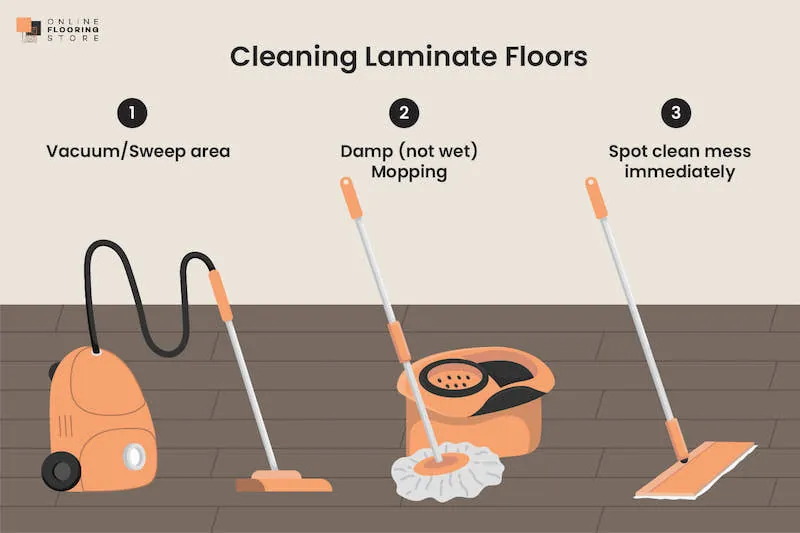
| Item | How much | Why it’s needed | A substitute |
|---|---|---|---|
| Microfiber mop | 1, with 2 pads | Holds little water, lifts dust | none — don’t swap this |
| pH-neutral laminate cleaner | 1 bottle, diluted per label | Cleans without dulling the wear layer | Mild dish soap, 1 drop per quart |
| Vacuum with hard-floor head | 1 | Removes grit before it scratches | Soft broom |
| Two buckets | 2, if using a bucket method | Keeps rinse water clean | Spray bottle |
| Dry microfiber cloths | 2 to 3 | Dries seams fast | Old cotton towels |
| Felt pads for furniture legs | 1 pack | Stops scratches between cleans | none — don’t swap this |
| Doormats | 1 inside, 1 outside | Traps grit at the door | none — don’t swap this |
Before you clean laminate floors
- Vacuum or sweep first. Grit under a damp mop acts like sandpaper on the wear layer, and that scratch doesn’t come out.
- Move chairs and small items off the floor. Lift furniture rather than dragging it — dragging is where deep scratches come from. If a piece is too heavy to lift alone, slide a felt pad or a folded towel under each leg and move it with a helper.
- Check the maker’s care guide or the warranty sheet. Some brands list cleaners they approve, and using a wrong one can affect a warranty claim. Keep the guide with your home paperwork, since the approved list can change between product lines.
- Test your cleaner on one hidden board, like inside a closet, and wait 10 minutes. If the surface looks dull or cloudy, don’t use it on the rest. Cloudiness usually means the product is leaving a film or attacking the finish, and more wiping won’t fix it.
- Never flood the floor. If a spill or a flood needs more than a damp mop — standing water, a leaking appliance, a soaked rug — that’s a job for a water-damage or flooring professional, not a DIY step.
How to clean laminate floors, step by step
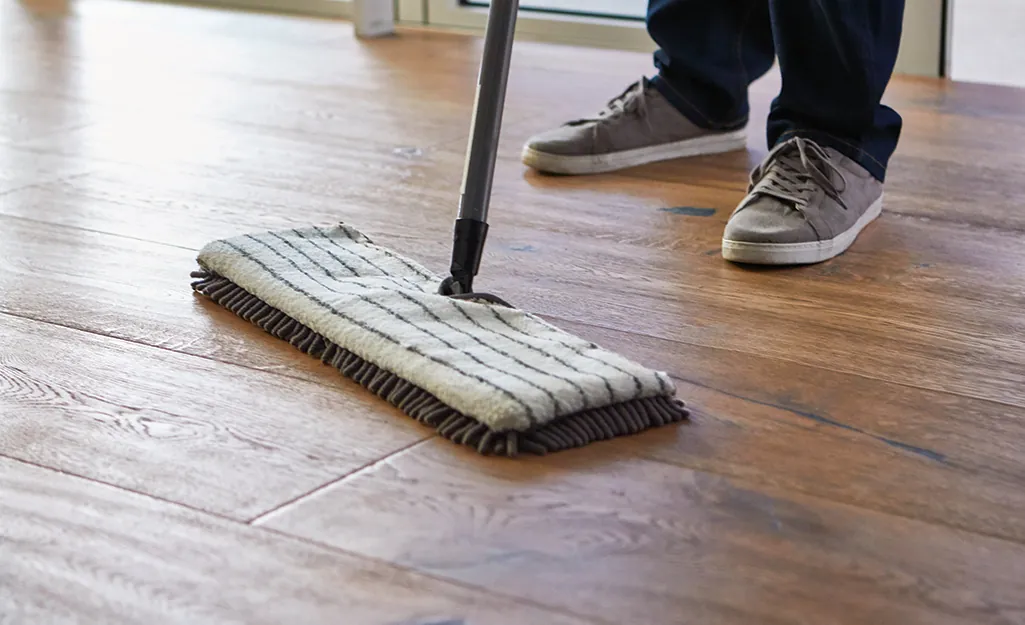
Clear the room. Move chairs, bins and loose rugs out, and lift what you can’t move onto felt pads. This takes about 5 minutes for a normal room. You know it worked when the floor is fully open and nothing is left standing on it.
Vacuum the whole floor with a hard-floor head, or sweep with a soft broom. Go along the boards, not across the seams, and don’t forget corners and under the edges of cabinets. Two to three minutes per small room is normal. It worked when you see and feel no grit left on the boards.
Mix the cleaner. Follow the bottle: most laminate cleaners want about 1 capful or the stated dose per quart of water. Use warm water, not hot. You know it’s right when the water is clear to slightly cloudy and not foamy.
Wring the mop until it’s barely damp. Squeeze it hard, or spin it, until no water drips when you lift it. A mop that drips is too wet for laminate. This is the step that decides whether the job goes well.
Mop in small sections, about 4 by 4 feet at a time. Go with the boards, not across them, so water doesn’t push into the seams. Rinse the mop pad in clean water every section or two. Move on when the section looks evenly clean.
Dry as you go. Run a dry microfiber cloth over each section right after mopping, especially near seams and edges. This takes seconds per section and stops water sitting. It worked when the boards feel dry, not tacky.
Treat spots separately. For a sticky mark, spray a little cleaner on a cloth and wipe just that spot, then dry it. Don’t scrub hard with an abrasive pad — that dulls the wear layer. Check the spot in good light before you move on.
Do the edges and corners last. Use a cloth or a soft brush along baseboards and in corners, where a mop can’t reach. Wipe dry right away. You know it’s done when no dark line of dirt is left along the wall.
Let the floor air-dry fully before walking on it. In normal room conditions that’s about 10 to 15 minutes after a damp mop; in humid weather it takes longer. It worked when the surface is dry to a bare foot.
Put furniture back only when the floor is dry. Slide felt pads under legs first. Check the pads are still stuck before you set anything down.
How to tell the laminate floor is clean
The floor is clean when it looks evenly colored under a light held at a low angle, with no cloudy patches and no dull streaks. Run your hand across a board: it should feel smooth and dry, not tacky, and a dry white cloth wiped over it should come up clean. Those are the checks you can trust.
Another sign: the seams look tight and flat. If a seam looks slightly raised, water may have got in — stop mopping and let that area dry for a full day before you use any water near it again.
A second round is needed when a dry cloth still lifts dirt after one pass, or when you can see footprints or dull patches in raking light. That usually means the mop was too dry or the cleaner was too weak, not that the floor is ruined. Go over that section again with a freshly rinsed pad.
Don’t use shine or smell as your test. A floor can look fine and still have water sitting in a seam. The dry-cloth check and the flat seam are the honest signs.
If a dull patch stays after two passes, the wear layer may have been damaged by an earlier harsh cleaner or an abrasive pad. That’s a surface problem, not dirt, and no amount of mopping fixes it.
If something goes wrong with laminate floors
| What happened | Why | What to do |
|---|---|---|
| Boards look cloudy or streaky | Too much cleaner or a waxy product | Rinse with a barely damp mop, then dry |
| A seam looks raised or puffy | Water reached the core | Stop all wet cleaning, dry the area, call a flooring pro |
| Scratches appear after cleaning | Grit dragged under the mop | Vacuum first next time, add doormats |
| Floor feels sticky after drying | Cleaner residue left behind | Rewipe with plain water, then dry |
| Surface dulls in one patch | Abrasive pad or harsh cleaner | Accept it or ask a pro about refinishing |
| Edges near the wall stay dark | Damp mop pushed water to the edge | Wipe edges by hand and dry right away |
A raised seam is the one problem on this list you shouldn’t try to fix yourself. Laminate is a printed surface over a core board, and once water swells that core the board can’t flatten again. Drying it stops the damage from spreading, but the puffy edge stays.
If the swelling is confined to one board near a doorway or a sink, a flooring pro may be able to swap that single plank. Matching the print and locking a new board into the old run is the hard part, and it’s why most people call someone in.
Cloudiness and stickiness are usually the same mistake at different strengths: too much product, or the wrong one. Rinse and rewipe with plain water before you assume the finish is worn out.
Scratches that show up right after cleaning are almost always grit, not the mop. Check the mop head itself too, since a trapped grain of sand keeps scratching every time you use it.
How often to clean laminate floors
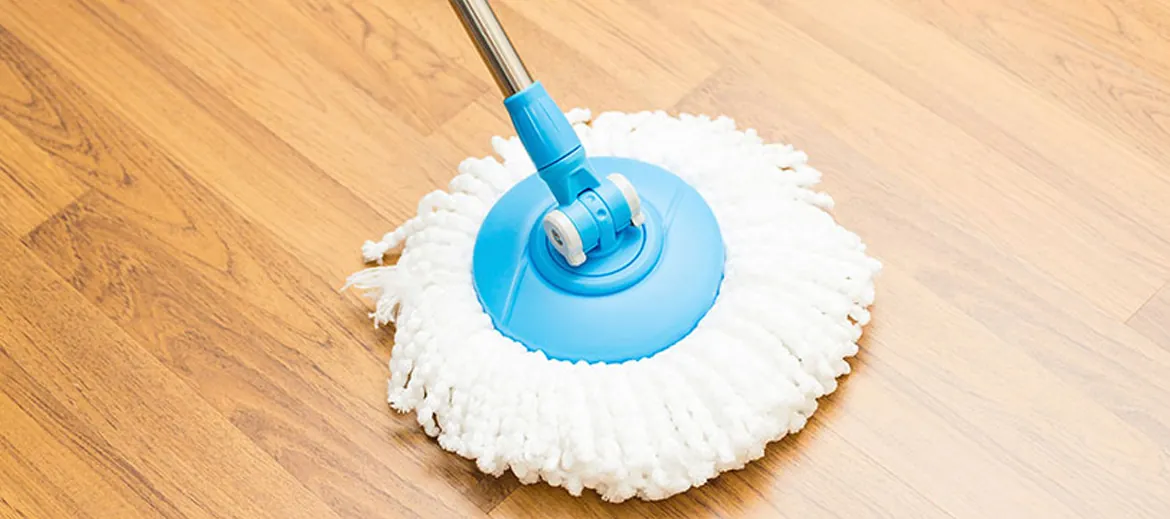
Vacuum or dry-mop laminate floors every 2 to 3 days in a busy home, and damp-mop once a week. That weekly mop is the real clean — the dry passes in between just keep grit off the wear layer so it doesn’t scratch.
Two things move that number most. The first is foot traffic and pets: a home with a dog that comes in from a yard needs the dry pass daily, and the damp mop every 4 to 5 days. The second is weather and season. In wet or snowy months, grit and salt come in at the door, so dry-mop daily and keep a mat on both sides of the entry.
If someone in the home has allergies, more frequent dry passes help more than more water. If the floor is in a low-traffic room like a spare bedroom, once a week dry and once every 2 weeks damp is enough.
The check that settles it: run a dry white cloth over a board in the middle of the room. If it lifts grey dust, do a dry pass now. If it lifts sticky dirt, it’s time for the damp mop. Keeping dust down matters for the air in your home, which is a good reason not to skip the dry passes.
Frequently asked questions
Can you use a steam mop on laminate floors?
No — skip the steam mop. Steam pushes hot moisture into the seams, and laminate’s wood-fiber core can swell when water gets in. Most laminate makers say not to use one, and doing so can affect your warranty. Use a barely damp microfiber mop instead, and check your own maker’s care guide before you use any wet tool.
Why does my laminate floor look cloudy after mopping?
Too much cleaner or too wet a mop leaves a film that dries cloudy. Rinse the mop pad in clean water, wring it until it barely drips, and go over the floor with plain warm water. Then dry it with a microfiber cloth. If the cloudiness stays after two rinses, an earlier waxy product may have built up — a flooring pro can tell you if it’s removable.
How long does it take to clean a laminate floor?
About 15 to 30 minutes for one average room, including vacuuming and drying. A whole ground floor of 3 to 4 rooms takes 45 to 60 minutes with one person. The vacuum pass is the slow part. If the floor hasn’t been cleaned in weeks, add one extra damp pass, which adds about 10 minutes.
Is it safe to use vinegar on laminate floors?
No — keep vinegar off laminate. Vinegar is acidic, and repeated use can dull the clear wear layer over time. It also does nothing a pH-neutral laminate cleaner doesn’t do better. If you want a low-cost option, use a single drop of mild dish soap in a quart of warm water, and rinse well afterward.
What happens if water gets under laminate flooring?
The boards can swell, and the seam lifts or puffs up. That damage doesn’t reverse when the floor dries. Stop all wet cleaning in that area, dry it with a fan for a full day, and call a flooring professional to look at it. Small spills wiped up right away are fine — standing water is the real risk.
Does it matter which direction you mop laminate floors?
Yes — mop along the boards, not across them. Going across pushes water into the seams, which is exactly where laminate is weakest. Going with the boards lets the mop glide over the surface and keeps water on top, where you can dry it. It also gives you a straighter, more even finish.
Can I use a regular floor cleaner on laminate?
Only if the label says it’s safe for laminate. Many general floor cleaners leave a waxy film or contain acids that dull the wear layer. Look for “laminate safe” and a pH near neutral on the label. If the label doesn’t say, test it on one hidden board first and check for cloudiness after 10 minutes.
How do I get rid of scratches on laminate floors?
Light surface marks often come off with a soft pencil eraser or a cloth with a little laminate cleaner. Deep scratches that you can feel with a fingernail don’t come out — the wear layer is cut. For those, ask a flooring pro about a repair kit or a board replacement. Felt pads and doormats stop most scratches before they start.
Conclusion
If you’re unsure which cleaner suits your boards, check the maker’s website or call their support line before buying anything. Keep a small spill kit handy too, so a dropped glass of juice doesn’t sit long enough to seep into the seams.