
Cleaning stove burners comes down to matching the method to the burner type: sealed gas caps and grates soak in hot soapy water, electric coil elements get wiped (never dunked), and glass-top surfaces need a cooktop cleaner plus a razor scraper — never an abrasive pad. Most household buildup is food grease and carbon, and it lifts with degreaser, a non-scratch scrub sponge, and a little patience.
Key Takeaways
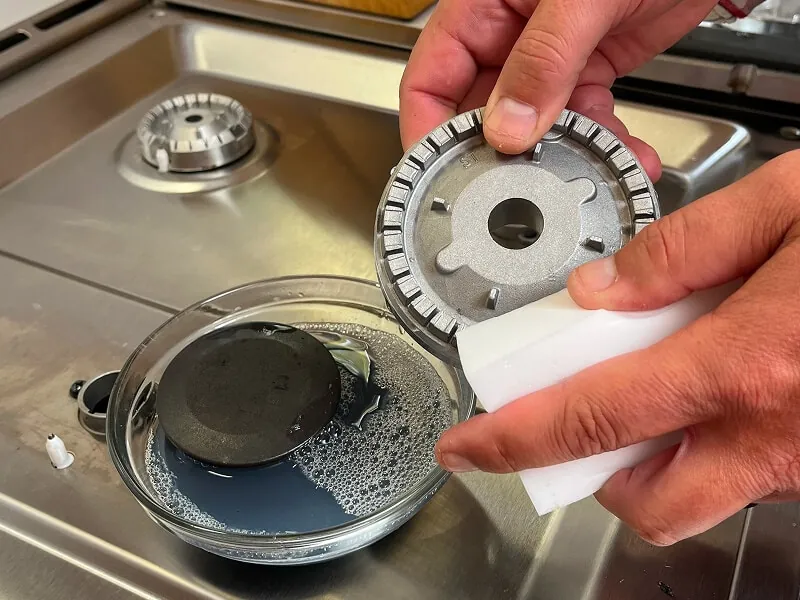
- Match method to burner type. Gas grates and caps can soak; electric coils, igniters, and glass tops cannot.
- Soak gas parts in hot, soapy water with a degreaser for 15–30 minutes before scrubbing.
- Never submerge electric coil elements or gas igniters — moisture ruins them.
- Baking soda paste lifts light carbon; a dedicated cooktop cleaner handles glass and ceramic.
- Clean burners when cool and confirm gas parts are fully dry before reassembly.
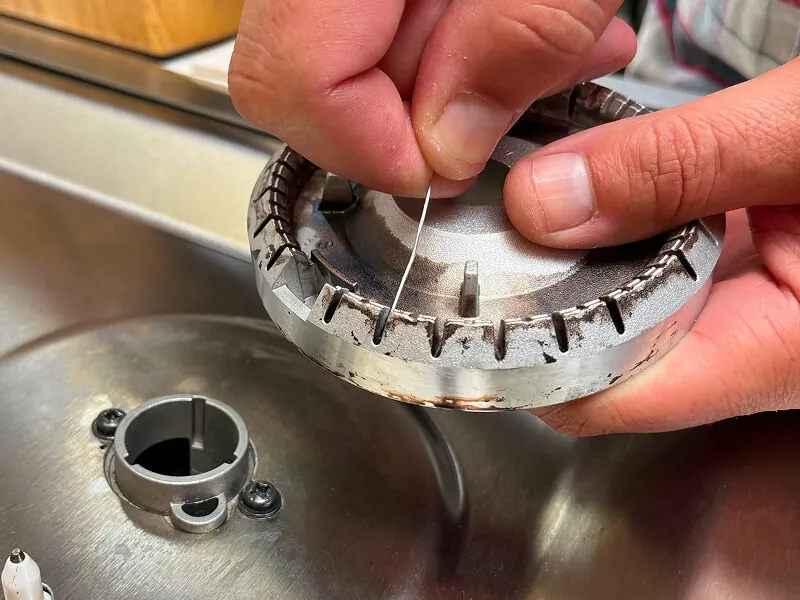
- Clogged gas ports cause uneven flames — clear them with a pin, not a knife.
Know Your Burner Type First
Before you touch anything, identify what you’re cleaning. The method, tools, and drying time all change with the burner. Cleaning the wrong component the wrong way is the fastest route to a damaged stove or a repair bill.
- Sealed gas burners: A cap and burner head sit over a sealed base. Grates and caps lift off; the base stays put.
- Open gas burners: Individual burner heads can often be removed for deeper cleaning.
- Electric coil burners: Plug-in elements lift out, and drip bowls sit underneath.
- Glass or ceramic cooktop: No removable burner parts — the surface itself is the burner.
- Induction cooktop: Same as glass/ceramic for cleaning purposes, but treat the surface gently to protect it.
Pro Tip: Snap a photo of the burner assembly before disassembly. Reassembly is far easier when you have a reference, especially with multi-part gas burners.
Gather the Right Supplies
You don’t need a cabinet full of specialty products. A short list covers nearly every burner type.
| Supply | Best For | Notes |
|---|---|---|
| Dish soap + hot water | Gas grates, caps, drip bowls | The workhorse soak |
| Degreaser (kitchen-grade) | Baked-on grease on metal parts | Follow label dilution |
| Baking soda | Light carbon, paste scrubbing | Gentle abrasive |
| Non-scratch scrub sponge | Most surfaces | Avoid steel wool on glass |
| Old toothbrush | Burner ports, crevices | Reaches where sponges can’t |
| Razor scraper | Glass/ceramic cooktops | Hold at a shallow angle |
| Cooktop cleaner | Glass, ceramic, induction | Formulated for the surface |
| Microfiber cloths | Final wipe-down | Lint-free finish |
Skip abrasive powders and steel wool on glass and ceramic — they scratch the surface permanently. For stainless steel trim, use a cleaner labeled safe for stainless.
Step-by-Step: Cleaning Gas Burners
This is the most common job, and the one with the most removable parts. Work when the stove is completely cool.
- Remove the grates, burner caps, and burner heads. Lift straight up; don’t twist or pry.
- Soak metal parts. Place grates and caps in a sink or basin of hot water with a few drops of dish soap and a splash of degreaser. Let them sit 15–30 minutes.
- Scrub the grates. Use a non-scratch sponge or a stiff brush. For heavy carbon, make a baking soda paste (three parts soda to one part water) and scrub.
- Clear the burner ports. Once the burner head is out, inspect the small holes around its edge. Clogged ports cause uneven or weak flames. Clear them with a toothbrush, a straight pin, or a paper clip — never a knife tip, which can widen or damage the openings.
- Wipe the burner base. Use a damp cloth with degreaser around the sealed base. Don’t flood it with water; liquid can seep toward the igniter or gas orifice.
- Dry everything completely. Water left in ports or on igniters can prevent lighting. Air-dry, then towel-dry the ports.
- Reassemble and test. Confirm caps sit flat and aligned, then light each burner to check for an even ring of flame.
Warning: Never soak a gas igniter or the burner base itself. Moisture in the ignition circuit is a common cause of a burner that won’t light after cleaning.
Cleaning Burner Grates Without a Soak
If your sink is too small or the grates are too heavy, lay them on a towel in a bathtub or use a large plastic bin. Alternatively, spray them with degreaser, let them sit 10 minutes, and scrub in place on newspaper. Cast-iron grates benefit from a light coat of cooking oil after drying to slow rust — but only a thin film, wiped nearly dry.
Step-by-Step: Cleaning Electric Coil Burners
Electric coils are simpler but less forgiving of moisture.
- Unplug the stove or switch off the breaker for safety.
- Lift out the coil elements. Grip the element and pull straight out of its socket — don’t yank the cord at an angle.
- Remove the drip bowls underneath and soak them in hot soapy water.
- Wipe the elements with a damp cloth only. Never submerge a coil element; trapped moisture damages the internal wiring.
- Scrub drip bowls with a sponge and baking soda paste for burned-on rings.
- Dry everything thoroughly before pushing elements back into their sockets. A damp socket can cause poor contact or a short.
- Wipe the reflector area under the bowls with a degreaser-dampened cloth.
Warning: If a coil element is cracked, blistered, or no longer heats evenly, replace it rather than clean it. Cleaning won’t fix a failing element, and a damaged coil can be a fire risk.
Cleaning Drip Pans That Won’t Come Clean
Heavily scorched drip bowls sometimes resist scrubbing. A paste of baking soda and water left on the stain for 20–30 minutes softens carbon. For chrome bowls with stubborn rings, a gentle cleanser labeled safe for chrome works; avoid oven cleaner on chrome, which can pit the finish. If a bowl is rusted through or the chrome is flaking, replacement bowls are inexpensive and fit by model number.
Step-by-Step: Cleaning Glass and Ceramic Cooktops
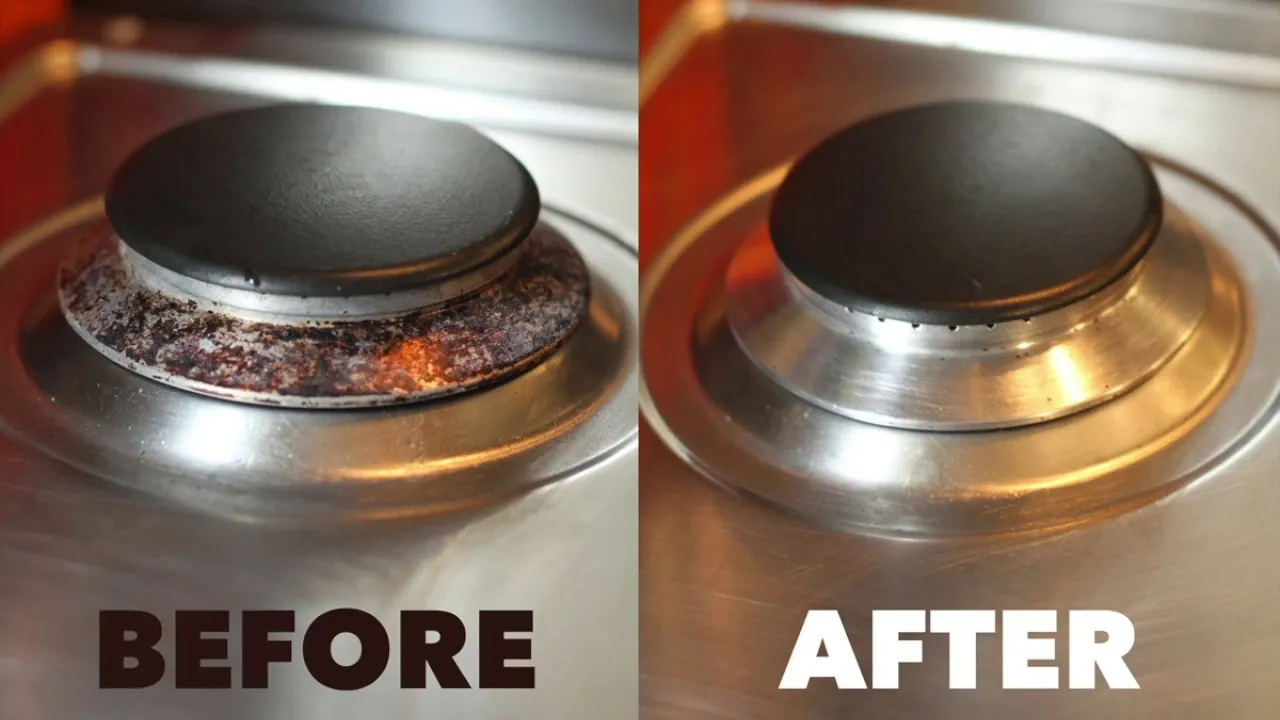
There are no removable burners here — the surface is the cooking zone. The goal is lifting residue without scratching.
- Let the surface cool completely. Cleaning a hot cooktop risks burns and can bake cleaner onto the glass.
- Scrape off heavy residue with a razor scraper held at a shallow angle (about 30–45 degrees). Push, don’t dig.
- Apply a cooktop cleaner made for glass or ceramic. Let it sit a few minutes per the label.
- Scrub with a non-scratch pad in circular motions over the soiled rings.
- Wipe clean with a damp microfiber cloth, then buff dry to prevent streaks.
- Remove burned-on spots with a baking soda paste and a soft pad; rinse well.
Pro Tip: A cooktop cleaner plus a razor scraper handles most glass-top messes in one pass. Avoid circular scrubbing with anything abrasive — it leaves a haze that shows under kitchen lighting.
Protecting the Surface After Cleaning
A thin coat of cooktop polish or a dedicated surface conditioner can make future cleanup easier and reduce sticking. Wipe it on, let it haze, buff off. Don’t use it on gas grates or coil elements — it’s for glass and ceramic only.
How to Clean Burners Without Harsh Chemicals
If you’d rather skip strong degreasers, these approaches work for routine buildup:
- Baking soda + water paste for light carbon on grates and drip bowls.
- White vinegar + dish soap spray for fresh grease; let it sit 5 minutes.
- Hot water soak alone loosens most everyday food residue on gas parts.
- Steam — place a heat-safe bowl of water on a low gas flame briefly to loosen splatter, then wipe (only on gas, and watch it closely).
These methods are slower on heavy, baked-on carbon. For years of accumulated buildup, a kitchen degreaser is the practical choice; natural methods are best for maintenance cleaning.
Common Mistakes to Avoid
- Soaking igniters or coil elements. Moisture is the top cause of post-cleaning ignition problems.
- Using steel wool on glass or ceramic. It scratches permanently.
- Reassembling wet gas parts. Trapped water in ports causes sputtering flames.
- Cleaning a hot surface. Burns and baked-on cleaner are both real risks.
- Poking burner ports with a knife. It widens holes and alters flame shape.
- Skipping the burner base. Grease around the base causes smoke and odors even after grates are clean.
Troubleshooting After Cleaning
| Problem | Likely Cause | Fix |
|---|---|---|
| Gas burner won’t light | Wet igniter or ports | Dry fully; air out 10–15 min |
| Uneven or weak flame | Clogged ports or misaligned cap | Clear ports; reseat cap flat |
| Yellow, lazy flame | Dirty ports or wrong cap position | Clean ports; check cap alignment |
| Electric coil heats unevenly | Damp socket or failing element | Dry socket; replace element if damaged |
| Glass top still streaky | Cleaner residue or wrong cloth | Buff with clean microfiber |
| Burner smells like gas | Unseated cap or debris at orifice | Reseat parts; ventilate; call a pro if it persists |
Warning: If you smell gas after reassembly and the cap is seated correctly, stop and ventilate the kitchen. Persistent gas odor is a service call, not a cleaning problem.
How Often Should You Clean Burners?
A practical schedule, adjusted to how much you cook:
| Frequency | Task |
|---|---|
| After each messy cook | Wipe glass top; spot-clean spills |
| Weekly | Wipe grates and burner bases; clear visible splatter |
| Monthly | Soak grates and caps; scrub drip bowls |
| Every 3–6 months | Deep-clean ports, bases, and under grates |
| As needed | Razor-scrape glass top; replace damaged parts |
Heavy frying and wok cooking speed up grease buildup, so shorten the intervals. Light use can stretch them.
When to Call a Professional
Cleaning handles grease, carbon, and clogged ports. It doesn’t fix:
- A burner that won’t light after drying and reseating parts
- A persistent gas smell
- A cracked cooktop surface
- Damaged wiring, sockets, or a failing coil element
- Flame problems that continue after ports are cleared
For gas appliances, any work beyond cleaning and reseating parts should go to a licensed technician. If you’re unsure whether your stove has a sealed or open burner system, the owner’s manual identifies it — and manufacturer guidance on cleaning materials should be followed when it conflicts with general advice. The U.S. Consumer Product Safety Commission publishes home fire safety guidance that reinforces keeping cooking surfaces free of grease buildup.
Frequently Asked Questions
Can I put stove grates in the dishwasher?
Some cast-iron and enameled grates are dishwasher-safe, but many manufacturers advise against it because harsh detergents and prolonged moisture can dull enamel or promote rust on cast iron. Check your owner’s manual first. Hand-soaking in hot soapy water is the safer default for most grates.
How do I clean burned-on food from a glass cooktop?
Scrape with a razor scraper at a shallow angle, apply a cooktop cleaner, and scrub with a non-scratch pad. For stubborn spots, a baking soda paste left for several minutes softens the carbon. Never use steel wool or abrasive powders, which scratch the glass permanently.
Why won’t my gas burner light after cleaning?
The most common cause is moisture in the igniter or burner ports. Dry the parts thoroughly and let them air out 10–15 minutes. Also confirm the burner cap is seated flat and aligned. If it still won’t light with dry, correctly seated parts, it may need professional service.
Can I clean electric coil burners with water?
Wipe the coil elements with a barely damp cloth, but never submerge them or let water enter the socket area. The drip bowls beneath can be soaked and scrubbed normally. Dry everything completely before plugging the elements back in.
How often should I deep-clean stove burners?
Roughly every three to six months for most households, plus a quick wipe weekly and a soak monthly. Cooks who fry often should shorten that interval. Regular light cleaning prevents the baked-on carbon that makes deep cleaning difficult.
Is it safe to use oven cleaner on burner grates?
It depends on the grate material. Oven cleaner can damage chrome, aluminum, and some enameled finishes. Cast iron generally tolerates it, but the manufacturer’s guidance should win. For most grates, hot water, dish soap, and a degreaser are enough.
Conclusion
Start with the burner type in front of you, soak what’s removable, keep moisture away from igniters and coils, and dry everything before reassembly. A monthly soak plus a weekly wipe keeps the deep clean short — and your flames even.