
Cleaning a mouth guard takes about 5 minutes a day and 10 minutes once a week. You’ll need soft soap, a soft toothbrush, and a denture or retainer cleaning tablet. The daily job is easy. The weekly deep clean is medium. The one thing you must have before you start is the case your guard came in — a clean, vented box, not a glass of water on the sink.
A new guard costs money to replace, so check the price of a spare at your dentist’s office before you start scrubbing. Costs for a replacement vary a lot by type — a store-bought boil-and-bite guard is cheap, a custom lab guard is not — so ask your dentist what a remake would cost for your exact guard. That figure is the real reason to be careful.
What you need to clean a mouth guard
| Item | How much | Why it’s needed | A substitute | |—|—|—|—|—| | Soft-bristle toothbrush | 1, used only for the guard | Scrubs plaque off without scratching | none — don’t swap this | | Mild liquid soap | 1 drop per clean | Lifts film and bacteria | dish soap, unscented only | | Denture or retainer tablet | 1 tablet per 1 cup water | Deep clean once a week | none — don’t swap this | | Vented storage case | 1 | Lets air in, keeps shape safe | a clean box with holes | | Lukewarm water | 1 cup | Rinses and soaks | cool water, never hot | | Clean towel | 1 small | Drying surface, no lint | paper towel, unprinted |
The brush is the one item worth buying new rather than borrowing. A brush that has already been in your mouth carries the bacteria you’re trying to remove, and one that has cleaned a sink or a pair of shoes will scratch the surface you’re trying to protect.
Keep the guard’s brush apart from the family’s. A dab of nail polish on the handle, or a spot in a different cup, is enough to stop it drifting back into the bathroom holder.
On the soap, unscented means unscented. A dish soap with lemon or a fragrance leaves a taste in the plastic that lingers through the next wear, and the guard sits against your gums for hours.
For the tablet, check the box says retainer or denture cleaner rather than a general-purpose sterilizing tablet. The two aren’t the same product, and only one is made to sit against soft plastic and then go in your mouth.
If your case has no vents, leave the lid open instead of hunting for a new one. Air moving through matters more than the holes themselves.
Before you start cleaning a mouth guard
- Take it out of the case first, and empty the case. Old water in the bottom of the case is where most of the trouble starts. Rinse the case and leave it open to air while you work.
- Never use hot water. Hot water can warp a thermoplastic guard, and a warped guard won’t fit. Lukewarm or cool water only — if it feels warm on your wrist, it’s too hot for the guard.
- Keep your regular toothbrush out of this job. The brush you clean the guard with should be a separate one. Using your own brush spreads the same bacteria back and forth.
- Check the guard for cracks before you clean it. Hold it up to a light. A hairline crack will get worse with scrubbing, and a cracked guard no longer protects your teeth.
- The step people skip: reading the maker’s cleaning note. Custom guards and store-bought guards are made of different plastics, and some makers say not to soak their product. Check the paperwork that came with your guard, or ask your dentist.
If your guard has a crack, a loose wire, or a broken clasp, stop. That’s a repair job for your dentist, not a cleaning job. Don’t try to glue or melt it back together.
How to clean a mouth guard, step by step
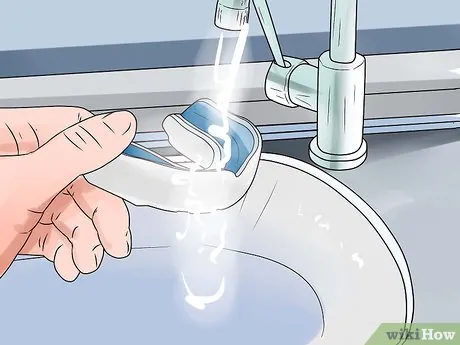
- Rinse the guard under cool running water for 10 seconds. This lifts loose saliva and food bits before you scrub. You’ll know it worked when the surface feels slick, not sticky, under your finger.
- Put 1 drop of mild liquid soap on the wet brush. One drop is enough for a full guard. More soap just means more rinsing later.
- Brush every surface for 60 seconds. Use small circles on the inside, the outside, and the biting edge. Set a timer — 60 seconds feels longer than you think. The step worked when you’ve covered all three surfaces once.
- Rinse under cool water until no soap bubbles remain. Hold it up and look for foam in the grooves. Any soap left behind will taste bitter and can irritate your mouth.
- Shake off the extra water and pat it dry with a clean towel. Don’t rub hard — a light pat is enough. A dry guard going into a dry case is the goal.
- Once a week, soak the guard in 1 cup of lukewarm water with 1 denture or retainer tablet. Leave it for the time on the tablet packet — usually 15 to 20 minutes, but read your own box. The soak lifts buildup a brush can’t reach.
- Rinse the guard well after the soak. Soak water isn’t meant to stay on the guard. Rinse for 10 seconds under cool water and check that the tablet smell is gone.
- Scrub the storage case with the same brush and soap. The case holds the same bacteria as the guard. Rinse it and leave it open to air-dry fully.
- Put the guard back in the dry case with the lid open or vented. A closed, damp case grows bacteria fast. Airflow is what keeps it clean between uses.
- Wash your hands before and after. This takes 20 seconds and stops you moving bacteria from your hands to the guard.
Your dentist or the guard’s maker is the best source for care and replacement advice.
How to know your mouth guard is clean
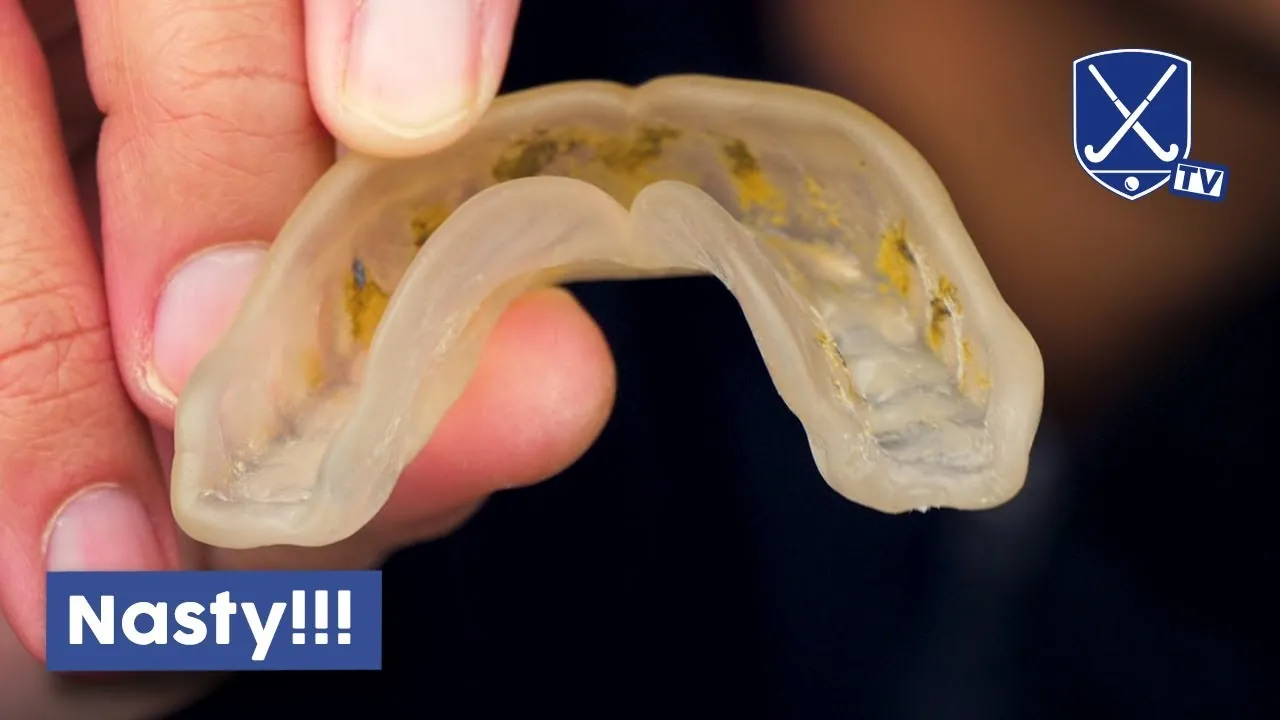
A clean guard feels smooth when you run a finger across it, with no film or grit in the grooves. Hold it up to a light: you should see clear plastic, not a cloudy haze or white spots. Cloudy spots are mineral and bacteria buildup, and they mean the guard needs a soak, not just a brush.
A clean guard also has no smell when you take it out of the case. If it smells sour, the case is likely the problem, not the guard. Wash the case with soap and warm water (the case, not the guard) and let it air-dry fully.
The signs it needs a second round: a film that comes back within a day, white chalky patches that don’t rinse off, or a guard that tastes bitter even after rinsing. Any of these means repeat the weekly soak once, then check again. If the patches stay after two soaks, show the guard to your dentist — some plastics stain permanently and the guard may need replacing.
One thing to watch: a guard that fits looser than before isn’t a cleaning problem. That’s a sign it has warped or worn, and no amount of cleaning will fix the fit.
If something goes wrong with your mouth guard
| What happened | Why | What to do |
|---|---|---|
| Guard turned cloudy or white | Mineral and bacteria buildup | Soak once with a tablet, then recheck |
| Guard feels loose or won’t sit right | Warped by hot water or wear | Stop using it, see your dentist |
| Sour smell won’t go away | Case is holding bacteria | Wash case with soap and warm water, air-dry it |
| Guard cracked while brushing | Too much pressure or old plastic | Stop brushing it, ask for a replacement |
| Mouth feels irritated after cleaning | Soap or tablet residue left on | Rinse again for 20 seconds, then recheck |
| Guard tastes bitter all day | Soak water not rinsed off | Rinse under cool water until taste clears |
A cloudy guard that stays cloudy after one tablet soak is a different problem from a cloudy guard that clears. If the film lifts, it was buildup and you caught it in time. If the plastic itself has gone white and dull, the surface has worn and no soak will bring it back. Ask your dentist whether it still fits well enough to protect your teeth.
A loose guard is worth a phone call rather than a workaround. A guard that rocks when you bite down no longer sits where it was molded, and wearing it that way can put uneven pressure on your teeth and jaw. Keep it out of your mouth until your dentist has looked at it.
If your mouth stings after cleaning, rinse the guard again and give it a few minutes. Irritation that fades was residue. Irritation that returns every time you wear it, or comes with redness or swelling, isn’t something to keep rinsing away — call your dentist.
How often to clean a mouth guard
Clean your guard every time you take it out — that’s the daily brush and rinse, about 5 minutes. Do the deeper tablet soak once a week, for 15 to 20 minutes, if you wear the guard nightly. That’s the routine most dentists give for a guard worn every night.
Two things change that schedule most. First, how much you wear it: a guard worn all day for sports needs the brush after every use and a soak twice a week, because it spends more time in a warm, wet mouth. Second, how clean your case stays: if the case sits closed and damp, you’ll need to wash the case every 2 to 3 days, not weekly.
A guard you wear only now and then sits differently. It isn’t collecting saliva all day, but it also isn’t getting rinsed, so the film dries on. Brush it before it goes back in the case, and soak it before the next wear rather than on a fixed day of the week.
If you’re sick, keep up the daily brush and rinse and wash your hands before handling the guard. Check the maker’s note or ask your dentist whether your guard can be replaced cheaply.
One more thing worth knowing: a guard that has started to smell or taste off needs the soak brought forward, not just a longer brush. That’s your signal that the routine has slipped, not that the guard is finished.
Frequently asked questions
Can I clean my mouth guard with toothpaste?
No — skip toothpaste for the guard. Most toothpaste is abrasive, and the grit scratches the soft plastic, which gives bacteria more places to hide. Use 1 drop of mild liquid soap instead. Save the toothpaste for your teeth.
Why does my mouth guard smell bad even after cleaning?
The case is the usual cause. A closed, damp case holds bacteria that move back onto the guard within hours. Wash the case with soap and warm water, let it air-dry fully, and store the guard with the lid open or vented.
How long should I soak my mouth guard?
Soak for the time printed on your tablet packet — usually 15 to 20 minutes, but check your own box because brands differ. Follow the time on the packet. Set a timer so you don’t forget it in the cup.
Is it safe to clean a mouth guard with vinegar?
It’s safe for most hard plastics but risky for soft ones. Vinegar is acidic and can break down soft guard material over time. Ask your dentist first if your guard is custom-made.
What happens if I use hot water on my mouth guard?
It can warp the plastic, and a warped guard won’t fit your teeth. A guard that doesn’t fit stops protecting you and can even shift your teeth. Use lukewarm or cool water only — if the water feels warm on your wrist, it’s too hot.
Does it matter which toothbrush I use on my mouth guard?
Yes — use a soft-bristle brush kept only for the guard. A hard brush scratches the plastic, and sharing your own toothbrush moves bacteria both ways. Keep the guard brush in a separate spot and replace it every 3 to 4 months, same as a normal brush.
How long does a mouth guard last if I clean it well?
Most guards last a few years with good care, but that range moves with how often you wear it and the plastic type. A nightly guard worn with clean hands and a dry case tends to sit at the top of that range. Check yours each month for cracks and loose fit.
Can I put my mouth guard in the dishwasher?
No — dishwasher heat warps most guards. The water in a dishwasher runs much hotter than a guard can take, and the drying cycle adds more heat. Hand washing with cool water and mild soap is the only safe method for a guard you want to keep.
Conclusion
If your guard still tastes or smells off after a week of this routine, or if you notice cracks or a loose fit, it’s worth checking in with your dentist. They can tell you whether it’s time for a replacement, and you’ll catch small problems before they turn into bigger ones.