
Scorched food at the bottom of a pot looks permanent, but in most cases it lifts off with a soak, a gentle simmer of water and baking soda, and a non-abrasive scrub — no steel wool required. The method depends on what the pot is made of and how deep the burn goes, and the single most common mistake is attacking a burnt pan with high heat and metal tools before the crust has softened. Below is a material-by-material plan, from the fifteen-minute fix for a light scorch to the overnight rescue for a black, rock-hard layer.
Key Takeaways
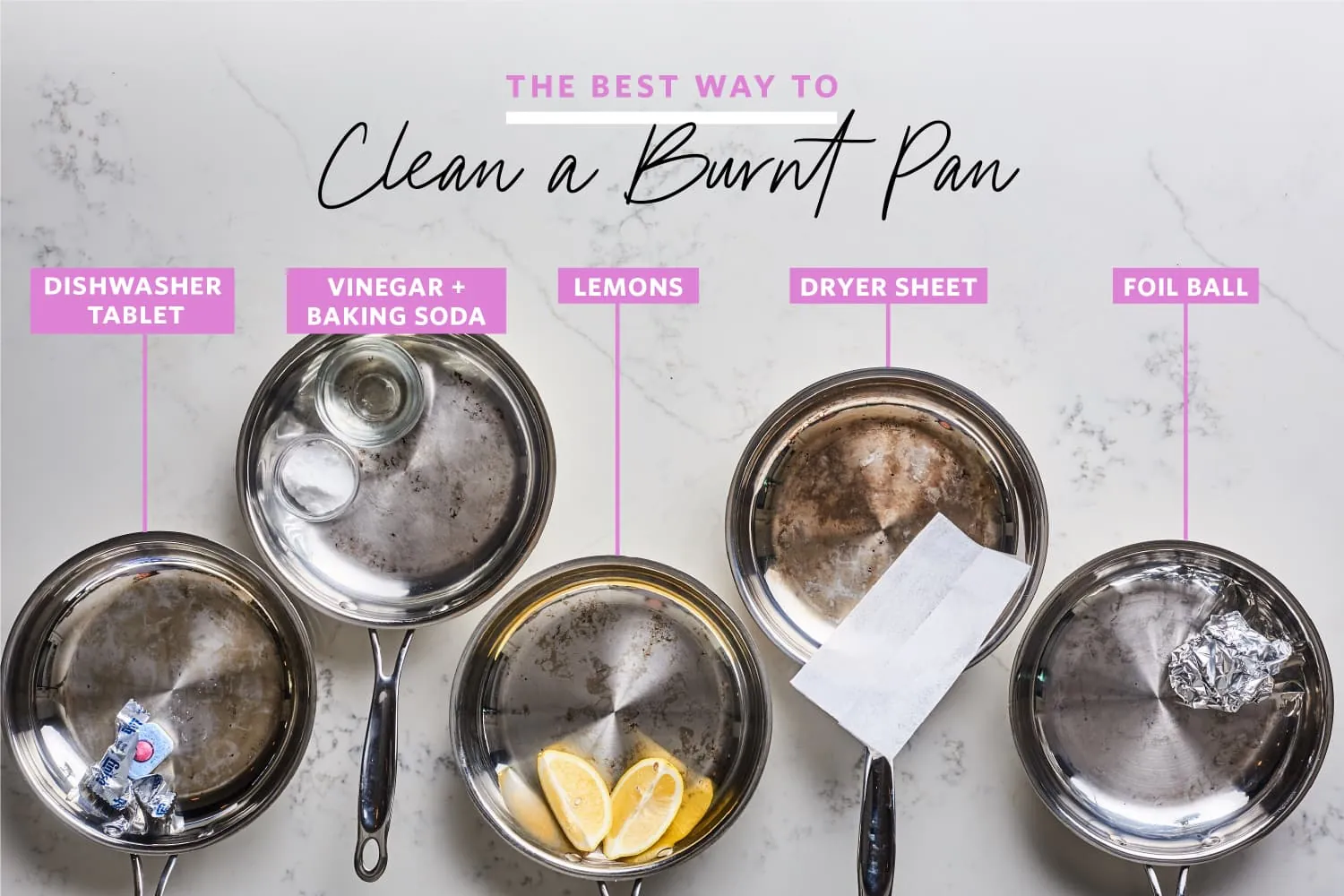
- Start with the least aggressive method — hot water and dish soap — and escalate only if the crust resists.
- Baking soda and water simmered in the pot is the workhorse fix for stainless steel, enamel, and most nonstick exteriors.
- Never use steel wool, abrasive cleansers, or metal scrapers on nonstick, ceramic, or enameled interiors.
- Aluminum reacts with strong alkalis and acids; use a vinegar-and-water boil instead of a long baking soda soak.
- A burned smell or dark smoke while cooking means the pan is too hot — lower the heat and use a wider pan.
- If the nonstick coating is scratched, flaking, or peeling, stop cooking with that pan; the coating is compromised.
First, Identify the Pot’s Material
The cleaning method you choose depends entirely on what the pot is made of, because the same scrub that rescues a stainless steel skillet can ruin a nonstick surface in seconds. Check the bottom of the pan or the manufacturer’s packaging before you start.
Common Cookware Materials and Their Tolerance
| Material | Safe Methods | Avoid |
|---|---|---|
| Stainless steel | Baking soda boil, vinegar soak, gentle abrasive pads | Chlorine bleach (can pit the surface) |
| Nonstick (PTFE-coated) | Dish soap soak, baking soda paste, soft sponge | Steel wool, metal utensils, high heat |
| Hard-anodized aluminum | Vinegar-and-water boil, dish soap soak | Strong alkali soaks, dishwasher detergent |
| Bare aluminum | Vinegar-and-water boil, cream of tartar | Baking soda soaks (darkens the metal) |
| Enameled cast iron | Baking soda boil, dish soap soak | Metal scrapers, thermal shock (cold water on a hot pot) |
| Bare cast iron | Coarse salt scrub, boiling water, re-season after | Long soaks (promotes rust) |
| Ceramic (nonstick ceramic) | Baking soda paste, soft sponge | Abrasives, sudden temperature change |
| Copper | Salt-and-vinegar paste, commercial copper cleaner | Harsh abrasives that scratch the tin lining |
If you’re unsure, treat the pot as the most delicate material it could be. A soft sponge and a baking soda paste won’t hurt any surface; a metal scrubber will.
The Gentle Method: Soak First
Before you reach for anything abrasive, give the burnt layer a chance to rehydrate. Carbonized food is mostly dried organic matter, and water softens it.
- Fill the pot with enough warm water to cover the burnt area by an inch.
- Add a few drops of dish soap.
- Let it sit for 15–30 minutes for a light scorch, or overnight for a heavy one.
- Pour out most of the water and use a soft sponge or nylon brush to lift the loosened crust.
This alone resolves a surprising number of “burnt” pots — especially those where food merely stuck and scorched at the edges rather than forming a solid black layer. Dish soap lowers the water’s surface tension so it penetrates the crust faster.
Pro Tip: If the crust is still firm after soaking, don’t scrape harder — move to the baking soda simmer below. Force is what scratches surfaces; chemistry does the work instead.
The Baking Soda Simmer (Best All-Round Fix)
This is the method to try first on stainless steel, enamel, and the exterior of nonstick pans. It works because baking soda (sodium bicarbonate) is mildly alkaline, which helps break down the bonds holding carbonized food to the metal, and the gentle simmer lifts the crust from below.
Step-by-Step
- Add water to the pot — about an inch above the burnt line.
- Stir in 2–3 tablespoons of baking soda per quart of water. It will fizz briefly; that’s normal.
- Set the pot on the stove over medium heat and bring it to a low simmer.
- Simmer for 10–15 minutes. Don’t let it boil dry.
- Remove from heat and let it cool until you can safely handle it.
- Pour off the water and scrub with a nylon brush or non-scratch scouring pad. Most of the crust should slide off.
- For stubborn spots, make a thick paste of baking soda and a little water, spread it on the residue, and let it sit for 20 minutes before scrubbing.
Warning: Never simmer a dry pot or leave the baking soda solution unattended — it can boil dry, scorch again, and damage the pan’s interior coating. Stay in the kitchen while it simmers.
For Heavy, Black, Rock-Hard Burns
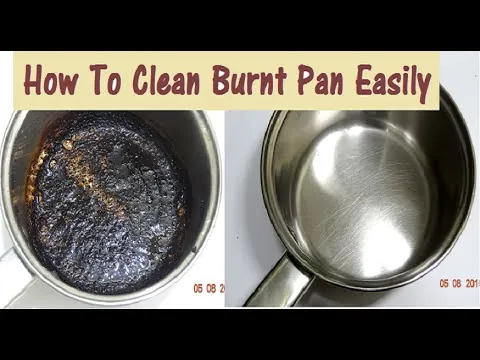
When the crust has turned into a solid black layer that a simmer won’t touch, you need a longer soak and a stronger alkaline solution.
- Fill the pot with water and add ½ cup of baking soda plus ½ cup of white vinegar. (They neutralize each other partly, but the fizzing action helps lift debris.)
- Bring to a boil, then turn off the heat and let it sit for several hours or overnight.
- In the morning, the crust should be soft enough to lift with a wooden spoon or nylon scraper.
- Repeat if a thin dark ring remains, then finish with a baking soda paste.
For stainless steel only, a commercial carbonized-food remover (often sold as a “burned pot cleaner” or “stainless steel cleaner”) is an option. Follow the label exactly and test on a small area first. Never use these on nonstick or aluminum.
Material-Specific Methods
Nonstick Pans
Nonstick coatings scratch easily, so skip every abrasive step. Soak in warm soapy water, then use a baking soda paste and a soft sponge or silicone scraper. If food is truly welded on, simmer water with a tablespoon of baking soda for five minutes, cool, and wipe.
Never use steel wool, scouring pads, or metal utensils. If the coating is scratched or peeling, the pan should be replaced — a damaged nonstick surface no longer releases food properly and can flake into your meal.
Stainless Steel
Stainless is the most forgiving. You can use the baking soda simmer, a vinegar soak, or a non-scratch scouring pad. For tough spots, a paste of baking soda and water left for 30 minutes works well. Avoid chlorine bleach, which can pit stainless steel over time.
Enameled Cast Iron (Dutch Ovens)
Enamel is glass-like and chips if struck or thermally shocked. Never plunge a hot enameled pot into cold water. Soak with baking soda and warm water, simmer gently if needed, and scrub with a nylon brush. Don’t use metal scrapers or abrasive cleansers. If the enamel is chipped, the pot is still usable for some tasks but the exposed iron underneath can rust — check with the manufacturer.
Bare Cast Iron
Cast iron is porous and holds seasoning (a polymerized oil layer). For burnt spots, scrub with coarse salt and a little oil, or boil water in the pan for a few minutes and scrape with a wooden spatula. Dry thoroughly on the stove and re-oil. Never soak cast iron for long periods — it rusts.
Aluminum
Bare aluminum darkens when exposed to strong alkalis like baking soda, so use a vinegar-and-water boil (equal parts) instead, or a paste of cream of tartar and water. Don’t use dishwasher detergent on bare aluminum.
Copper
Use a paste of salt and white vinegar, or a commercial copper polish. Rinse well and dry immediately. Avoid harsh abrasives that can scratch the tin lining on the interior.
What Not to Do
- Don’t use steel wool or metal scouring pads on nonstick, ceramic, enamel, or copper. They scratch permanently.
- Don’t pour cold water into a hot pot. Thermal shock can warp metal and crack enamel.
- Don’t use oven cleaner on cookware interiors — it’s caustic and can damage coatings and leave residue.
- Don’t scrape with a knife or metal spatula. Use wood, silicone, or nylon.
- Don’t ignore a burnt smell. It usually means the heat was too high or the pan was too small for the food’s moisture content.
Warning: If you smell acrid, chemical fumes (not just burnt food) while cleaning or cooking, ventilate the kitchen and stop. Overheated nonstick coatings can release fumes that cause flu-like symptoms; the CDC notes that polymer fume fever can result from overheating PTFE-coated pans. Keep pans below their rated maximum temperature and never preheat an empty nonstick pan on high.
Preventing the Next Burnt Bottom
The best cleaning method isn’t needing one. Most burnt pots come from a handful of avoidable habits.
Causes of Burnt Bottoms
- Heat too high. Most cooking happens at medium or medium-low. High heat is for boiling water and searing, not simmering sauces.
- Pan too small for the food. A crowded pan traps moisture and steams instead of browning, then scorches when the liquid evaporates.
- Dry pan, no fat. Food sticks and burns when there’s no oil or liquid between it and the metal.
- Sugar-heavy sauces. Sugar burns at a lower temperature than many cooks expect; keep the heat low and stir.
- Walking away. A pot of milk, oatmeal, or beans left unattended will scorch at the bottom within minutes.
Practical Habits
- Match the burner size to the pan’s base — a small pan on a large burner heats unevenly.
- Stir starches (rice, oatmeal, mashed potatoes) frequently and keep the heat low.
- Use a heat diffuser under thin-bottomed pots for gentle simmering.
- Let the pan heat before adding oil, then add food — this reduces sticking.
- For tomato or wine-based sauces, use a heavy-bottomed pot; acidity plus high heat accelerates scorching.
How to Tell If the Pot Is Ruined
Most burnt pots are salvageable. A few signs mean it’s time to replace:
| Sign | What It Means | Action |
|---|---|---|
| Nonstick coating scratched, flaking, or peeling | Coating is compromised | Replace the pan |
| Deep pitting or rust on stainless | Corrosion has weakened the surface | Replace if rust persists after cleaning |
| Enamel chipped to bare iron | Exposed iron will rust | Use for non-acidic foods or replace |
| Warped base (rocks on the counter) | Uneven heating, poor contact with burner | Replace — it will burn food repeatedly |
| Persistent burnt smell after cleaning | Residue remains in pores or coating | Re-clean; replace if it persists |
Cleaning Products That Actually Help
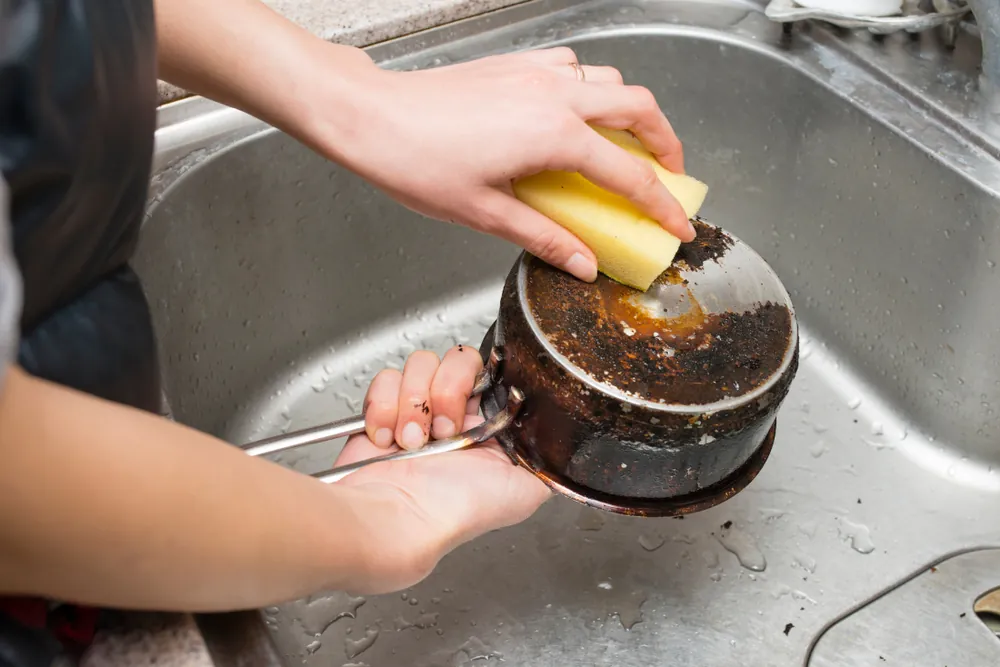
You don’t need a cabinet full of specialty cleaners. A short list covers nearly every situation:
- Baking soda — the most versatile; alkaline, mildly abrasive, safe on most surfaces.
- White vinegar — cuts mineral deposits and loosens light burns; use on aluminum and copper.
- Dish soap — the first line of defense for soaking.
- Nylon brush or non-scratch scouring pad — the safe scrubbing tool for coated pans.
- Silicone or wooden scraper — lifts softened crust without scratching.
- Cream of tartar — for aluminum and stainless brightening.
- Commercial carbonized-food remover — for stainless steel only, when home methods fail.
Skip oven cleaner, bleach, and steel wool for cookware interiors. They cause more damage than the burn did.
Frequently Asked Questions
Can I use baking soda on a nonstick pan?
Yes, in a gentle form. Make a paste of baking soda and water, apply it to the burnt area, let it sit for 15–20 minutes, and wipe with a soft sponge. Don’t scrub hard or use baking soda as a dry abrasive on nonstick — it can dull the coating over time. A short simmer with a tablespoon of baking soda in water is also safe.
How do I clean a burnt pot without scrubbing?
Soak it. Fill the pot with warm water and dish soap for 30 minutes, or simmer water with baking soda for 10–15 minutes, then let it cool. The crust softens and lifts with a light wipe. For heavy burns, an overnight soak in baking soda and water does most of the work while you sleep.
Is it safe to cook in a pot that was burnt?
Usually yes, once it’s clean. A burnt bottom doesn’t make the pot unsafe unless the coating is damaged. If the nonstick surface is scratched or flaking, or enamel is chipped, stop using it for cooking. Stainless steel and cast iron are fine after cleaning.
Why does food keep burning on the bottom of my pot?
The most common causes are heat set too high, a pan with a thin or warped base, and food that’s too starchy or sugary for the heat level. Use medium or lower heat, stir frequently, and match the pan size to the burner. A heavy-bottomed pot distributes heat more evenly.
Can I put a burnt pot in the dishwasher?
Check the manufacturer’s instructions first. Stainless steel and some enameled cookware are dishwasher-safe, but bare aluminum, cast iron, and most nonstick pans are not. Dishwasher detergent is abrasive and can dull finishes. Hand-washing is safer for any pot you have just rescued from a burn.
Does vinegar really remove burnt food?
Vinegar helps loosen light burns and mineral deposits, especially on aluminum and copper, but it isn’t a strong carbon remover on its own. For heavy burns, baking soda is more effective. Combining the two creates fizzing that can lift debris, but the alkaline soak does most of the work.
Conclusion
Once the pot is clean, dry it fully before storing, and give the interior a quick feel with your fingertips — any rough patch on a coated pan is your cue to retire it. Start with the gentlest soak tonight, and most burnt bottoms will be gone by morning.