
Wooden spoons, spatulas and boards stay safe to use for years if you clean them by hand in warm water with a little dish soap, rinse fast, and dry them standing up so air reaches every side. Never leave kitchen utensils soaking, and never put them in the dishwasher. That’s the whole method, and it takes about 2 minutes per utensil.
What this takes
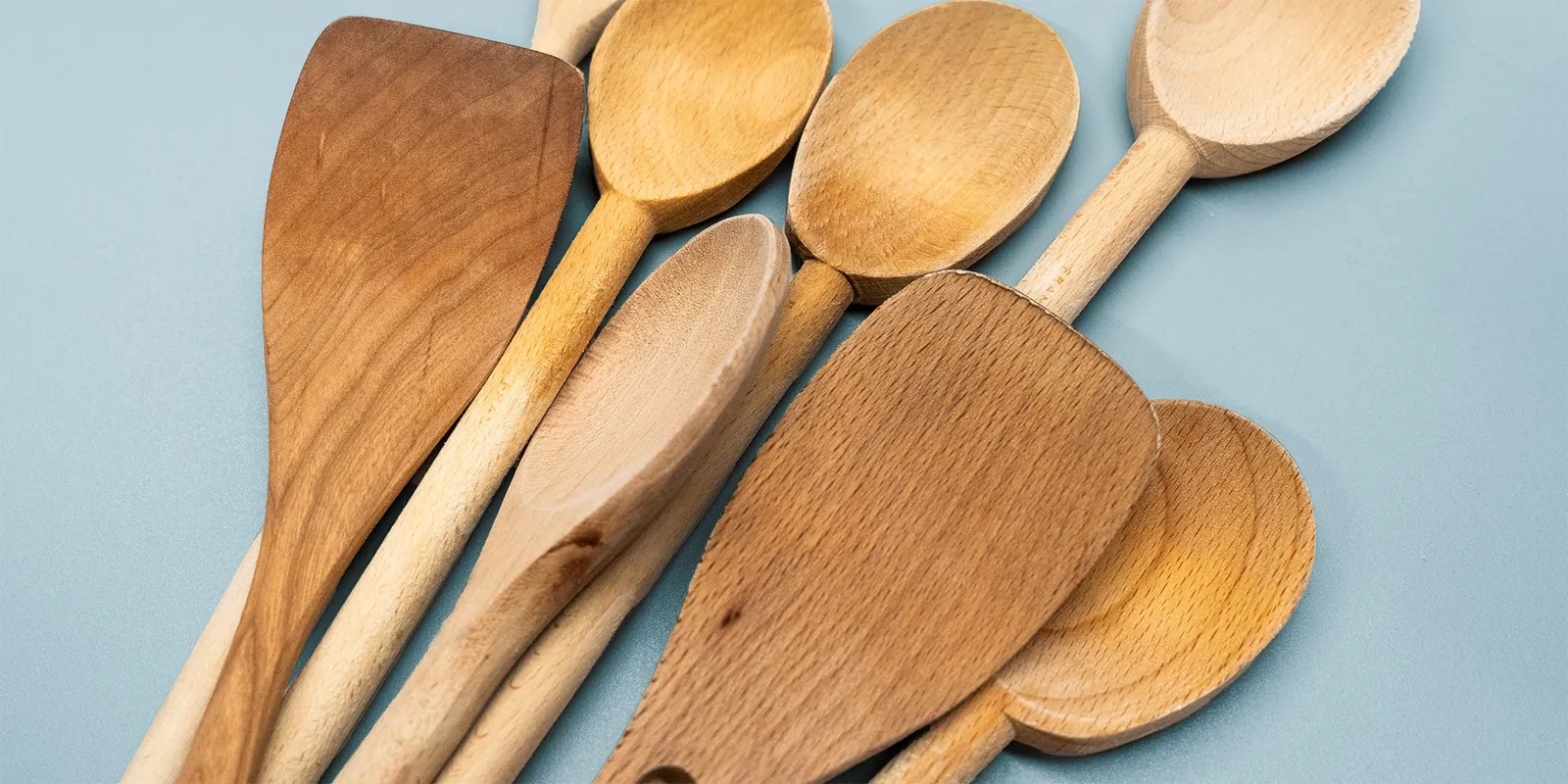
The wash itself takes 2 minutes per utensil. A full jar of spoons and spatulas takes about 10 minutes, plus drying time. You don’t need to buy anything if you already have dish soap, a soft sponge and a cloth.
Difficulty is easy, but the drying part needs care. The one thing you must have before you start is a place where the utensils can stand upright with air on all sides — a dish rack, a jar, or a clean towel with the handles propped up.
That drying spot matters more than it sounds. A spoon left flat on the counter stays wet underneath, and the wood keeps soaking it up. Standing it upright lets water run off both faces instead.
If your counter space is tight, a tall jar works as well as a rack. Put the handles in first so the working ends point up and air reaches the grain.
Cost is low: dish soap you already own, plus mineral oil if the wood looks dry. Check the oil’s label for its own instructions, and check the price at your local store rather than trusting any figure online.
What you need to clean wooden utensils
You probably own most of this already. The table shows what each item does and what you can swap it for.
| Item | How much | Why it’s needed | A substitute | |—|—|—|—|—| | Dish soap | 1 teaspoon per bowl of water | Lifts grease and food | none — don’t swap this | | Warm water | Enough to cover the utensil | Carries the soap | none — don’t swap this | | Soft sponge | 1 | Scrubs without scratching | Soft cloth | | Soft nail brush | 1 | Cleans spoon bowls and grooves | Old toothbrush | | Clean towel | 1 | Takes off surface water | Paper towels | | Dish rack or jar | 1 | Lets air reach all sides | Upright in a mug | | Mineral oil | 1 teaspoon per spoon | Feeds dry wood | Food-grade board oil |
The two items with no substitute are the ones that do the actual cleaning. Soap lifts the grease that water alone leaves behind, and warm water carries it off the wood.
Skip the soap and you’re only wetting the surface. Skip the warm water and the soap has nothing to move the grease into.
The swaps are for the tools around the washing, not the washing itself. An old toothbrush reaches into a spoon bowl better than a sponge, which is why it earns a place next to the nail brush rather than replacing it.
Keep the brush soft. Keep the brush soft. A stiff brush scratches the surface and raises the grain, and raised grain is where food and moisture settle afterward.
On the oil, buy food-grade only. Board oil sold for conditioning cutting boards is the same job, so you don’t need a second bottle.
Before you start cleaning wooden utensils
Get the sink ready before anything touches water. A few small moves now save the wood later.
- Scrape off food first. Tip solids into the trash or compost, not the sink. Wet crumbs turn into paste that pushes into the grain.
- Fill the bowl with warm water, not hot. Warm water is comfortable on your hands and is enough to carry the soap.
- Clear space to dry. Have your rack or jar ready before you wash. A utensil left flat on the counter stays wet on one side.
- Check for cracks. Run your thumb along the edge. A deep crack traps water and food, and that utensil should be retired.
- The step people skip: drying upright. Most damage comes from utensils left in a wet sink or stacked flat while damp.
If a utensil has black mold in a deep crack, or the wood is splitting, stop. That’s a replacement job, not a cleaning one.
How do you clean wooden kitchen utensils?
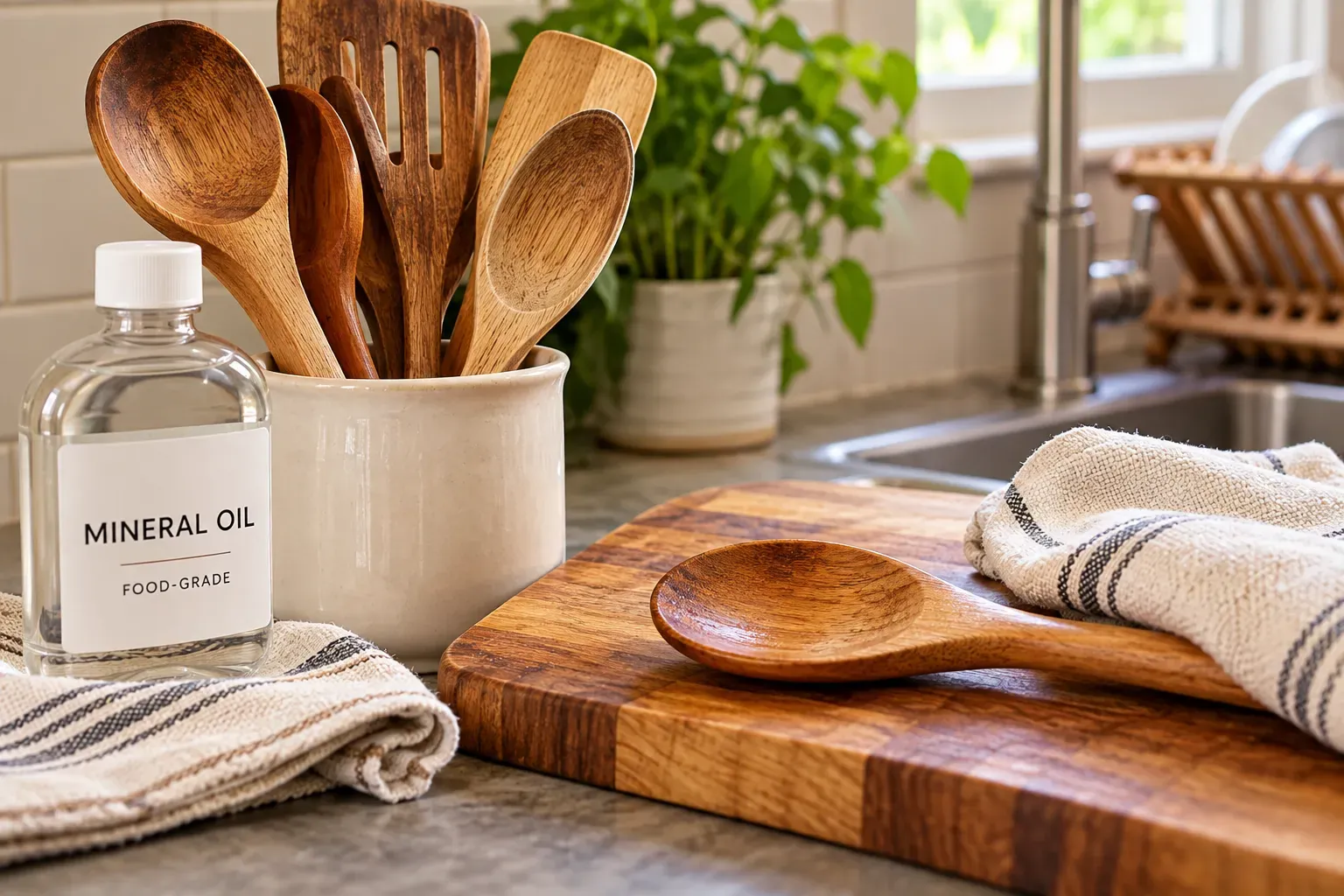
Work through these in order. Each step tells you how you know it’s done before you move on.
- Scrape off loose food with a spatula or the back of a knife. Get rid of every bit you can see. This takes about 30 seconds. You’re done when the surface looks clear of crumbs and sauce.
- Fill a bowl or the sink with warm water and add 1 teaspoon of dish soap. Swirl it once with your hand. The water should feel warm on your wrist, not hot. If it’s too hot to hold your hand in, add cold water.
- Wash one utensil at a time with the soft sponge. Scrub both sides and the handle for about 20 seconds each. Don’t scrub hard in one spot — you’ll raise the grain. Move on when the surface feels smooth, not tacky.
- Use the soft brush inside spoon bowls and around grooves. Small circles, about 10 seconds per bowl. Food hides in the curve where a sponge can’t press. The bowl is clean when you can’t feel any grit with a fingertip.
- Rinse under running warm water for 5 to 10 seconds. Turn the utensil so water runs off the ends. Rinse until the surface no longer feels slippery from soap.
- Shake off the water and pat dry with a clean towel. About 10 seconds per utensil. Press the towel into the spoon bowl. The surface should feel dry to the touch, not damp.
- Stand the utensil upright so air reaches every side. Handles down in a jar, or propped in a rack. Leave 2 to 3 hours for full drying; in a humid kitchen, allow longer.
- Check for dryness before you put it away. Touch the handle end and the bowl. If either feels cool and damp, give it more time. Storing a damp utensil in a drawer is how mold starts.
- Oil dry wood about once a month, or when water stops beading on the surface. Use 1 teaspoon of mineral oil per spoon. Rub it in with a cloth, wait 15 minutes, then wipe off what hasn’t soaked in.
- Store utensils upright in a jar or loose in a drawer. Never in a closed plastic box while any dampness remains. Air movement is what keeps wood healthy between washes.
How to tell your wooden utensils are clean and dry
Clean wood looks even in color and feels smooth under your thumb. Run a fingertip across the surface — no grit, no sticky patch, no film. The grain may rise slightly after washing, which is normal. A light rub with a fine pad once dry smooths it.
Dry wood is the real test. Touch the handle end and the deepest part of the spoon bowl. Both should feel room temperature and dry, not cool and damp. Water should bead on a well-oiled surface; if it soaks in right away, the wood needs oil.
Signs it needs another round:
- A faint food smell that stays after washing.
- Dark patches in the grain or along a crack.
- A sticky feel after drying.
- Water soaking in within seconds instead of beading.
If a dark patch doesn’t lift after a second wash with the brush, the stain has gone into the wood. That’s when you sand lightly with fine paper, wash again, dry fully, and re-oil. If the dark patch sits inside a crack, replace the utensil.
One thing that varies for every kitchen: how fast wood dries. A humid climate, a cold kitchen, or a utensil with thick handles all add hours. Read your own drying time by touching the wood, not by the clock.
If something goes wrong with wooden utensils
Most problems come from water sitting too long or heat that’s too high. The table matches each one to a fix.
| What happened | Why | What to do |
|---|---|---|
| Utensil smells sour | Left wet too long | Wash again, dry upright fully |
| Surface feels rough | Grain raised by water | Sand lightly, re-oil when dry |
| Dark spots in the grain | Moisture or food trapped | Scrub with brush, dry, re-oil |
| Handle cracked | Heat or long soaking | Retire it — cracks hold water |
| White haze on the wood | Soap residue left on | Rinse longer, dry, re-oil |
| Wood looks pale and dry | Oil worn off over time | Oil with 1 teaspoon, wipe excess |
Mold in a crack can’t be cleaned out safely. The USDA Food Safety and Inspection Service covers what to do when food contact surfaces are damaged — and for a cracked, moldy wooden spoon, the answer is to throw it out.
How often to clean wooden utensils
Wash wooden utensils after every use with raw meat, fish or eggs, and after anything sticky like dough or sauce. For a spoon that only stirred dry ingredients, a quick wipe is often enough, with a full wash once a day.
Two things move that schedule most. First, what the utensil touched: raw poultry or ground meat means wash right away, before you do anything else. Second, how humid your kitchen is. In a damp climate, utensils take longer to dry, so wash them earlier in the day when there’s time for full air drying.
Think about the whole set, not just the spoon in your hand. A wooden spatula that scraped a pan of chicken thighs needs the same immediate wash as a spoon that stirred the marinade. The board you carved on counts too, even if the meat only rested there a moment.
Where you live shapes this more than most people expect. A kitchen in coastal Florida or the Gulf Coast holds moisture in the air year-round, so a utensil left to drain on the counter may still be damp hours later. In a dry desert kitchen, the same utensil can be ready to put away much sooner.
Oil is a separate rhythm — about once a month, or whenever water stops beading. If you cook daily with the same spoons, check the bead test weekly and oil when it fails.
Related guides
Frequently asked questions
Can you put wooden utensils in the dishwasher?
No. Dishwasher heat and long soaking both damage wood, and the repeated wet-dry cycle raises the grain and opens cracks. Hand washing takes about 2 minutes per utensil, which is faster than the damage takes to show. If a wooden item says “dishwasher safe” on its own label, follow that label — but most plain wooden spoons and spatulas aren’t built for it.
Why did my wooden spoon turn black?
Black marks come from moisture and food trapped in the grain, usually from soaking or from drying flat. A light surface stain often lifts with a soft brush and a second wash. A black patch inside a crack can’t be reached, and that spoon should be replaced. Drying upright after every wash is what prevents it.
How long should you soak wooden utensils?
Zero minutes. Don’t soak them at all. Water pushes into the grain and swells the wood, and as it dries unevenly the utensil can warp or split. Wash, rinse and dry in one go — the whole wash takes about 2 minutes per utensil. If a utensil has already been soaked by accident, dry it upright for a full day before using it again.
Is it safe to use a wooden cutting board or spoon with cracks?
No. A crack holds water and food where a sponge can’t reach, and it can’t be cleaned out. Small surface lines are fine, but a crack you can feel with a fingernail is a replacement signal. The same goes for a spoon with a split bowl. Wood is safe when it’s whole and dry — not when it’s split.
How do you get smells out of wooden utensils?
Wash with warm water and dish soap, scrub the surface with a soft brush, then dry upright for a full day. Most food smells fade once the wood is fully dry. If the smell stays after that, the source is usually inside a crack, and the utensil should go. Never mask a smell with oil — oil seals it in.
Does it matter what oil you use on wooden utensils?
Yes. Use a food-grade mineral oil or a board oil sold for kitchen wood. Avoid cooking oils like olive or vegetable oil — they can turn rancid over time. Use about 1 teaspoon per spoon, rub it in, wait 15 minutes, then wipe off the excess. Oil once a month, or when water stops beading on the surface.
How long do wooden utensils last?
Anywhere from a few years to well over a decade, depending on how they’re washed and dried. The things that shorten life most are soaking, dishwasher cycles and storing damp. A utensil that’s washed by hand, dried upright and oiled monthly will usually outlast several plastic ones. Check yours for cracks each time you wash.
Can you sanitize wooden utensils with boiling water?
Don’t pour boiling water over them. The sudden heat can crack the wood and raise the grain. Warm water with dish soap is enough for everyday cleaning. For a utensil that touched raw meat, wash it right away with soap and warm water, rinse, and dry upright.
Conclusion
Once your utensils are dry, rub them with a little food-safe oil every few months to keep the grain from drying out and cracking. It’s a small habit that pays you back, and you’ll notice the difference the first time you pick up a spoon that’s been cared for.