
Suede is leather with a brushed, velvety surface, and cleaning it means lifting dirt off that surface without soaking it. You can clean a suede coat at home in about 30–45 minutes of hands-on work, using a suede brush, a suede eraser and a small amount of white vinegar for stains. The job is medium difficulty. Most of the time goes on drying, not scrubbing — a wet coat needs 24 hours or more in open air before you judge the result.
The one thing you must have before starting is a suede brush with soft brass or nylon bristles. Check the coat’s care label and any hangtag first; some suede is labeled “dry clean only,” and that label overrides every step below.
Rough cost for the supplies is modest — a brush and eraser together sit in the price of a couple of coffees — but check current prices at your local shoe repair shop or online retailer rather than trusting a figure here.
What you need to clean a suede coat

| Item | How much | Why it’s needed | A substitute |
|---|---|---|---|
| Suede brush | 1, soft brass or nylon | Lifts dirt and resets the nap | None — don’t swap this |
| Suede eraser | 1 block | Rubs out dry scuffs and marks | A clean pencil eraser, soft grade |
| White vinegar | 1 cup, diluted | Lifts water and oil marks | None — don’t swap this |
| Clean cloths | 3–4, white only | Blotting and wiping | Paper towels, unprinted |
| Distilled water | 1 cup, room temperature | Dilutes the vinegar | Cool tap water, low mineral |
| Spray bottle | 1, fine mist | Even, light application | A clean sponge, barely damp |
| Soft towel | 1 large | Dries the coat flat | None — don’t swap this |
Before you start on a suede coat
- Check the label first. “Dry clean only” means stop here. Take the coat to a cleaner who lists suede on their services, and ask what process they use before you hand it over.
- Empty every pocket and remove the belt, hood or any detachable trim. Loose items press marks into damp suede that won’t brush out later.
- Brush off dry dirt outside, not indoors. Loosened grit settles into the nap and grinds deeper if you work over it on a table.
- Test the vinegar mix on a hidden patch — inside the hem, about 1 inch of fabric. Wait 15 minutes. If the color darkens and stays dark, don’t use the mix on the visible coat.
- The step people skip is the test patch. Skipping it’s how a small mark becomes a pale ring across the whole front panel, and that ring usually needs a professional to fix.
Suede that’s badly stained, moldy, or has a tear at a seam is past home cleaning. Take it to a leather specialist or a cleaner trained in suede — a wrong product can strip the dye permanently.
How to clean a suede coat, step by step
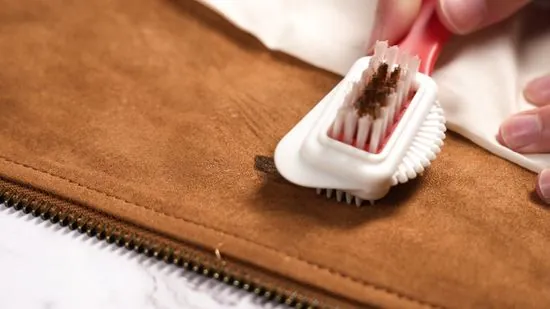
Brush the whole coat dry, in one direction. Use the suede brush with light strokes, about 2 minutes per panel. Work from the shoulders down so loosened dirt falls away. You know it worked when the nap stands up evenly and no dust puffs off.
Rub out scuffs with the eraser. Press the suede eraser onto each dry mark and rub in short strokes for 10–20 seconds. Brush the crumbs away after each one. The mark should fade or disappear; if it doesn’t move at all, it’s probably oil and needs step 4.
Mix 1 cup of distilled water with 1 cup of white vinegar. Pour it into the spray bottle. This ratio assumes ordinary 5% household vinegar — if yours is stronger, dilute it more. Shake once and label the bottle so nobody mistakes it for plain water.
Mist the mix lightly onto a cloth, never onto the coat. Hold the bottle about 6 inches from a white cloth and give 2–3 sprays. The cloth should feel damp, not wet. Pressing a soaking cloth into suede is what causes the stiff, crusty patches people complain about.
Blot each mark, working from the outside in. Press the damp cloth onto the stain for 5 seconds, lift, and repeat. Move inward in small circles so the edge of the mark doesn’t spread. Stop when the mark stops lifting — usually 3–5 blots for a fresh mark.
Wipe the whole coat with a barely damp cloth. Go over the panels in one direction, about 1 minute per panel, to even out any tide lines left by spot cleaning. Rinse the cloth and wring it hard so it stays only slightly damp.
Stuff the sleeves and body with clean towels. Roll the towels loosely and push them in so the coat holds its shape while drying. This is what stops creases setting into the suede as it dries.
Dry flat, away from heat, for 24 hours. Lay the coat on a dry towel in a room at normal temperature. Keep it off radiators, out of direct sun and away from a hair dryer — heat hardens suede. Check at 24 hours; damp weather can push it to 48.
Brush the nap back up once dry. Use the suede brush in one direction over the whole coat, about 2 minutes per panel. The surface should feel soft and even again. If a patch still feels stiff, repeat steps 4–6 on that patch only.
Hang the coat on a wide, padded hanger. Give it 24 hours hanging in open air before wearing or storing it in a closet. A wire hanger leaves shoulder marks that are hard to brush out later.
How to tell the suede coat cleaning worked
The coat is clean when the nap stands up evenly under your hand and no dust comes off when you brush it. Run your palm across a panel in one direction — it should feel soft and slightly rough, the same as an untouched area.
Hold the coat up to a window: color should look even, with no darker rings at the edges of where you cleaned. A faint tide line means the cloth was too wet or you stopped blotting too early.
Stains that need a second round usually look one of two ways. A mark that’s lighter but still visible after drying needs another pass with steps 4–6, this time blotting for 10 seconds instead of 5. A patch that feels stiff or crusty means too much liquid went in — dampen a cloth, blot the patch, and dry it flat again for 24 hours.
Check the seams and the collar first, because that’s where liquid pools. If the seam feels hard or the collar has lost its softness, the coat took on too much moisture and needs a slower dry, not more cleaning.
How much a suede coat can take depends on the finish it was given at the factory — some suede is treated to resist water, some isn’t, and the care label or the maker’s own care page is where you read which one you have. Two coats that look identical can react differently to the same vinegar mix.
If something goes wrong with suede coat cleaning
| What happened | Why | What to do |
|---|---|---|
| Dark ring after cleaning | Cloth was too wet | Dampen evenly, blot, dry flat 24 hours |
| Patch feels stiff and hard | Too much liquid soaked in | Blot with damp cloth, redry away from heat |
| Color faded in one spot | Vinegar too strong or rubbed hard | Stop cleaning, see a leather specialist |
| Mark spread wider | Blotted outward, not inward | Let it dry fully, then spot clean again |
| Nap flattened and shiny | Brushed against the grain | Brush one direction, light strokes |
| Coat still damp after 48 hours | Humid room or towels soaked | Change towels, move to drier room |
A dark ring is the most common of these, and it’s also the most fixable. It forms at the edge of the damp patch, where water carried dirt outward and then stopped.
Dampen a cloth and go over the whole ring, not just its line, so the wet edge moves past the stain. Blot, then lay the coat flat to dry for 24 hours.
The stiff patch is different. That’s liquid that soaked deeper than the surface, and heat will set it. Blot again with a damp cloth and redry somewhere with moving air, well away from a radiator.
Faded color is the one you can’t undo at home. Vinegar that’s too strong, or rubbing too hard, lifts the dye itself. Stop there and take the coat to a leather specialist.
How often a suede coat needs cleaning
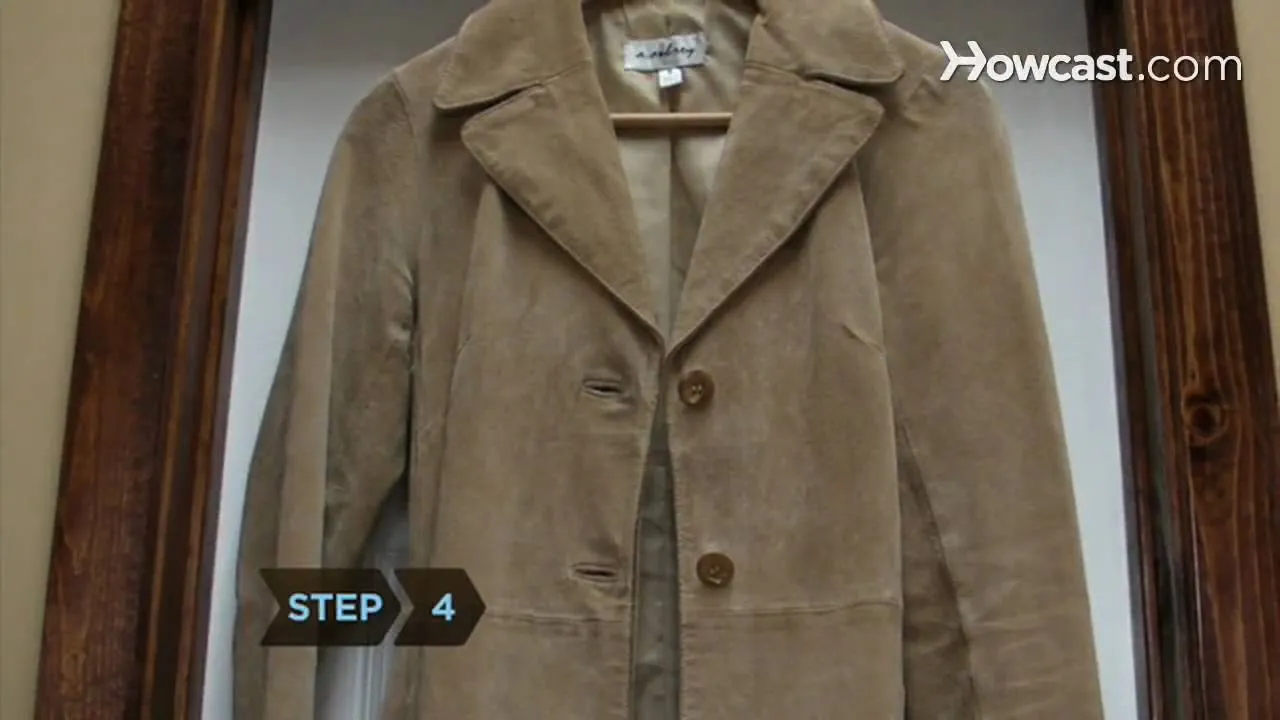
Clean a suede coat fully about once a season — roughly every 3 months of regular wear — and spot clean marks within a day or two of them appearing. Fresh marks lift far more easily than ones that have sat for weeks. If you wear the coat daily through winter, once a month is closer to right, because body oils and road salt build up at the cuffs and collar faster than anywhere else.
Two things move that interval most. The first is weather: a wet, salty winter in a city that salts its roads pushes grit into the hem, so brush the coat weekly and clean it monthly. The second is how close the coat sits to your skin — a coat worn over a thin shirt picks up less oil at the collar than one worn over bare shoulders in summer.
Don’t clean suede “just in case” before storing it. Over-cleaning wears the nap down, and a coat cleaned too often looks thin and patchy at the elbows. Brush it, air it, and clean only when you can see or feel a mark. For guidance on leather and suede care in general, the American Leather Chemists Association publishes technical resources on leather finishes and their care.
Related guides
- How to Clean Suede Shoes Puma
- How to Clean Dental Implants at Home
- How to Clean Suede Cowboy Boots: Expert Tips
Frequently asked questions
Can you wash a suede coat in a washing machine?
No — a standard washing machine will ruin most suede coats. Water and agitation flatten the nap and can shrink or stiffen the leather, and the damage usually can’t be reversed at home. Only wash if the care label explicitly says the coat is machine-washable, which is rare. Otherwise, brush and spot clean, or take it to a professional suede cleaner.
Why did my suede coat go hard after cleaning?
It took on too much liquid and dried too fast. Suede stiffens when water soaks through the leather and pushes out the natural oils as it dries. Dampen a clean cloth, blot the hard patch evenly, stuff the coat with towels, and dry it flat at room temperature for 24 hours. If it’s still hard after that, a leather specialist can often soften it again.
How long does it take to clean a suede coat?
About 30–45 minutes of hands-on work for a full coat, plus 24 hours of drying. Spot cleaning one mark takes 5–10 minutes. The drying time is what most people underestimate — a coat judged while still damp will look worse than it is, and brushing it too early flattens the nap. In humid weather, allow up to 48 hours.
Is it safe to use vinegar on suede?
Yes, diluted white vinegar is safe on most suede, but only at 1 part vinegar to 1 part water and only after a test patch. Vinegar lifts water marks and light oil stains without the harsh solvents in some commercial cleaners. Never use it neat, and don’t use it on suede that’s labeled dry clean only or on suede with a delicate dyed finish.
What happens if suede gets soaked in rain?
Let it dry flat and slowly — don’t wring it, brush it wet, or put it near a heater. Stuff the sleeves and body with towels, change them when they feel damp, and leave the coat at room temperature for 24–48 hours. Once dry, brush the nap back up. Most rain-soaked suede recovers if you resist the urge to speed up drying.
Does suede coat cleaning matter before storage?
Yes — store it clean, because oils and salt left on the coat set into the fibers over months and become much harder to remove later. Brush the coat, spot clean any marks, and let it dry fully before putting it away. Store it on a padded hanger in a breathable cotton bag, not a plastic one, which traps moisture.
Can I use a normal leather cleaner on suede?
No — most leather cleaners are made for smooth leather and will darken or mat suede. Use products labeled specifically for suede and nubuck, or the vinegar and water mix above. If you’re unsure about a product, test it on the inside hem first and wait 15 minutes before touching the visible coat.
How do I get oil stains out of a suede coat?
Blot the oil with a dry cloth first, then apply the vinegar mix lightly and let it dry. For a fresh oil mark, sprinkle cornstarch on it, leave it for several hours, and brush it off — the powder pulls some oil out. Old oil stains that have set are usually a job for a professional suede cleaner, not a home fix.
Conclusion
Once it’s dry, give the nap a final light brushing in one direction so it looks even, then hang the coat on a wide padded hanger with space around it. If you’re unsure about a stubborn spot, test your method on an inside seam first — you’ll be glad you did.