
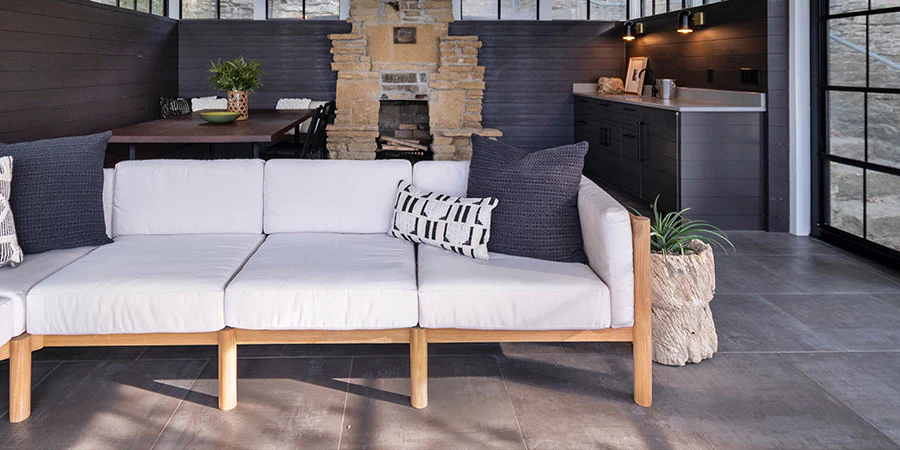
Arguably Basically, polywood cushions are engineered for longevity. Cleaning them properly involves a few tricks that most everyone miss. The trickiest part?, and the foam core holds moisture for up to 48 hours after a wash, which means a speedy soap-and-water job can backfire spectacularly.
Key Point
- While Polywood fabrics like Sunbrella are rated for bleach cleaning, hidden cotton/polyester thread in the seams degrades faster than you’d guess.
- Standing cushions on their edge with zippers facing down cuts drying time from nearly two full days to just 6-8 hours.
- Rinsing until you can’t feel any suds changes the outcome completely; leftover soap residue attracts fresh pollen and feeds new mold colonies within a weekend.
- Dark cushion colors heat up to surface temperatures above 140°F in direct sun, so drying them flat on hot pavement risks zipper warping.
TL; DR
- Use 1/4 cup mild soap per gallon of lukewarm water for routine cleaning, and a bleach solution of 1 cup bleach plus 1/4 cup mild soap per gallon for mildew, but only on Sunbrella fabrics.
- Always air dry cushions by standing them on their side with the zipper facing down so internal moisture drains, and never pressure wash above 1,500 PSI.
- Rinse until no bubbles appear when you squeeze the fabric, because leftover soap acts like a magnet for dirt and promotes mold growth.
What You’ll Need
The right tools and supplies turn a two-hour chore into a 30-minute task.
You need a soft bristle brush or sponge, two large buckets, a garden hose with a spray nozzle set to a gentle fan, mild liquid soap like Dawn, and if you’re tackling mildew, household bleach. Time investment is about 45 to 60 minutes total plus drying time. Skill level: beginner. You’ll also want an old towel for blotting and a spot where cushions can stand vertically with plenty of airflow. High-density foam inserts in premium Polywood lines are designed to resist sagging after washing, but they take 24 to 48 hours to dry internally if not positioned correctly.
Step 1: Mix Your Solution and Pre-Treat Problem Spots
Always start with a mild cleaning mixture unless you see black mildew actively spreading.
Combine 1/4 cup of mild liquid soap per gallon of lukewarm water, making sure the water temperature stays below 100°F. For stubborn mildew, mix 1 cup bleach and 1/4 cup mild soap per gallon of cool water, but only on Sunbrella-branded Polywood fabrics. Blot heavy soiling first with a dry towel to lift debris.
Bird droppings are a notorious headache. They can bake into the fabric within 48 hours and need a soft-bristle brush scrub. Read that again if you need to, so use a dedicated sponge for the cleaning solution, then lightly dab the stained areas. Avoid over-saturating the foam core.
How do you treat baked-on bird droppings without damaging the fabric?
Let a soapy paste sit for five minutes before gently agitating with a soft brush.
A 1:1 mixture of mild soap and water formed into a thin paste breaks down the droppings without harming the UV-resistant coating. Then rinse thoroughly.
Step 2: Wash and Rinse Like a Pro
The most common cleaning mistake isn’t insufficient scrubbing; it’s insufficient rinsing.
Textile consultant Sarah Roberts pointed out that if you see bubbles when it rains, you’ve left soap behind that’ll feed new mold growth. Work the solution into the fabric evenly, then rinse until the water runs clear and you can’t feel any slipperiness when you squeeze the cushion.
That’s where plenty of everyone go wrong, and they rinse until the soapy look is gone, but a microscopic film remains. Use a low-pressure hose setting, and rinse from top to bottom, letting gravity pull residue downward. Flip the cushion and repeat on the other side.
Remember that solution-dyed acrylic fabrics like Sunbrella can handle bleach without losing color, but the thread holding everything together weakens after repeated bleach cycles. If you’re using bleach, do it only when mildew is genuinely present. Plus, in my run into, I’ve seen zippers start to fail after just four heavy bleach cleans over a summer season.
What’s the trick to test if all soap is gone?
Squeeze a small corner of the fabric tightly and watch for suds.
If any white foam appears, rinse again. This two-minute check prevents the musty smell that haunts many outdoor cushions.
When rinsing large cushions, a common Reddit tip works well. Improve them on a clean plastic crate so water flows through fully. This speeds up the rinse process, and keeps dirty runoff from pooling underneath.
Step 3: Dry and Protect Cushions So They Last
Stand cushions on their edge with the zipper facing down and let gravity do the work.
According to the Polywood Care Engineering Team, this position allows the poly-fill core to drain fully, cutting internal drying time to as little as 6-8 hours instead of 48. Never lay them flat on a hot surface like a concrete patio; dark fabric can absorb enough heat to warp zippers above 100°F.
Air flow is what matters most. In many cases, outdoors, choose a shady breezy spot, and honestly. I once left a navy cushion flat in the sun for six hours, and the zipper became stiff and tough to close. Lesson learned.
Nine times out of ten, spray evenly. And let it cure for at least 24 hours before heavy use.
Is it safe to machine wash cushion covers?
Only if the manufacturer’s label explicitly says so; most Polywood covers are designed for spot cleaning rather than machine washing.
Agitation inside a machine can break down interior foam and stress zippers. Better to hand wash in place and air dry.
For a long-term care approach similar to how we clean Polywood furniture. Incorporate a gentle wipe-down every few weeks to prevent buildup.
Troubleshooting, FAQs, and Next Steps
Common Mistakes That Ruin Polywood Cushions
Even careful owners make these five errors that lead to irreversible fabric damage.
- Using undiluted bleach poured directly on seams. This eats stitching thread in minutes.
- Storing cushions while still damp inside. The foam traps moisture and within a week, you’ll smell mildew.
- Power washing with a turbo nozzle. Anything above 1,500 PSI can blast through the fabric weave.
- Leaving cushions flat on hot pavement to dry. Zipper warping and color fading accelerate.
- Skipping the rinse until all soap is gone. That invisible film attracts pollen and mold spores.
People Also Ask
How often should I clean Polywood cushions?
Every 4 to 6 weeks during peak outdoor season is enough for routine cleaning.
If they’re near a pool, rinse weekly with plain water to remove chlorine spray.
Can I use a pressure washer to clean Polywood cushions quickly?
Yes, but only with a wide fan tip at low pressure, never exceeding 1,500 PSI, and keep the nozzle at least 12 inches away.
Getting closer or using higher pressure will fray seams.
What’s the safest way to remove mold from Polywood cushion seams?
A bleach solution of 1 cup bleach and 1/4 cup mild soap per gallon of water applied with a soft-bristle brush is the safest approach.
Rinse thoroughly afterward and stand to dry.
Why do my cushions smell musty even after cleaning?
The foam core likely retained moisture during drying, allowing mold to grow inside.
Always stand cushions on edge with zipper down for the fastest dry and never store them while damp.
Do I need to re-treat the fabric after cleaning?
If your cushions have a PFAS-free finish, re-application of a water-repellent spray is recommended after every deep clean to restore water resistance.
Check the label for specific product guidance.
What to Do Next
Create a simple monthly cleaning schedule that aligns with your mowing or pool maintenance routine. Check for bird droppings weekly and spot clean immediately. For deeper care, plan a twice-yearly deep clean and re-treatment, especially before storing cushions for winter. You’ll also want to inspect zippers and seams for early wear; catching a frayed stitch early saves a $95-$280 replacement cost per cushion set.
- Gather supplies — mild soap, soft brush, two buckets, hose, and optional bleach.
- Mix cleaning solution — 1/4 cup soap per gallon of lukewarm water (under 100°F).
- Spot-treat stains — apply soap paste to bird droppings and baked-on debris, let sit 5 minutes.
- Wash and rinse — scrub with sponge, rinse until no bubbles appear when squeezed.
- Stand cushions to dry — on edge, zipper down, in a shady breezy area, and re-treat with water repellent spray.
🔍 Research Sources
Verified high-authority references used for this article