
Acrylic paint comes off with soap and warm water while it’s still wet, but once it dries it turns into a plastic film that water alone won’t shift. On skin you can usually lift it in 5 to 10 minutes with warm soapy water and a soft brush. On fabric, wood or a paintbrush, expect 20 to 40 minutes of work per item. The difficulty sits at medium, and the one thing you must have is the right liquid for your surface.
What you need for cleaning off acrylic paint
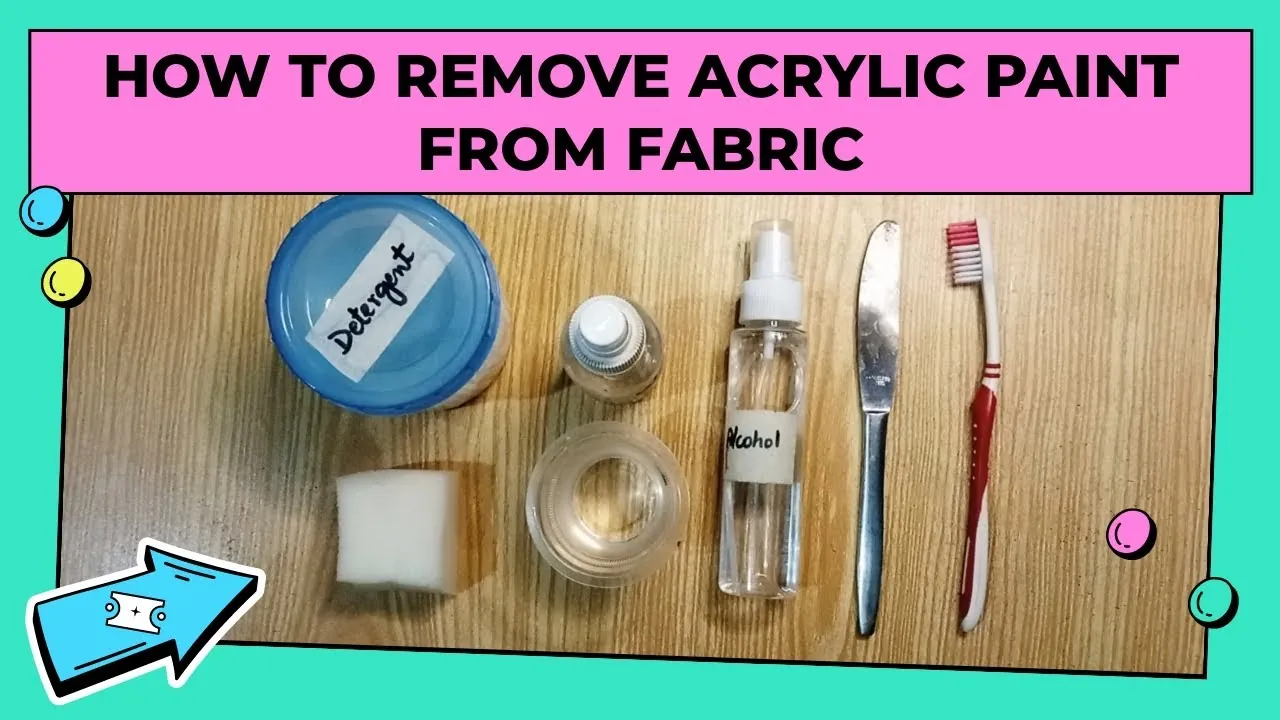
Different surfaces need different tools, and using the wrong one is how people spread the paint or damage what’s underneath. Gather what matches your job before you start, because hunting for a cloth with wet paint on your hands just makes a bigger mess.
| Item | How much | Why it’s needed | A substitute |
|---|---|---|---|
| Warm water | 1 cup (240 ml) per item | Softens fresh acrylic | none — don’t swap this |
| Mild liquid soap | 2 to 3 drops | Lifts paint from skin and brushes | dish soap, same amount |
| Soft brush or old toothbrush | 1 | Works soap into bristles and skin | soft cloth |
| Isopropyl alcohol | 1 to 2 tablespoons | Breaks down dried paint on hard surfaces | none — don’t swap this |
| Clean cotton cloths | 3 to 4 | Wipe, then dry, without smearing | paper towels |
| Plastic scraper | 1 | Lifts flakes without scratching | old credit card |
| Rubber gloves | 1 pair | Protects hands from alcohol | none — don’t swap this |
Before you start cleaning acrylic paint
Stop and check three things before any liquid touches the paint. The biggest trouble comes from people skipping the test patch — a hidden corner of fabric or a finished wood surface can change color or lift its coating when alcohol hits it, and you won’t know until the damage is done. Do that test first, every time.
- Switch off and unplug anything electrical near your workspace, and move phones and laptops well away from the water and alcohol.
- Empty and cover the area: clear the table, then lay down newspaper or an old towel so drips don’t reach the surface underneath.
- Test a hidden spot with your chosen liquid — inside a hem, under a chair, on the back of the brush handle — and wait 5 minutes to see if the color or finish changes.
- Move the item to good light near a sink, so you can rinse fast and see what’s left.
- Know where to stop: if the paint sits on silk, suede, a screen, or an antique finish, don’t treat it yourself. Take it to a professional cleaner or upholsterer, because the wrong solvent can set the stain or strip a finish permanently.
How do you clean off acrylic paint?
Work from the gentlest method upward, and only move to a stronger one when the paint won’t budge. The steps below cover the common surfaces: skin, brushes, fabric and hard surfaces. Pick the steps that match your item, and give each one time to work before judging the result.
Scrape off the loose, dry flakes first. Hold a plastic scraper or old credit card at a low angle and push the dried paint off in short strokes. Take 2 to 3 minutes. You’ll know it worked when no more flakes lift and you can see the bare surface underneath. Never use a metal blade — it scratches.
Wipe skin with warm soapy water. Mix 1 cup of warm water with 2 to 3 drops of mild soap, rub the painted area for 30 to 60 seconds, then rinse. Fresh acrylic comes off in one pass. You’ll know it worked when the skin feels smooth, not tacky. Don’t scrub hard — that irritates skin more than the paint does.
Soak a dried paintbrush in warm soapy water for 10 minutes. Keep the water below the ferrule (the metal band), because soaking above it loosens the glue and the bristles fall out. After 10 minutes, flex the bristles gently. You’ll know it worked when paint starts to slide off in soft flakes.
Work soap through the bristles with your fingers. Add 2 to 3 more drops of soap and massage from the ferrule toward the tip for about 1 minute. Rinse under warm running water. Repeat until the water runs clear. You’ll know it worked when no color comes out when you squeeze the bristles.
Dab isopropyl alcohol on dried paint on hard surfaces. Pour 1 to 2 tablespoons onto a cotton cloth — never straight onto the surface — and hold it against the paint for 30 seconds. Then rub gently. You’ll know it worked when the paint softens and lifts onto the cloth. Change to a clean part of the cloth as it loads up.
Treat fabric from the back, not the front. Lay the fabric paint-side down on a stack of paper towels and dab alcohol or warm soapy water onto the back of the stain. This pushes the paint out instead of into the fibers. Work for 5 to 10 minutes. You’ll know it worked when the towel underneath starts catching color.
Rinse fabric in cool water before washing. Hold the treated area under cool running water for 1 to 2 minutes. Hot water can set any remaining acrylic. You’ll know it worked when the rinse water runs clear and the fabric feels soft, not stiff.
Wash fabric as the care label allows. Check the label inside the garment and follow its temperature setting. Use your normal detergent amount. You’ll know it worked when the item comes out of the wash with no stiff patch. If a patch remains, repeat step 6 before drying — heat from a dryer sets what’s left.
Dry brushes bristle-down, never upright. Reshape the bristles with your fingers and lay the brush flat or hang it bristle-down to dry for 12 to 24 hours. Standing it upright lets water run into the ferrule and rot the glue. You’ll know it worked when the bristles dry soft and separate cleanly.
Check the surface in raking light. Tilt the item toward a lamp and look along the surface at a low angle. Any leftover film shows as a dull patch or a ridge. You’ll know the job is done when the surface reflects evenly with no texture change.
How to tell the acrylic paint is really gone
The surface tells you, not your eyes at a glance. Tilt the item toward a light and look along it at a low angle — leftover acrylic shows as a dull patch, a faint ridge, or a slightly stiff area on fabric.
Run a fingertip across it: bare skin, glass and finished wood feel smooth and even, while a thin film feels tacky or catches slightly. On fabric, flex the spot between your fingers; a clean fiber bends softly, while a painted one feels stiff and crackles.
For brushes, squeeze the bristles and watch the water. Clear water means clean; cloudy or colored water means paint is still trapped near the ferrule and the brush needs another soap round. A brush that dries stiff and splayed wasn’t fully cleaned — the paint hardened inside the base of the bristles where your fingers can’t easily reach.
It needs a second round if any of these show up: the surface still feels tacky after drying, a white or cloudy haze sits on dark wood, the fabric patch is still stiff after washing, or the paint lifted only in the middle and left a ring at the edges.
A ring means pigment was carried to the edge of the wet area and redeposited as it dried — go back with a clean cloth and work from the outside edge inward.
One thing varies by surface and by how long the paint has been there: porous things like unfinished wood and cotton hold paint deeper than glass or glazed tile, and paint left for weeks bonds harder than paint left for hours.
You can read your own case off the item itself — press a damp cloth on a hidden spot and see how quickly the color transfers. Fast transfer means a gentle method will work; no transfer means you’ll need the alcohol step.
If cleaning off acrylic paint goes wrong
Most problems come from too much liquid, too much rubbing, or the wrong solvent. Match what happened to the fix below, and stop before you make a small mark into a big one.
| What happened | Why | What to do |
|---|---|---|
| Paint spread into a wider smear | Too much liquid on a cloth | Blot, don’t wipe; use a clean dry cloth |
| Fabric patch still stiff after washing | Paint dried deep in the fibers | Repeat from the back with alcohol, then rewash |
| Wood finish turned cloudy or white | Alcohol sat too long on the finish | Stop; let it dry fully, then consult a furniture restorer |
| Brush bristles dried stiff and splayed | Paint left near the ferrule | Soak 10 minutes in warm soapy water, comb out |
| Skin red and sore after scrubbing | Too much friction, not enough soaking | Rinse, stop scrubbing, let the skin rest |
| Paint won’t budge at all | It’s fully cured and bonded | Switch to the alcohol method, or take it to a pro |
How often you’ll need to clean acrylic paint off
Clean brushes and skin right after each painting session — within 1 to 2 hours, while the paint is still wet — because that’s when warm soapy water does the whole job in under 5 minutes. Once acrylic cures, which typically takes from a few hours to a couple of days depending on how thick the layer is and how warm and dry the room is, the work jumps to 20 minutes or more and sometimes needs alcohol.
Two things move that timing most. The first is thickness: a thin wash on skin dries in minutes, while a thick blob on fabric can stay soft for hours but cure hard underneath. The second is the surface: non-porous glass and glazed tile give you more slack because the paint sits on top, while cotton, unfinished wood and grout grab it fast and hold it.
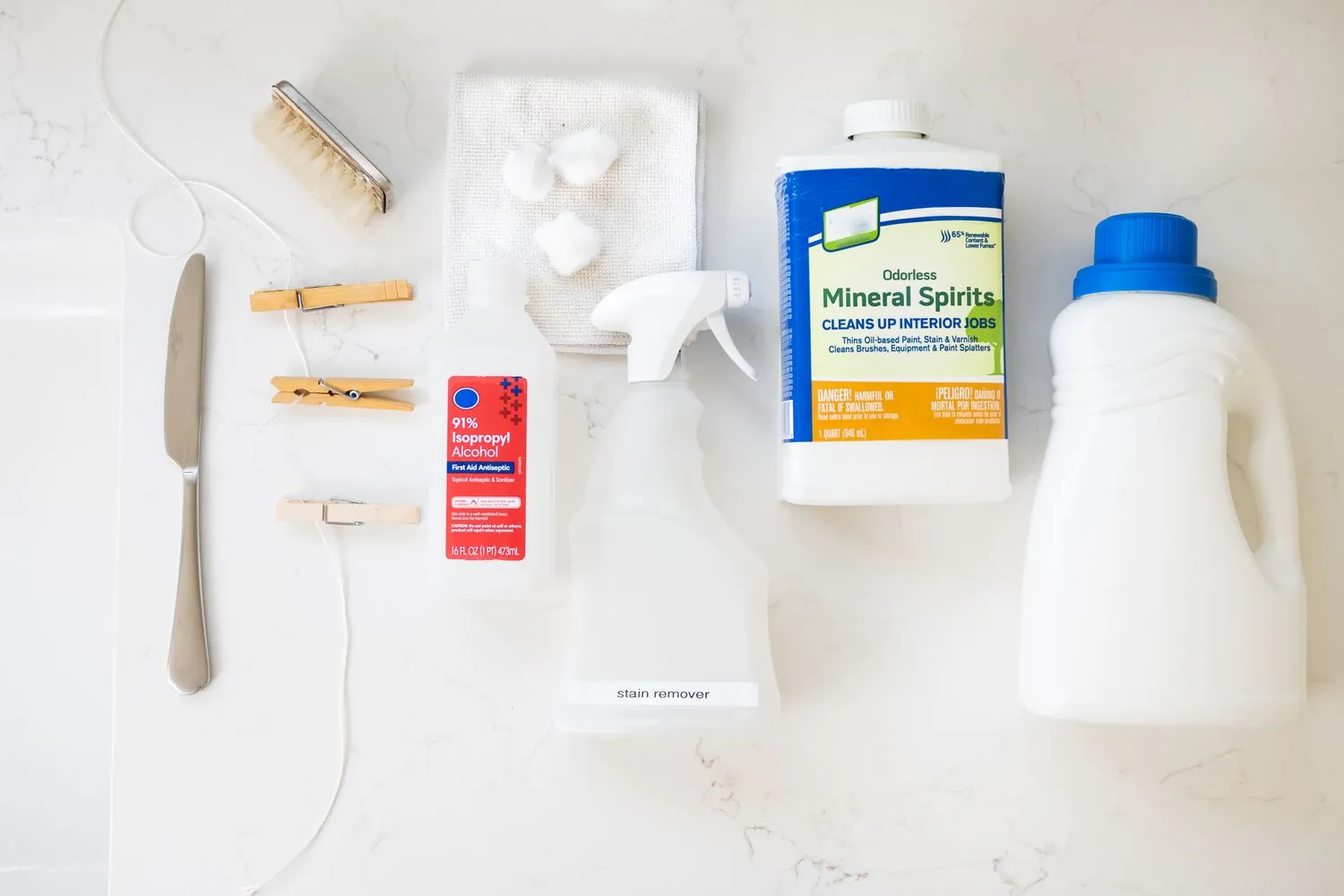
For clothes and drop cloths, check them after every painting session rather than waiting for laundry day — a spot you can still flex out today may need alcohol tomorrow. Keep a small cleaning kit (soap, cloths, alcohol, scraper) next to your paints so the 2-hour window doesn’t slip past while you look for supplies.
Frequently asked questions
Can you clean off dried acrylic paint with just water?
No — water alone won’t remove fully dried acrylic, because cured paint forms a plastic film that water can’t dissolve. Warm soapy water works on fresh paint within 1 to 2 hours of application. Once it’s hard, you need isopropyl alcohol on hard surfaces, or a soap soak plus gentle flexing on brushes. On fabric, work from the back with alcohol, then wash as the care label allows.
Why does acrylic paint turn sticky when I clean it?
It turns sticky because the water or solvent softens the paint’s surface without lifting it fully, leaving a half-dissolved film. That happens most when you use too little liquid and rub too soon. Add more warm soapy water or alcohol, let it sit for 30 seconds, then blot with a clean cloth.
How long does it take to get acrylic paint off fabric?
Plan on 20 to 40 minutes for a dried stain on cotton, assuming you treat it from the back with alcohol and then wash it. Fresh paint takes 5 to 10 minutes. Thick blobs and older stains take longer, and some may need two rounds. Check the garment’s care label for the wash temperature, and always rinse in cool water before washing so hot water doesn’t set what’s left.
Is it safe to use isopropyl alcohol on skin?
Yes, in small amounts and briefly — isopropyl alcohol is safe for spot cleaning skin, but it dries the skin and shouldn’t be left on or used over large areas. Use a cotton cloth with 1 to 2 tablespoons, dab rather than soak, and rinse with water afterward. For most skin cases, warm soapy water is enough and gentler. Keep alcohol away from eyes and open cuts.
What happens if I put painted fabric in the dryer?
The heat sets the acrylic permanently, and the stain usually won’t come out after that. Dryer heat fuses the remaining acrylic film into the fibers, making it much harder to remove. Always air-dry a treated item first and check it in good light before it goes near a machine. If you’ve already dried it and a stiff patch remains, a professional cleaner may still help, but results aren’t guaranteed.
Does acrylic paint come off glass and tile easily?
Yes — glass and glazed tile are the easiest surfaces, because the paint sits on top instead of soaking in. Let it dry fully, then lift it with a plastic scraper; most flakes pop off in one piece. For a thin film, dab isopropyl alcohol on a cloth and wipe. Avoid metal blades and abrasive pads, which scratch glass and dull tile glaze.
Can I use nail polish remover on acrylic paint?
It works on hard surfaces like glass and metal but is too harsh for skin, fabric and most finished wood. Acetone in nail polish remover can strip varnish, melt some plastics and dry skin badly. Stick to isopropyl alcohol for general use. If you only have acetone, test it on a hidden spot first and keep the room ventilated.
Does it matter how old the paint stain is?
Yes — a stain under 2 hours old comes off with soap and water in minutes, while one that’s been there for days is fully cured and needs alcohol plus more rubbing. Age matters more than the size of the stain. If you’re unsure how old it is, press a damp cloth on a hidden part: quick color transfer means it’s still fresh.
Conclusion
If a stubborn patch still won’t budge, set the item aside and let the solvent sit on it a little longer before trying again—patience often does more than scrubbing. And before you tackle anything valuable or sentimental, test your method on a hidden spot first, so you’ll know it’s safe.