
I learned that the time-wasting way a few years back. What’s the catch?
If you’ve ever opened a Hoshizaki and found slimy buildup or cloudy ice. You know the sinking feeling: neglected maintenance kills ice quality rapid. You might’ve scrubbed the surfaces and thought it was enough. It rarely is.
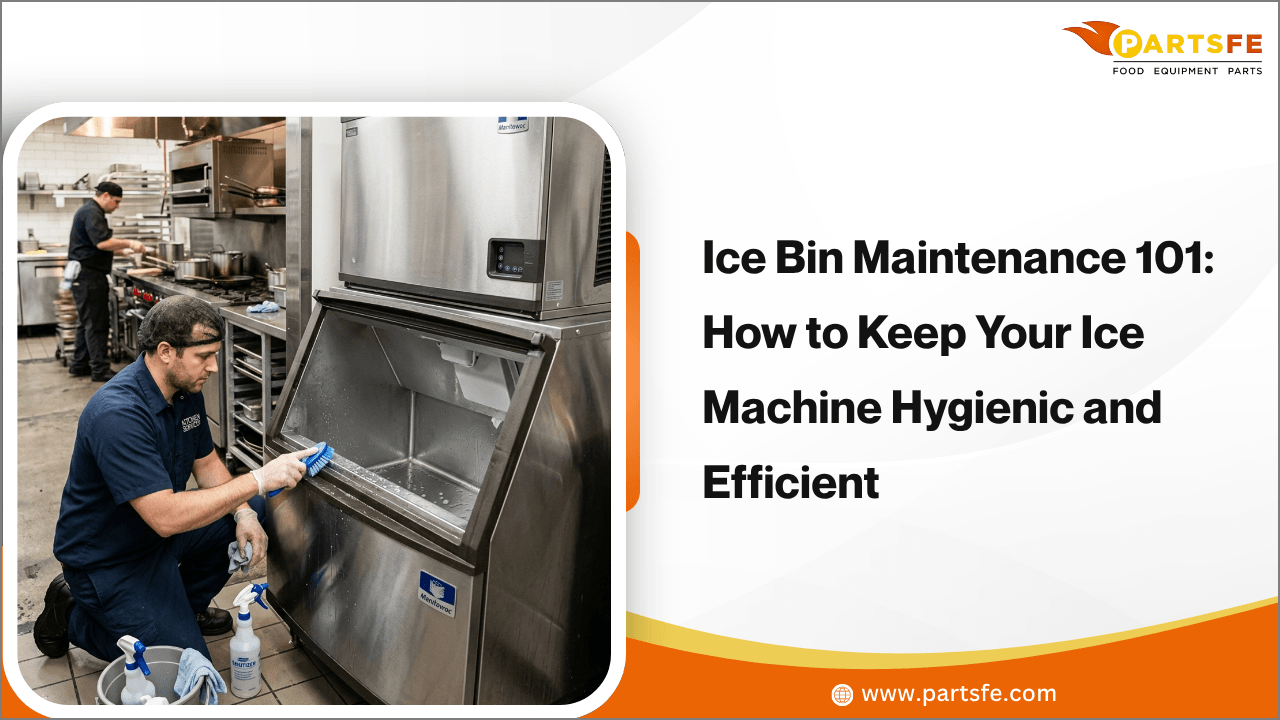
A properly cleaned Hoshizaki isn’t just about keeping up appearances…which means it’s about food safety, machine lifespan, and not poisoning your customers or your family.
With a few simple steps and the right tools, you can do this yourself.
TL; DR
- Cleaning a Hoshizaki ice machine requires descaling with an acidic cleaner, manual scrubbing of hidden parts like the check valve and distribution tube, and a final sanitize cycle with diluted chlorine bleach.
- Hoshizaki recommends a full cleaning every 6 months, air filter cleaning every 2 weeks, and you must discard the first two batches of ice after the process to remove chemical residue.
- The biggest mistake is relying on chemicals alone — you have to physically brush the float switch and water tube to remove biofilm; otherwise bacteria will regrow almost immediately.
Key Point
- Hard water scale won’t dissolve with sanitizer; you must descale first.
- The distribution tube and check valve are the #1 hiding spots for slime, and a soft toothbrush is the only tool that gets in there safely.
- Set aside 2 to 4 hours — rushing will leave residue or damage delicate sensors.
- Hoshizaki’s stainless steel evaporator can handle aggressive acidic cleaners, so generic descalers are okay as long as they’re approved for nickel-free evaporators.
- Always unplug the machine or flip the breaker before touching any interior components — water and electricity don’t mix, and the control board is expensive to replace.
What You’ll Need
Gather everything before you start. The cleaning process moves fast once you’re in the middle. You don’t want to be running to the hardware store mid-scrub. As far as I know, if it’s your first time, carve out up to four hours.
- Descaling solution: Hoshizaki ScaleAway (preferred) or a commercial descaler safe for stainless steel evaporators. Avoid anything with hydrochloric acid — it can pit the metal.
- Sanitizer: Hoshizaki Sanitizer or a mix of 5.25% sodium hypochlorite (household bleach) diluted to 1 ounce per gallon of water. Do not use splashless or scented bleach.
- Soft brushes: A toothbrush, a small bottle brush, and a nylon scrub pad. Nothing metal — scratched surfaces hold bacteria.
- Tools: Phillips screwdriver, clean microfiber cloths, a bucket, rubber gloves, safety glasses.
- Time: 2–4 hours, depending on scale buildup.
- Skill level: Intermediate. If you can disassemble a blender, you can handle this.
How to Clean Your Hoshizaki Ice Machine (Step-by-Step)
This sequence walks you through what actually works, based on Hoshizaki’s service manual, and (depending entirely on the context) plenty of trial and error. Each step matters; skip one, and you’ll wonder why the machine still smells off a week later.
How often should you clean a Hoshizaki ice machine?
If you look closely. Every 6 months at the absolute minimum. If your water is hard, or the machine runs in a high-humidity kitchen. Every 3 months prevents scale from choking the evaporator and keeps slime from (which works out well in practice) getting a foothold. More often than not, and the compressor runs hotter. Shortening the machine’s life by years.
What’s the difference between cleaning and sanitizing?
From a practical standpoint. Cleaning removes mineral scale and visible gunk. Sanitizing kills bacteria. You can’t sanitize effectively if scale is still there.
Because bacteria hide underneath it. So descale first, then sanitize; rarely ever swap the order.
Can I use a generic descaler instead of Hoshizaki ScaleAway?
From a broader view, yes, as long as it’s safe for stainless steel evaporators. Hoshizaki’s evaporator plate is pure stainless, unlike older nickel-plated units that could be damaged by acidic cleaners. Avoid any descaler with hydrochloric acid — it can etch the metal over time and cause uneven freezing.
Troubleshooting (Mistakes That Haunt New Users)
As far as I know, plus, you’ll save hours by checking these before calling for service.
- No ice production: The float switch is stuck or damaged. Gently tap it; if it doesn’t move freely, you likely bent the arm during scrubbing. Replacements cost about $25 but are tedious to install.
- Cloudy ice with a chemical taste: You didn’t rinse enough. Residual descaler or sanitizer coats the ice. Run three full rinse cycles with clean water, and try again.
- Water leaking from the machine: The check valve wasn’t seated correctly, or the distribution tube is misaligned. Both prevent proper drainage and cause overflow. Double-check the valve’s orientation — the arrow should point toward the drain.
- Slime returned within a month: You ignored the distribution tube’s spray holes. Chemicals can’t reach inside those narrow openings; you must physically poke them clear with a bristle brush.
People Also Ask
How do I know if my Hoshizaki ice machine needs cleaning right now?
Look for milky or cloudy ice cubes, a musty odor, or slower ice production. Any visible pink or green slime inside the bin. The thing is, or on the water tube means bacteria is already thriving and the machine (which completely makes sense logically) needs immediate cleaning.
Is cleaning a Hoshizaki different from cleaning a Manitowoc or Scotsman?
From a broader view, yes. Because Hoshizaki uses a stainless steel evaporator that allows stronger acidic cleaners. Nickel-plated evaporators (common in older Manitowoc units) can be damaged by those same acids. Plus, so the cleaning chemistry is less aggressive with other brands.
How much does professional Hoshizaki cleaning cost?
Service calls usually run between $150 and $300 depending on location. And that doesn’t include parts if the float switch or check valve need replacement. Doing it yourself saves at least that much every cycle.
Can I clean just the bin and skip the internal wash cycle?
The bin cleaning alone prevents nothing. The ice-making cell harbors most scale and biofilm. Skipping the internal wash cycle means you’ll still have contaminants dropping into fresh ice within hours.
Will using a different sanitizer damage the machine?
25% sodium hypochlorite mixed 1 ounce per gallon of water is exactly what Hoshizaki recommends, which means avoid no-splash bleach, it leaves a gummy film.
What to Do Next
From a broader view, now that your machine is running clean, set a reminder on your phone for the next cleaning in 6 months (or 3 months for challenging water). Also wipe down the exterior with a microfiber cloth. Check the air filter again in two weeks. While you’re in maintenance mode.
Don’t stop at the ice machine. Other appliances need the same kind of deep attention. Like cleaning your Hoover carpet cleaner to keep it from developing mold. If you’ve got automated pet gear. Knowing how to clean a Litter Robot 4 without making a huge mess is worth the 20 minutes.
Even something as seemingly passive as a Honeywell tower fan collects enough dust to cut its (and rightly so) airflow in half. You can restore it in five steps and notice quieter operation immediately.
The rule stays the same: manual scrubbing. Where the machine can’t reach makes all the difference.
🔍 Research Sources
Verified high-authority references used for this article