
Down jackets are safe to wash at home, but only if you use a front-loading machine on a gentle cycle with a down-specific cleaner — and dry them fully with dryer balls. A full wash and dry takes about 3 to 4 hours, most of it drying time. The job is medium difficulty: the washing is easy, the drying is where jackets get ruined. You’ll need a front-loading washer and a tumble dryer before you start.
The cost is low — one bottle of down wash covers several washes, and dryer balls are a one-time buy. Check the care label on your jacket for the maker’s own instructions, since some shells have coatings with their own rules. The one thing you must have is a dryer. Air-drying clumps the down and can leave it smelling damp.
What you need to wash a down jacket
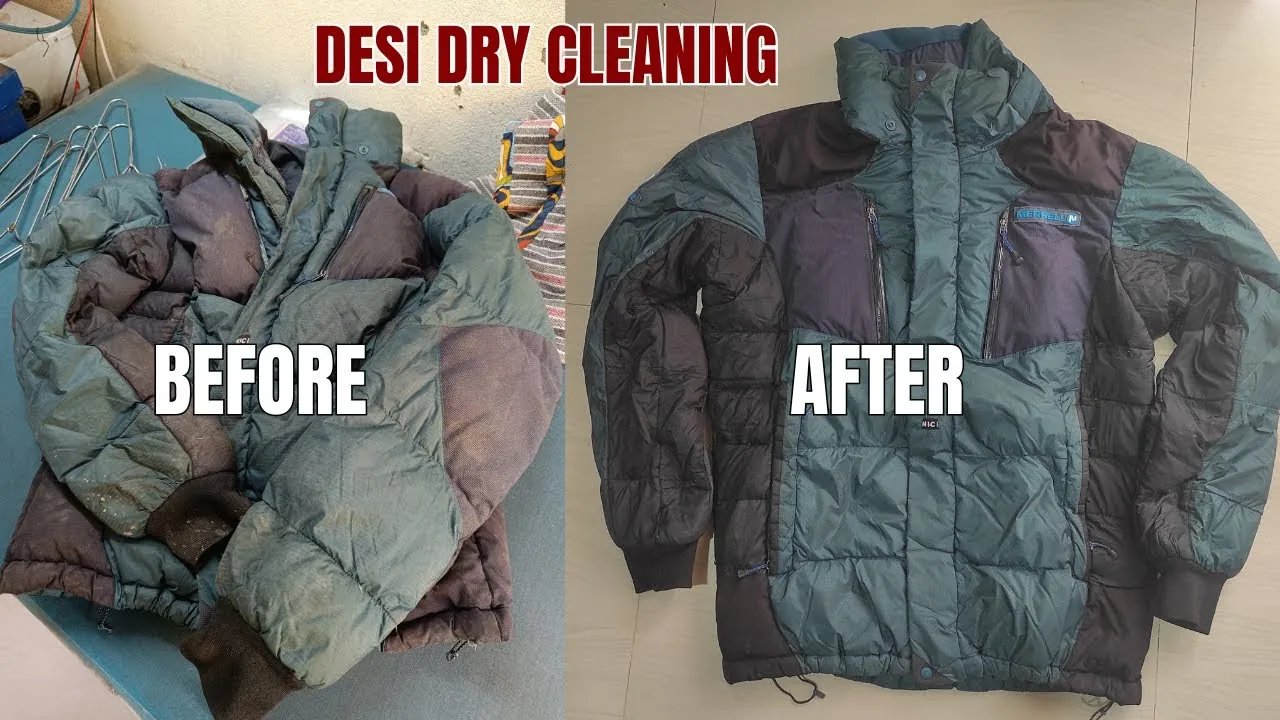
| Item | How much | Why it’s needed | A substitute |
|---|---|---|---|
| Down-specific wash | 1–2 capfuls per load | Strips oil without damaging feathers | none — don’t swap this |
| Front-loading washer | 1 load, gentle cycle | Paddles move the jacket gently | Hand wash in a tub, no agitation |
| Tumble dryer | 1 full cycle | Loosens clumps as down dries | none — air-drying clumps down |
| Dryer balls | 3–4 balls | Breaks up wet down clumps | Clean tennis balls work |
| Soft brush | 1 | Cleans cuffs and collar first | Old toothbrush |
| Mesh laundry bag | 1, sized to jacket | Protects the shell fabric | none — don’t swap this |
| Clean towel | 1 large | Rolls out extra water | none — don’t swap this |
The front-loading washer matters more than the other items on this list. A top-loader’s central agitator can tear baffles and pull down through the shell, so use a top-loader only if it has no agitator. If your only machine is a top-loader, wash the jacket by hand in a bathtub instead.
Match the mesh bag to the jacket, not to the drum. A bag that’s too small bunches the jacket and leaves folds that hold water. A bag that’s too big lets the shell snag on the drum’s edges.
Dryer balls are the one place you can improvise. Three or four clean tennis balls do the same job as purpose-made balls, as long as they’re clean. A ball with grit on it can scuff the shell.
Buy the down wash in a size that covers several washes. You’ll use 1–2 capfuls each time, and the bottle keeps.
Before you wash a down jacket
- Read the care label first. It names the maker’s own cycle and heat settings. If it says dry clean only, stop and follow that — the wrong wash can void your warranty.
- Empty every pocket and close all zippers, snaps and hood cords. An open zipper snags the shell fabric in the drum.
- Brush off loose dirt from the collar and cuffs with a soft brush before washing. Ground-in soil sets deeper once it’s wet.
- Check for tears. A small rip opens wider in the wash. Patch it first or take it to a repair shop.
- The preparation people skip: pre-treating the collar and cuffs. These hold body oil, which water alone won’t lift. Work a little detergent into the fabric with your fingers or a soft brush and let it sit while you gather everything else.
Labels vary more than people expect, even between jackets from the same brand. A jacket built for alpine use may allow a warm wash and tumble drying on low, while a lighter urban style might ask for cold water and air drying only. Read the label on the jacket in your hands, not the one you owned before.
If your jacket has a waterproof coating and you’re not sure it can take a wash, ask the maker or a repair specialist. Getting that wrong costs more than a cleaning.
How to clean a down jacket, step by step

Pre-treat the dirty spots. Dab a small amount of down wash — about a teaspoon — onto the collar, cuffs and any stained patches. Rub it in gently with your fingers or a soft brush. Wait 5 minutes. You’ll see the wash lift the oil into a light lather before you move on.
Close up the jacket. Zip every zipper, fasten snaps and pull in the hood cords. This keeps the shell from snagging. Check that nothing is left in the pockets. It takes about 1 minute.
Load it alone. Put the jacket in the drum by itself. A full drum doesn’t let the down move, so the wash can’t reach the feathers. One jacket per load is the rule.
Add the down wash. Pour 1 to 2 capfuls into the detergent drawer, following the bottle’s dose for a single item. Never use regular detergent — it coats the feathers and flattens the loft. Check the bottle for the exact amount.
Choose the gentle cycle. Set a cold or lukewarm wash — 86°F (30°C) or below — with a low spin. Hot water can shrink the shell, and a fast spin stresses the seams. Run the extra rinse if your machine has one.
Run a second rinse. Set the machine to rinse again with no detergent. Leftover soap holds moisture and weighs the down down. You’ll know it worked when the water runs clear.
Roll out the water. Lay the jacket on a clean towel and roll it up, pressing gently. Don’t wring or twist it — that bends the feathers. Stop when no more water comes out, usually after 2 to 3 minutes.
Tumble dry on low with dryer balls. Put the jacket in the dryer with 3 to 4 dryer balls on low heat. Check it every 20 to 30 minutes and pull clumps apart with your fingers. A full dry usually takes 2 to 3 hours.
Keep drying until it’s fully dry. Feel the thickest parts — the chest, the hood and the cuffs. Any cool or damp patch means more time. Damp down clumps and can grow mold, so don’t stop early.
Shake and hang. Take the jacket out, shake it hard a few times, and hang it for 10 minutes. The down should feel light and even. If one spot still feels flat, put it back in for another 20 minutes.
How to tell a down jacket is clean and dry
The clearest sign of success is loft: the jacket puffs back to its full shape with no flat spots. Squeeze the chest and hood — they should feel springy and even, not lumpy. A fully dry jacket also has no cool patches when you press it against your cheek, and the shell feels smooth, not stiff.
Weight is a good check too. A damp jacket feels heavier than it did before washing. Weigh it on a kitchen scale before and after if you want a number — when it matches the dry weight, the water is gone.
Signs it needs another round: clumps you can feel through the shell, a musty smell, or flat panels after drying. Put it back in the dryer on low with the balls for another 30 minutes and pull the clumps apart with your fingers. If clumps stay after two extra rounds, the down may not have rinsed clean — run another rinse cycle with no detergent.
One thing to know: drying time depends on your dryer’s heat setting and how wet the jacket was when it went in. A low-heat dryer takes longer than a medium one, and a jacket straight from a wet roll takes longer than one that drained well. Your own dryer’s manual will tell you its heat range, and that’s the number that decides your timing.
If something goes wrong with your down jacket
| What happened | Why | What to do |
|---|---|---|
| Down clumped in clumps | Dried too fast or not fully | Re-dry on low with 3–4 balls |
| Jacket smells musty | Damp down left inside | Wash again, then dry fully |
| Shell feels stiff | Regular detergent residue | Run a rinse cycle, no soap |
| Waterproof coating flaking | Wrong wash or hot water | Ask maker about re-coating |
| Seam opened in the wash | A tear not patched first | Take it to a repair shop |
| Jacket lost its puff | Old down, packed flat | Shake well, store loosely |
A musty smell is the one to take seriously. That smell means down inside the jacket is still damp, and damp down can turn into mildew that no second wash will lift. Wash it again with down detergent and dry it until the smell is gone, not just until the shell feels dry.
If the shell feels stiff after a wash, the cause is usually regular detergent left behind. Run a rinse cycle with no soap at all, then dry as normal. Skip the extra detergent on the next wash.
For a flaking waterproof coating, contact the maker before you try anything. Many brands sell a re-coating product for their own shells, and some will repair the jacket for you. A coating that has started to peel won’t come back with another wash.
A seam that opened in the wash is a repair shop job. Don’t run the jacket through another cycle with the seam open, or the down will work its way out and the repair gets harder.
How often to clean a down jacket
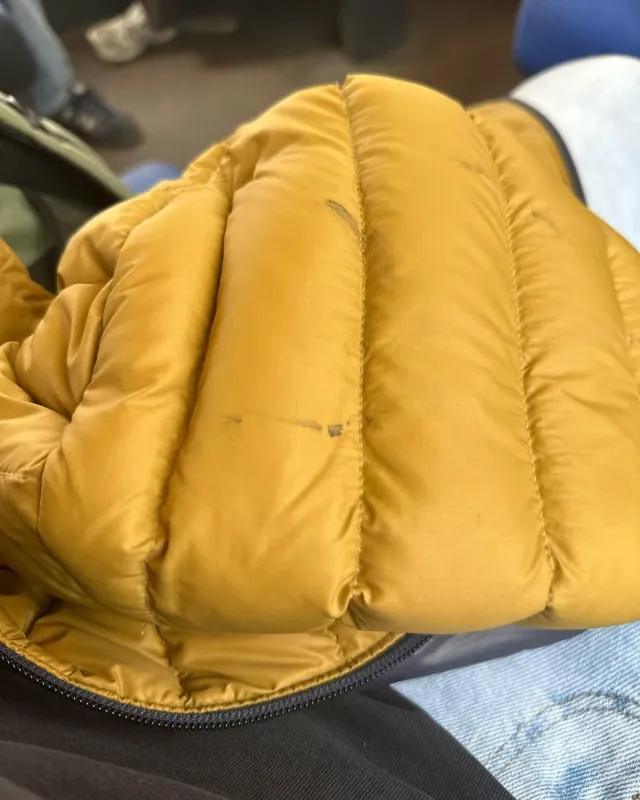
Wash a down jacket about once a season — roughly every 10 to 15 wears — or sooner if it’s visibly dirty. Body oils and sweat mat the down and reduce its loft over time, so a dirty jacket actually loses warmth faster than a clean one.
Two things change this most. First, how close the jacket sits to your skin: a base layer under it means less oil reaches the shell, so you can stretch the gap. Second, how often it gets wet or muddy — a wet winter in a rainy city means more washes than a dry climate.
A jacket that only ever goes over a shirt on a dry commute can go longer than the season. One that comes out in sleet, gets sat on in wet grass, or soaks through the shoulders needs attention sooner. Treat the season as a starting point, not a rule.
If you’re not sure, check the collar and cuffs. When they look dark or feel greasy, it’s time. Washing too often isn’t the danger — a bad wash is. Follow the steps above and the jacket will hold up.
Frequently asked questions
Can you wash a down jacket in a washing machine?
Yes, in a front-loading machine on a gentle, cold cycle with down-specific wash. Top-loading machines with a center agitator can tear seams and clump the down, so use a laundromat front-loader instead. Always check the care label first — a few jackets are dry-clean only.
Why did my down jacket clump after washing?
Because it wasn’t fully dried, or it was air-dried instead of tumble-dried. Wet down sticks together, and only tumbling with dryer balls breaks the clumps apart. Put it back in on low heat with 3 to 4 balls and keep going until the thickest parts feel dry and springy.
How long does it take to dry a down jacket?
About 2 to 3 hours in a tumble dryer on low heat with dryer balls, for a standard jacket. A thicker or longer jacket can take 4 hours or more. Check every 20 to 30 minutes and keep going until no cool, damp patches remain in the chest, hood or cuffs.
Is it safe to put a down jacket in the dryer?
Yes, on low heat with dryer balls. High heat can damage the shell fabric and any waterproof coating, so keep it low. Never dry a down jacket on a hot setting or over a radiator.
What happens if you wash a down jacket with regular detergent?
Regular detergent leaves a residue that coats the feathers and flattens the loft, so the jacket feels thin and loses warmth. It can also strip the shell’s water-repellent finish. Use a down-specific wash, and run an extra rinse to clear any leftover soap.
Does it matter if you use hot or cold water on a down jacket?
Yes — use cold or lukewarm water at 86°F (30°C) or below. Hot water can shrink the shell fabric and damage waterproof coatings. Cold water cleans down well when you use a proper down wash, though lukewarm water lifts oils more easily.
Can you wash a down jacket by hand?
Yes, in a bathtub with cool water and a capful of down wash. Press the jacket gently under the water, let it soak for 15 minutes, then rinse until the water runs clear. Don’t wring it — roll it in a towel and tumble dry on low with balls, same as a machine wash.
How do you store a down jacket after washing?
Store it fully dry and loosely — hanging in a closet or in a large cotton bag. Never pack it tight in a stuff sack for months, because compressed down loses loft. Make sure it’s completely dry before storing; damp down can grow mold in a closed closet.
Conclusion
Once your jacket’s dry, give it a good shake and hang it loosely so the loft settles before you wear it. If you spot clumps later, a few minutes in the dryer with those balls will loosen them. Store it uncompressed, and it’ll keep you warm for years.