
Dogs don’t get cavities the way people do, but they do get something worse: periodontal disease, which the American Veterinary Dental College reports affects most dogs by age three. The fix at home is consistency, not intensity—brushing with a dog-safe toothpaste most days, plus a few supporting habits, prevents the plaque that hardens into tartar within days and starts the gum damage. This guide walks through the full routine, from the first session with a nervous dog to the products that actually help and the signs that mean a vet needs to look.
Key Takeaways
- Brush most days with a soft pet toothbrush and enzymatic dog toothpaste; skipping days lets plaque harden into tartar that only a vet can remove.
- Never use human toothpaste—fluoride and xylitol are toxic to dogs—and skip baking soda, which throws off their electrolyte balance.
- Build the habit slowly: let the dog lick toothpaste first, then touch teeth, then brush one or two teeth at a time over a week or two.
- Dental chews and water additives help but don’t replace brushing; look for the Veterinary Oral Health Council (VOHC) seal on products.
- Bad breath that persists, bleeding gums, or a dog that drops food are reasons for a vet exam, not more brushing.
- Professional cleanings under anesthesia are the only way to remove tartar above and below the gumline—home care maintains the result.
Why Home Dental Care Matters
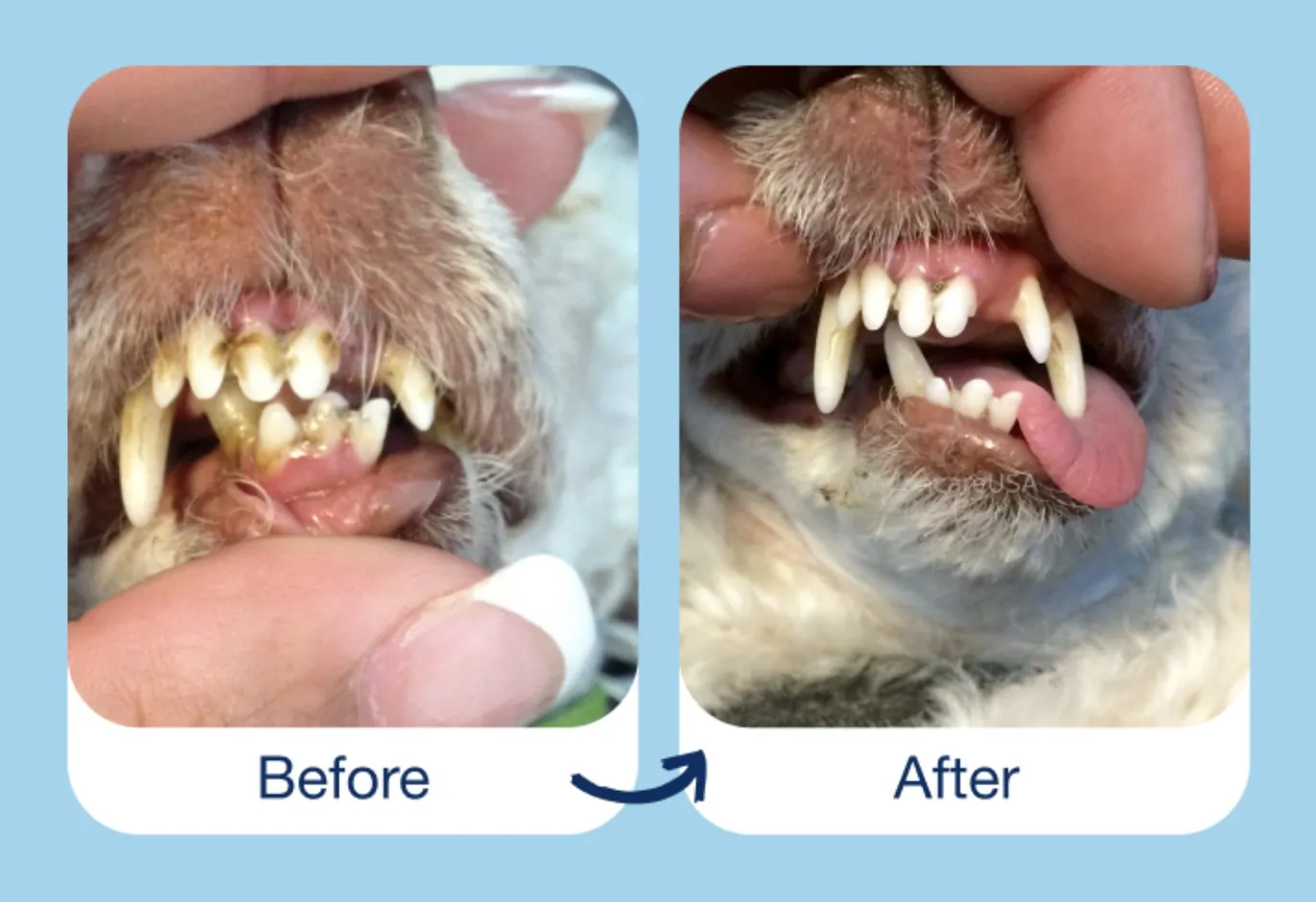
Periodontal disease starts with plaque, a soft film of bacteria that forms on teeth within hours. If it isn’t disturbed, plaque mineralizes into tartar (calculus) in roughly 24 to 72 hours, and tartar can’t be brushed off—it has to be scaled by a vet. The bacteria under the gumline then trigger inflammation that erodes the bone holding teeth in place.
The consequences go beyond lost teeth. The AVMA notes that dental disease is one of the most common conditions in pets, and chronic gum inflammation has been linked in veterinary research to changes in the heart, kidneys, and liver. That doesn’t mean every dog with tartar will develop organ disease, but it does mean mouth health is body health. Daily brushing is the single most effective home measure because it removes plaque before it hardens.
Gather the Right Supplies First
You need four things, and none of them are expensive. Get them before you start so the first session isn’t a scramble.
- Soft-bristled pet toothbrush: a finger brush for small or nervous dogs, a angled-handle brush for larger mouths. Human toothbrushes are too stiff and too big.
- Enzymatic dog toothpaste in a pet-safe flavor (poultry, malt, peanut butter). The enzymes do some of the work even where the brush doesn’t reach.
- Gauze pads or a washcloth as a backup for dogs that won’t tolerate a brush yet.
- Dental chews or a water additive with the VOHC seal as supporting tools, not replacements.
Warning: Human toothpaste isn’t a shortcut. Most contains fluoride, and many “natural” varieties contain xylitol, both of which are toxic to dogs. Baking soda is also a poor choice—it’s high in sodium and can upset a dog’s acid-base balance. Keep human dental products locked away.
How to Brush a Dog’s Teeth, Step by Step
The first session is about trust, not cleanliness. Plan for two to three weeks of gradual introduction before you attempt a full brush.
Step 1: Get the dog comfortable with handling
Sit beside your dog when it’s calm, lift a lip, and look at the teeth for a few seconds. Reward with praise and a treat. Do this once or twice a day for several days. The goal is a dog that doesn’t pull away when a hand approaches its muzzle.
Step 2: Introduce the toothpaste
Put a pea-sized dab of dog toothpaste on your finger and let the dog lick it. Most enzymatic pastes are flavored to be appealing, so this step usually goes fast. Repeat for two or three days until the dog associates the tube with a treat.
Step 3: Touch the teeth and gums
With toothpaste on your finger or a finger brush, rub it along the outside of the upper teeth and gumline for a few seconds. Don’t push for the back molars yet. Praise, then stop while the dog is still relaxed.
Step 4: Add the brush
Switch to the toothbrush with a small amount of paste. Brush in gentle circles along the gumline, focusing on the outer surfaces of the upper teeth—where the cheek meets the tooth—because that’s where plaque accumulates fastest. You don’t need to open the mouth; lifting the lip is enough. Aim for 30 seconds per side at first.
Step 5: Build to a full routine
Once the dog accepts the brush, work up to about a minute per side, covering the outer surfaces of all teeth and the front incisors. The inner surfaces (tongue side) get some natural cleaning from the tongue and are lower priority if your dog is impatient. Finish with a treat and end on a good note every time.
Pro Tip: Brush at the same time each day—after the evening meal or walk works well—so it becomes a predictable part of the routine rather than a wrestling match. A dog that expects it fights it less.
How Often Should You Brush?
Daily is ideal; every other day is the realistic minimum for most owners. The reason is the plaque-to-tartar timeline: plaque that sits for a couple of days starts to mineralize, and once it’s tartar, brushing does nothing. If you can only manage three sessions a week, spread them out rather than clustering them.
| Frequency | What it achieves | Realistic for |
|---|---|---|
| Daily | Removes plaque before it hardens; best gum protection | Dogs that tolerate brushing well |
| Every other day | Slows tartar formation significantly | Most busy owners |
| Twice a week | Slows buildup but won’t prevent it | Dogs that resist, as a compromise |
| Weekly or less | Minimal preventive value | Better than nothing, but pair with chews and vet checks |
If your dog genuinely won’t tolerate a brush, don’t abandon the goal—switch to gauze wrapped around a finger, which still wipes plaque off the tooth surface, and lean harder on VOHC-accepted chews and a vet-recommended water additive.
What to Do If Your Dog Hates It
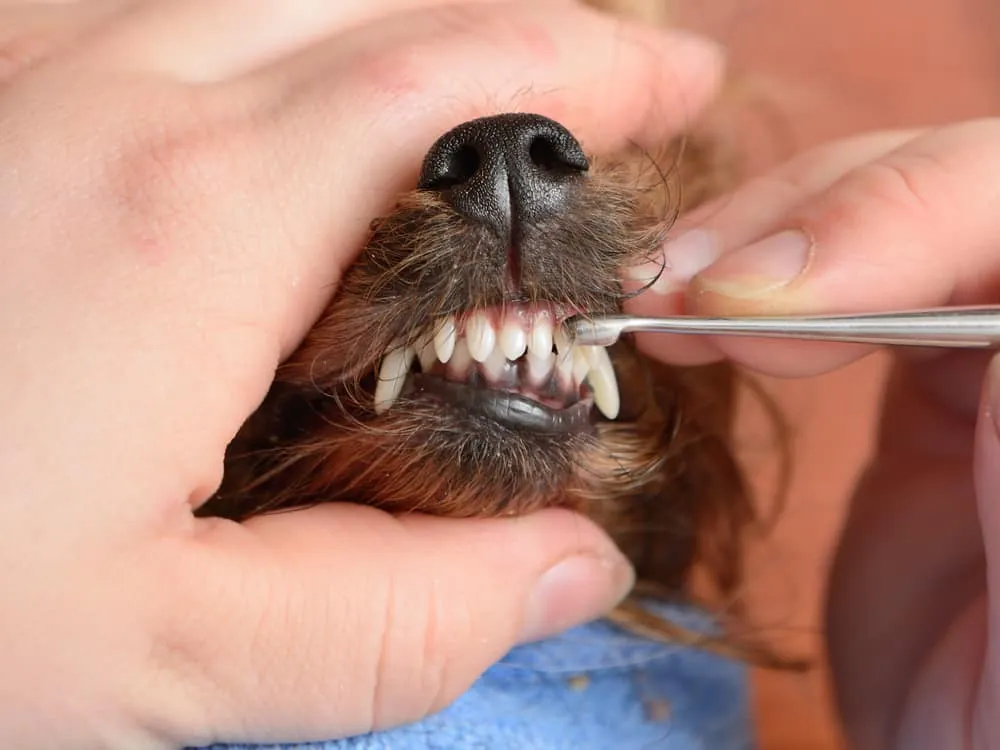
Resistance is normal, especially in older dogs that have never had their mouths handled. Work through these in order:
- Start with a tired dog. After a long walk, a dog is more likely to accept handling.
- Use a finger brush or gauze instead of a full brush—less intimidating and easier to control.
- Brush only the canine teeth and front incisors for the first month. Partial brushing beats no brushing.
- Try a different toothpaste flavor. Dogs that reject poultry paste often accept malt or peanut butter.
- Never force the mouth open. Lifting the lip is enough, and forcing creates a lasting aversion.
- Stop before the dog struggles. Two calm seconds beat thirty seconds of fighting.
If a dog snaps, growls, or shows pain when its mouth is touched, stop and book a vet visit. Mouth pain is a common reason for sudden resistance, and a dog in pain shouldn’t be pushed.
Dental Chews, Toys, and Additives That Help
These products are supporting cast, not the lead. The Veterinary Oral Health Council reviews products and awards a seal to those that demonstrate plaque or tartar reduction in controlled trials—look for that seal rather than marketing claims. A few categories worth knowing:
| Product type | How it works | Best for | Limits |
|---|---|---|---|
| Dental chews (VOHC-sealed) | Abrasion and chewing action scrub tooth surfaces | Dogs that won’t tolerate a brush | Calories; choose size-appropriate, supervise |
| Rubber chew toys | Mechanical cleaning, especially on back teeth | Heavy chewers | Not all toys are safe; avoid hard nylon that can fracture teeth |
| Water additives | Antimicrobial or enzymatic action in drinking water | Dogs that resist everything else | Modest effect; some dogs refuse treated water |
| Dental diets | Kibble designed with fiber matrix that scrubs as chewed | Dogs on dry food | Must be the primary diet to work |
Warning: Skip antlers, bones, and hard nylon chews that don’t give when you press a thumbnail into them. These are a common cause of slab fractures in the back teeth, and a fractured tooth usually means extraction or a root canal. Match chew size to the dog—a chew small enough to swallow whole is a choking hazard.
Signs Your Dog Needs a Vet, Not a Brush
Home care maintains healthy mouths; it doesn’t fix diseased ones. Book a veterinary dental exam if you notice any of the following:
- Persistent bad breath that returns within days of brushing—this is often the first sign of periodontal disease, not just “dog breath.”
- Red, swollen, or bleeding gums, especially along the gumline.
- Yellow-brown crust on the teeth near the gumline, which is tartar and can’t be brushed off.
- Dropping food, chewing on one side, or refusing hard kibble—possible signs of a painful tooth.
- Loose teeth, swelling under the eye, or nasal discharge—these can indicate infection that has spread beyond the tooth.
- Pawing at the mouth or excessive drooling.
A vet will examine the mouth, often under sedation for a full look, and may recommend a professional cleaning. Dental X-rays are the only way to see what’s happening below the gumline and inside the tooth, and many problems are invisible from the outside.
Professional Cleanings and What They Involve
A professional dental cleaning under anesthesia is the only way to remove tartar from above and below the gumline, scale the tooth surfaces, and polish away the microscopic scratches that give plaque a place to grip. The AVMA’s position is clear that anesthesia-free dental cleanings aren’t a substitute—they can’t reach under the gumline, they stress the dog, and they create a false sense of security.
Expect the visit to include bloodwork to confirm the dog is healthy enough for anesthesia, monitoring during the procedure, dental X-rays, scaling and polishing, and possibly extractions if teeth are too damaged to save.
Costs vary widely by region and by how much work is needed; ask for an estimate in advance and ask specifically whether extractions and X-rays are included, since those are the line items that change the total most. After a cleaning, your home routine is what keeps the mouth healthy until the next one—most dogs need a professional cleaning every one to three years, depending on breed, size, and home care.
Puppies, Seniors, and Flat-Faced Breeds
Different dogs need different approaches, and the differences are worth planning around.
- Puppies should start mouth handling as soon as they come home, before adult teeth arrive. Use a finger brush and puppy-safe paste, and keep sessions to seconds. Their adult teeth erupt around four to seven months, and that’s when daily brushing should become routine.
- Senior dogs often have years of tartar and may have painful teeth. Get a vet exam before starting a brushing routine—brushing over diseased gums hurts, and a dog that associates brushing with pain will refuse it permanently.
- Flat-faced breeds (bulldogs, pugs, Boston terriers) have crowded, rotated teeth that trap plaque and are harder to brush. They often need professional cleanings more frequently, and some benefit from starting with a vet-guided plan.
- Small breeds like toy poodles and Yorkies are prone to retained baby teeth and crowded mouths; ask your vet to check for retained teeth at the puppy visits.
Common Mistakes That Undermine the Routine
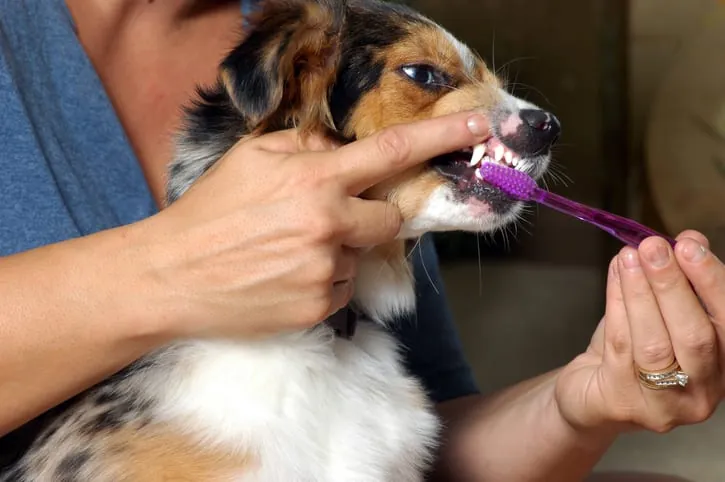
Most failed brushing routines fail for the same handful of reasons. Avoid these:
- Starting with a full brush on day one. This is the fastest way to teach a dog that brushing is a fight.
- Brushing only when you remember. Sporadic brushing does little; the plaque timeline rewards frequency, not effort.
- Pressing hard. Firm pressure irritates gums and teaches the dog to pull away. Light circles along the gumline are enough.
- Skipping the gumline. Brushing the flat tooth surface misses the spot where periodontal disease starts—angle the bristles toward the gum.
- Relying on chews alone. Chews help, but they don’t clean the gumline consistently, and many are high in calories.
- Ignoring bad breath. “Dog breath” that persists is a symptom, not a personality trait.
Frequently Asked Questions
Can I use human toothpaste on my dog?
No. Human toothpaste typically contains fluoride, and many products contain xylitol, both of which are toxic to dogs. It also foams, which dogs dislike. Use an enzymatic pet toothpaste—dogs can swallow it safely, and the flavors are designed to be appealing.
How often should I brush my dog’s teeth?
Daily is ideal, and every other day is the practical minimum for most owners. Plaque starts hardening into tartar within a couple of days, so brushing less than every other day lets buildup get ahead of you. Spread sessions out rather than clustering them.
What if my dog won’t let me brush its teeth?
Start with gauze or a finger brush and brush only the front teeth for the first few weeks. Use a flavored enzymatic paste, work after a walk when the dog is calm, and stop before it struggles. Pair with VOHC-accepted chews and ask your vet about water additives.
Do dental chews actually clean dogs’ teeth?
They help but don’t replace brushing. Chews with the VOHC seal have been shown to reduce plaque or tartar in controlled trials, but they don’t clean the gumline consistently and many are calorie-dense. Use them as a supplement, not a substitute, and supervise chewing.
How do I know if my dog has dental disease?
Watch for persistent bad breath, red or bleeding gums, yellow-brown tartar at the gumline, dropping food, chewing on one side, pawing at the mouth, or drooling. Any of these warrants a vet exam—dental disease is often painful and can be advanced before owners notice.
Is anesthesia-free teeth cleaning safe for dogs?
It’s not recommended as a substitute for professional cleaning. Without anesthesia, a provider can’t clean below the gumline or take X-rays, and the procedure can stress the dog. The AVMA advises that anesthesia-free cleanings don’t address periodontal disease and can create a false sense of security.
Conclusion
Start tonight with the smallest possible step: put a dab of dog toothpaste on your finger and let your dog lick it. Do that for three days, then add a finger brush for a few seconds. In two weeks you’ll have a routine, and in a month you’ll have a dog that sits for the brush—which is the whole game.