
Cleaning a Blackstone griddle takes about 15 minutes while the surface is still warm, and the whole job needs nothing more than a scraper, a cloth, and a little water. The steps below cover how to clean blackstone flat-tops the way the maker intends: scrape off the food, wipe the surface, and then re-oil the steel so it doesn’t rust. It’s easy work, but it needs care at one point — you’re looking after a seasoned steel plate, not a non-stick pan.
The cost is small. A stiff scraper, a rough pad, and a bottle of oil are the only things you’ll buy, and most people already own a cloth. The job is rated easy, with one catch: never soak the plate or scrub it with soap, because that strips the seasoning you built up. The one thing you must have before you start is a warm — not hot — griddle, so the water lifts the food without burning your hand.
What you need to clean a Blackstone griddle
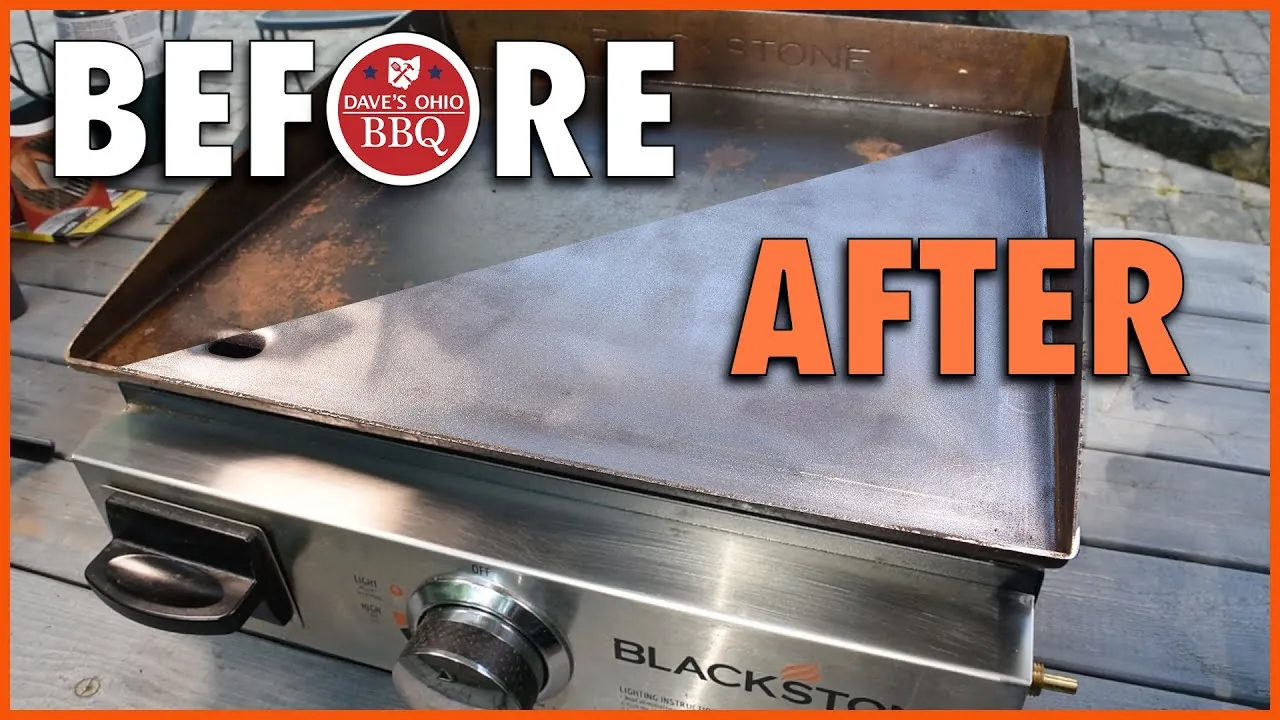
You need five or six things, and most of them cost very little. The table below lists each item, how much to use, and what you can swap if you don’t have it.
| Item | How much | Why it’s needed | A substitute |
|---|---|---|---|
| Stiff metal scraper | 1, with a flat edge | Lifts stuck food without soap | None — don’t swap this |
| Warm water | About 1 cup (240 ml) per wipe | Loosens food and lifts grease | None — don’t swap this |
| Paper towels or clean cloth | 3 to 4 sheets | Wipes the surface dry | Cotton cloth, washed after |
| Cooking oil | 1 to 2 teaspoons | Re-seasons the steel after cleaning | Any high-smoke-point oil |
| Nylon brush | 1, medium stiffness | Clears corners and edges | Scraper corner, used gently |
| Heat-resistant gloves | 1 pair | Protects hands from a warm plate | Oven mitts you already own |
Check the oil you plan to use against the maker’s own guidance. Blackstone publishes its seasoning and care guidance on its website, and that page is the one to trust over any bottle label.
Before you start cleaning your Blackstone
- Turn off the burners and let the plate cool for 5 to 10 minutes. A plate hot enough to sizzle water will burn a cloth and your hand. Warm is right; steaming hot is too soon.
- Move the griddle away from wind and loose paper. Grease pops, and a paper towel near an open flame is a fire risk. Keep a lid or a metal tray within arm’s reach.
- Empty the grease cup before you scrape. A full cup spills onto the frame and drips down the side, and that’s the mess you’ll spend extra time on later.
- Cover the floor or table under the griddle with a mat or old towel. Grease and dirty water will run off the front edge, and a bare floor gets slippery fast.
- The step most people skip: check the plate is warm, not hot, before the first wipe. Water on a cold plate just sits there and does nothing; water on a hot plate flashes into steam and can splash.
This job is safe to do yourself. If your griddle runs on propane and you smell gas at any point, stop and call a qualified gas technician — that isn’t a cleaning problem, and it isn’t something to fix with a cloth.
How to clean a Blackstone griddle step by step
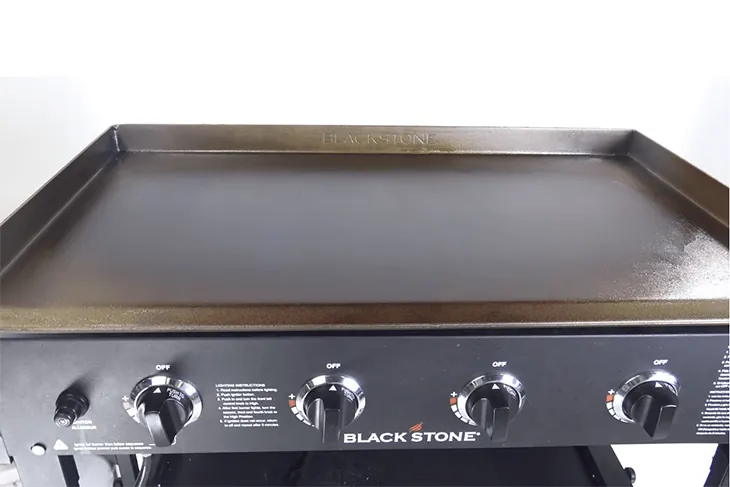
- Scrape off the loose food while the plate is still warm. Hold the scraper flat and push the food and grease toward the front grease trap. Use steady strokes, about 5 or 6 across the whole surface. You’ll know it worked when the plate looks mostly bare and the food has collected at the front edge.
- Push the scraped waste into the grease cup. Tip the front edge slightly and use the scraper to guide it in. This takes under a minute. If food falls past the cup, wipe it off the frame now, before it sets.
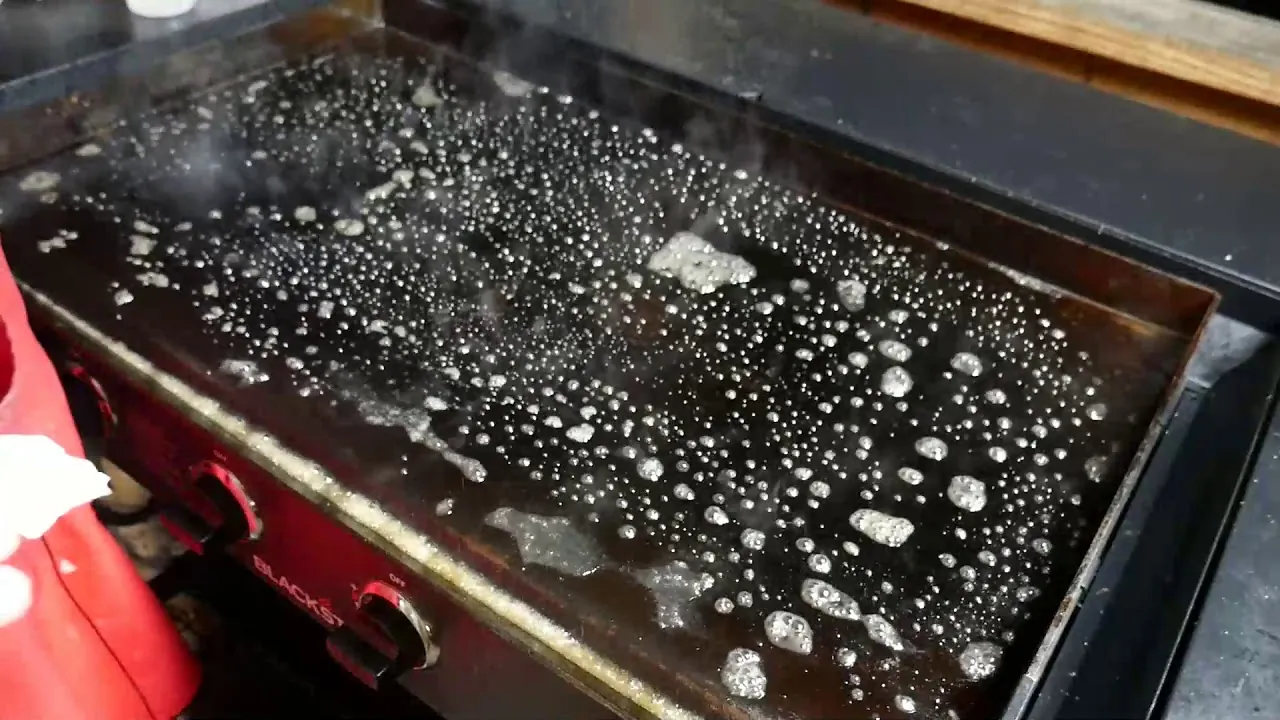
- Pour about 1 cup (240 ml) of warm water across the plate. Spread it with the scraper so it covers the whole surface. Let it sit for 30 seconds only. The water should lift the brown film; if the plate still looks dark and sticky, go back to step 1.
- Scrub the corners and edges with the nylon brush. The middle clears fast, but the raised edges hold grease. Work the brush along all four sides for about 1 minute. You’ll see the water turn brown — that’s the grease coming off.
- Push the dirty water into the grease trap. Use the scraper again, in the same direction as before. Don’t let water pool in the corners. When the plate looks wet but clean, you’re ready to dry.
- Wipe the surface dry with 3 to 4 paper towels. Press down firmly and work in straight lines. The plate should look dry and slightly dull, not shiny with water. Any water left behind is what causes rust spots.
- Apply 1 to 2 teaspoons of cooking oil while the plate is still warm. Spread it thin with a paper towel until the whole surface has a light, even sheen. You want a film, not a puddle. Too much oil turns sticky and collects dust.
- Wipe off the excess oil with a clean paper towel. One pass is enough. The plate should feel smooth and barely greasy to the touch. If it feels tacky, you used too much — wipe again.
- Clean the grease cup and the frame with warm water and a cloth. Empty the cup into the bin, not the sink, so grease doesn’t block your drain. Wipe the outside of the griddle last. A clean frame stops grease from baking on next time.
- Let the griddle cool fully before you put the cover on. About 20 to 30 minutes is enough. A cover on a warm plate traps moisture, and moisture on steel means rust by morning.
How to tell your Blackstone is clean and seasoned
A clean, well-seasoned Blackstone looks dark brown to black across the cooking area, with a smooth, slightly glossy surface. Run your scraper across it — it should glide with no drag and no bumps. That even, slick feel is the sign the seasoning is intact and the food came off cleanly.
The water test tells you the most. Pour a small splash — about 2 tablespoons — onto the warm plate. On a seasoned surface it beads and slides; on a bare or damaged spot it spreads and soaks in. If the water soaks in, the seasoning has worn thin in that spot and needs another oil coat.
Check the edges and corners too. These are where grease hides, and where rust starts first. If you see orange or brown specks, that’s rust, and it means moisture sat on the plate. A light scrub with the rough pad and a fresh oil coat usually clears it.
Signs it needs a second round: the plate still feels tacky after oiling, the paper towel comes away brown after drying, or food sticks the next time you cook. Any of these means one more scrape, one more water wipe, and one more thin oil coat. Don’t reach for soap to fix it — soap strips the seasoning and puts you back at the start.
If something goes wrong with your Blackstone
Most problems come from three things: too much water, too much heat, or soap where it doesn’t belong. The table below matches each one to what to do.
| What happened | Why | What to do |
|---|---|---|
| Rust spots on the plate | Water left on the steel | Scrub with a rough pad, then re-oil |
| Food sticks every time | Seasoning worn thin | Re-season with thin oil coats |
| Plate looks dull and gray | Soap stripped the oil layer | Wash off, dry, re-oil while warm |
| Grease fire at the edge | Built-up grease met a flame | Turn off gas, cover with a metal lid |
| Water pools in the corners | Plate not level | Level the griddle, then dry the corners |
| Sticky, tacky surface | Too much oil applied | Wipe off excess with a dry towel |
A grease fire is the one case where you stop cleaning and act. Never throw water on it — water spreads burning grease. Turn off the gas, cover the plate with a metal lid or tray, and wait. If the fire doesn’t go out in a few seconds, leave the area and call the fire service.
How often to clean a Blackstone griddle
Clean the cooking surface after every use, and do a deeper clean about once a month. The quick clean — scrape, water wipe, dry, oil — takes 10 to 15 minutes and keeps the seasoning healthy. The monthly deep clean adds the frame, the grease cup, and the corners, and takes about 30 minutes.
Two things move that schedule most. The first is how much fat you cook: bacon, burgers, and fried food leave far more grease than pancakes or vegetables, so a heavy-fat cook may need the deeper clean every 2 weeks instead of monthly. The second is where the griddle lives. An outdoor griddle in humid or coastal air rusts faster, so check the surface for orange specks weekly and oil it more often.
If you cook only now and then, a light oil coat after each use is enough, and you can stretch the deep clean to every 6 to 8 weeks — but check for rust each time before you cook.
Related guides
Frequently asked questions
Can you use soap on a Blackstone griddle?
No — skip soap on the cooking surface. Soap strips the polymerized oil layer that makes the plate non-stick and protects it from rust. Warm water plus a scraper does the job, though a little soap on the outside frame and grease cup is fine since those aren’t seasoned.
Why is my Blackstone rusting?
Rust comes from moisture left on bare steel, so the cause is almost always water that stayed behind after cleaning. Dry the plate fully with paper towels, then oil it while warm. If you store the griddle outdoors, a cover on a cool, dry plate helps, but a cover on a warm plate traps steam and makes rust worse.
How long does it take to clean a Blackstone?
About 10 to 15 minutes for the after-cook clean, assuming the plate is warm and you have the scraper and towels ready. A full deep clean — frame, grease cup, corners — takes around 30 minutes. The time grows if the plate has cooled, because cold grease is much harder to scrape off. Cleaning while warm is the single biggest time saver.
Is it safe to clean a hot Blackstone?
Only when it’s warm, not hot. A plate you can hold your hand near for a few seconds is right. Water on a very hot plate flashes to steam and can splash and burn you, and a cloth near an open flame is a fire risk. Turn the burners off and wait 5 to 10 minutes first. Wear heat-resistant gloves if you’re unsure.
What happens if you don’t clean a Blackstone?
Grease builds up, turns sticky, and starts to smoke the next time you heat the plate. Old food also sticks and pulls off the seasoning when you scrape it. Left long enough, trapped moisture causes rust, and heavy grease near a flame is a fire risk. A quick 10-minute clean after each cook prevents all of this and keeps the surface cooking evenly.
Does it matter what oil you use to season a Blackstone?
Yes — pick an oil with a high smoke point, like canola or vegetable oil. A low-smoke-point oil burns off at cooking heat and leaves a sticky, bitter film instead of a hard seasoning layer. Apply it thin: 1 to 2 teaspoons spread with a paper towel is enough for the whole surface. Check the maker’s own guidance for its recommended oils.
How do you clean a Blackstone without a scraper?
Use a stiff metal spatula with a flat edge, held at a low angle, to push food and grease toward the trap. A nylon brush alone won’t lift stuck food. Avoid a knife or anything sharp that can gouge the steel — a deep scratch holds moisture and rusts. A proper scraper is cheap, and it’s the one tool worth buying before you start.
Can you pressure-wash a Blackstone griddle?
No — keep a pressure washer away from the cooking surface. High-pressure water forces moisture into the steel and under the frame, and it strips the seasoning in seconds. Warm water, a scraper, and a cloth are all the plate needs.
Conclusion
Once you’ve got the hang of it, try cooking something simple like smash burgers or a batch of pancakes to see how well the surface performs. You’ll notice the griddle gets better with each use, and you’ll be ready to tackle bigger meals for a crowd.