
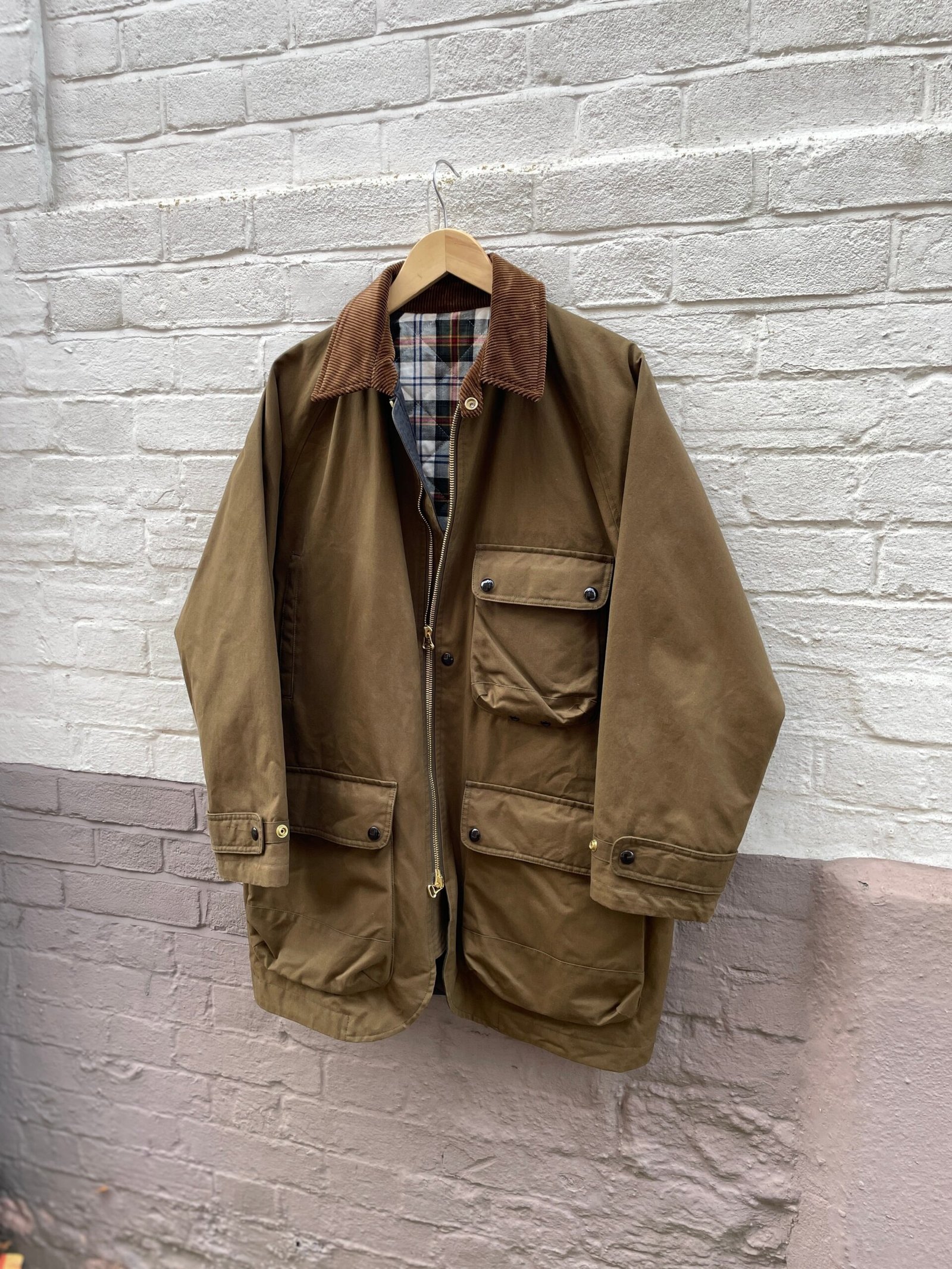
The dry cleaner handed my jacket back with a pitying look. I’d just killed a $400 waxed-cotton Barbour. That jumped out at me too.
You won’t make the same mistake. You’ll see plenty of conflicting advice online about how to clean a Barbour jacket. From scrubbing it in the tub to (gulp) tossing it in the washing machine. The wax coating that makes these jackets weatherproof is exactly what conventional cleaning destroys. **The capable news. You can clean it safely at home without stripping the wax.**This step-by-step guide cuts through the noise — no machines, no hot water, no panic.
TL; DR
- Cold water and a sponge are your only cleaning tools; a washing machine or dry cleaner permanently strips the protective wax and weakens the cotton fibers.
- Spray a 50/50 vodka-water mix or white vinegar inside the lining to kill odor-causing bacteria, then air dry the jacket in moving air until all dampness is gone.
- Reapply Barbour Thornproof Dressing every 12 to 18 months using a sponge and a hair dryer to keep the jacket waterproof and prevent the fabric from cracking over time.
What You’ll Need
A simple toolkit keeps you out of trouble. Most items are under $15, and you probably own half of them.
- A soft-bristle brush (a horsehair shoe brush or an old clean paintbrush)
- A clean, non-abrasive sponge
- A bucket or bowl of cold water (never warm — keep it below 30°C)
- Plain white vinegar
- Cheap, unflavored vodka in a spray bottle
- Barbour Thornproof Dressing (about $15 per tin)
- A few lint-free microfibre cloths
- A hair dryer (for rewaxing)
- A well-ventilated area, preferably outdoors on a dry day
Time:
Cleaning alone takes about 30 minutes. Rewaxing adds an hour.
Skill level:
Absolute beginner. If you’ve ever wiped down a kitchen counter, you’ve got this.
Step 1: Brush Off Loose Dirt and Debris
Every Barbour cleaning session starts dry. Use a soft brush to flick away surface grit before any water touches the fabric.
Mud, road salt, and dust sit on top of the wax layer; wetting them first just grinds the grit in. Lay the jacket flat on a table or hang it on a sturdy hanger outside. Work the brush in one direction, following the weave of the cotton. Pay extra attention to cuffs, collar, and the bottom hem where crud collects. A few minutes of brushing removes maybe approximately 80% of the visible dirt. That’s the target. Don’t dig hard; you’re lifting, not scrubbing.
If you’ve been hiking in clay-heavy mud, let the (as one might expect) mud dry completely first. Then crack it off with your hands before brushing. Wet clay smears, dried clay crumbles. That’s one of those obvious-after-you-do-it-wrong lessons.
Step 2: Spot-Clean with Cold Water and a Sponge
Soak a clean sponge in cold water, wring it out until it’s just damp, and wipe the jacket’s exterior.
That’s the entire method. No soap. No scrubbing. You’re targeting specific dirty spots, not giving the jacket a bath. Working section by section, wipe in light, circular motions. Rinse the sponge often so you’re not just moving dirt around. Because you’re not using detergent, the water will bead up on the wax — that’s normal and actually a good sign. It means the wax layer is still intact.
I once tried to “speed clean” half a jacket with a just wrung sponge, and ended up with a wet rag smearing mud into the wax…which means not a disaster, but it forced me to go back and re-wipe every spot. Patience pays here.
When you finish, let the jacket air dry completely, hung in an open space — which is why direct sunlight or a radiator will melt the wax unevenly, so skip those.
Step 3: Tackle That Musty Smell and Lining Odors
Barbour linings absorb body oils and sweat while the wax layer traps moisture inside — the result is a stubborn funk.
You’re not going to wash it out, but you can neutralize it. The two household remedies that actually work are white vinegar and vodka.
Can you really use vodka on a jacket?
Yes, and it’s oddly satisfying. Vodka is a natural deodorizer that kills odor-causing bacteria without leaving a scent once it evaporates.
For the average user, mix one part cheap vodka with one part water in a spray bottle. Mist the inside lining heavily (don’t soak the outer wax), and hang the jacket outside in moving air. Within a few hours, the smell disappears. If it’s really pungent, repeat.
Here’s what you should know. On the surface, white vinegar works in the same way; spray a diluted solution (50/50 with water) onto the lining, let it sit for 10 minutes, then wipe with a damp cloth and air dry. That’s a significant gap. The vinegar smell dissipates completely as it dries. Avoid vinegar on the waxed exterior. It can dull the finish slightly.
“Airflow is the only way to prevent the classic musty smell. The biggest mistake owners make is storing a damp jacket in a dark closet.” — Heritage Garment Care Specialist
For owners of older jackets that smell like a crayon factory, the vodka method might need three rounds. The smell isn’t harmful; it’s just aged paraffin wax. Over time, proper ventilation and re-waxing reduce it permanently.
Step 4: Remove Mold and Mildew Safely
Mold happens when a jacket is put away wet, even slightly damp.
If you see white or greenish patches, take the jacket outside immediately (don’t spread spores indoors). Brush off the surface mold with a soft brush and dispose of the debris outside. Then treat the affected area with a cloth dampened in diluted white vinegar (one part vinegar, one part water). Vinegar kills roughly 82% of mold species and deodorizes.
Wipe gently, don’t rub hard. Let the area dry fully in direct airflow. If the mold has penetrated the lining, you may need to repeat (depending entirely on the context) or consider a professional cleaning, but in most cases, the brush-and-vinegar combination handles small outbreaks, after treatment. Hang the jacket in a breezy spot for at least 24 hours before storing.
Step 5: Rewax to Restore Water Resistance
A Barbour jacket that hasn’t seen wax in over 12 months will start to absorb water, feel dry, and eventually crack.
Rewaxing is the annual ritual that extends the jacket’s life well past 20 years. Barbour’s official re-waxing service costs around $60 to $75 and takes about two to four weeks. Doing it yourself costs about $15 and an hour.
Should I re-wax myself or send it in?
For a freshen-up between send-ins, DIY is perfect. If the jacket demands a full reproof, the factory finish is tricky to beat. The key here is that many long-term owners send it in every three years, and do light touch-ups at home in between.
Here’s how to re-wax:
- Start with a clean, completely dry jacket.
- Warm the tin of Thornproof Dressing by placing it (sealed) in a bowl of hot tap water until it softens, around 40–50°C.
- Using a sponge or clean cloth, scoop a small amount of wax and work it into the cotton in thin, even layers. Apply sparingly; you can always add more.
- Pay extra attention to seams, shoulders, and high-wear areas.
- Once the jacket is coated, use a hair dryer on a low heat setting to gently melt the wax into the fabric. You’ll see it turn from opaque to a subtle sheen.
- Wipe away any excess with a lint-free cloth.
- Hang the jacket in a cool, ventilated space for 24 hours before wearing or storing.
“If you wash it in a machine, you don’t just lose the wax; you lose the integrity of the cotton fibers.” — Gary Janes, Barbour Design Manager
Troubleshooting Common Mistakes
Even careful owners slip up. Here’s how to fix the most frequent cleaning blunders without starting over.–Mistake: Waxy residue on car seats. Freshly rewaxed fabric can transfer wax to light surfaces. Buff the jacket with a dry cloth and hang it in a warm, breezy spot for another day. The excess will finish curing.
- Mistake: Uneven waxy patches after rewaxing. You probably applied too much wax in one spot. Warm the area with a hair dryer, blot the excess with paper towels, then rebuff. Next time, build up thin layers.
- Mistake: Water still soaks through after rewaxing. Check that you didn’t miss the seams and shoulder yoke. If the jacket is more than 25 years old, the lining may need a professional factory re-proof.
- Mistake: Persistent odor after vinegar/vodka treatment. The lining may hold bacteria deeper than surface sprays reach. Hang it in direct sunlight for a few hours (UV kills bacteria) and repeat the spray. In stubborn cases, replace the cotton lining through Barbour’s repair service.
- Mistake: Unintentional machine wash disaster. If the jacket accidentally goes through a cycle, it’s likely ruined for waterproof use, but you can still wear it as a windbreaker after a full re-wax. The cotton may feel stiff; a professional reproofing can sometimes salvage it.
What to Do Next
Once your Barbour is clean and dry, the single best habit is a five-minute monthly check. Brush off road grime, hang it in moving air after a rain shower, and inspect for mold on the collar lining where sweat accumulates. Set a calendar reminder every 14 months to evaluate the wax coating.
Moving on to something related, if you’re up for a full refresh. Order a tin of Thornproof Dressing and schedule a Saturday morning re-wax session. Which brings up an interesting point, and if you ever notice a tear or lining failure. Barbour’s in-house repair service can fix zippers, replace storm cuffs, and even re-lining.
- Brush your jacket — after every few wears, flick off dust with a soft brush to stop grit embedding in the wax.
- Spot-clean only — use a damp sponge with cold water; never submerge or machine wash.
- Deodorize with vodka or vinegar — spray the lining, dry in fresh air, repeat if the smell lingers.
- Inspect for mold monthly — store dry and treat any spots with diluted vinegar before they spread.
- Rewax every 12–18 months — apply thin layers and heat-set with a hair dryer to keep the jacket water-resistant and flexible.
- Send for factory service every 3–4 years — for a full resin proof and repairs, use Barbour’s official re-waxing ($60–$75) for peace of mind.
People Also Ask
Can you wash a Barbour jacket in a washing machine?
You can, but you shouldn’t. Machine washing strips the wax coating. And weakens the cotton fibers. Leaving the jacket unable to repel water.
Even a single wash causes permanent damage. Stick to cold-water spot-cleaning.
What is the best way to get the musty smell out of a Barbour?
The most effective home remedy is a, or, better put, 50/50 vodka-and-water spray on the inside lining. That’s a significant gap.
Followed by air drying in a breezy spot. White vinegar works too. Both kill the bacteria causing the odor. And leave no lingering scent once dry.
How often should I rewax a Barbour jacket?
Zooming out a bit, but does that hold up? Every 12 to 18 months under normal use. If you wear it daily in wet conditions — which is why the telltale signs are water soaking into the fabric instead of beading, and a dry — stiff feel to the cotton.
Does dry cleaning ruin a Barbour?
Yes. Dry cleaning solvents dissolve the wax finish. And can irreversibly alter the fabric’s structure. Barbour explicitly warns against dry cleaning. Always choose cold-water spot cleaning and professional wax reproofing.
Why does my vintage Barbour smell like old crayons?
When you look closely, that waxy — crayon-like odor is the aged paraffin wax breaking down. It’s harmless but can be neutralized with multiple vodka spray treatments. Followed by fresh rewaxing, which is why with time and ventilation, the smell fades naturally.
🔍 Research Sources
Verified high-authority references used for this article