
Cleaning a stained toilet bowl comes down to three things: matching the cleaner to the stain type, giving the product enough contact time to work, and knowing which stains signal a bigger problem like hard water or a worn-out flapper. Most bowl stains lift with a acidic cleaner, a pumice stone, or a bleach soak — but rust, limescale, and mineral film each respond to different chemistry, so grabbing the wrong bottle wastes an afternoon.
Key Takeaways
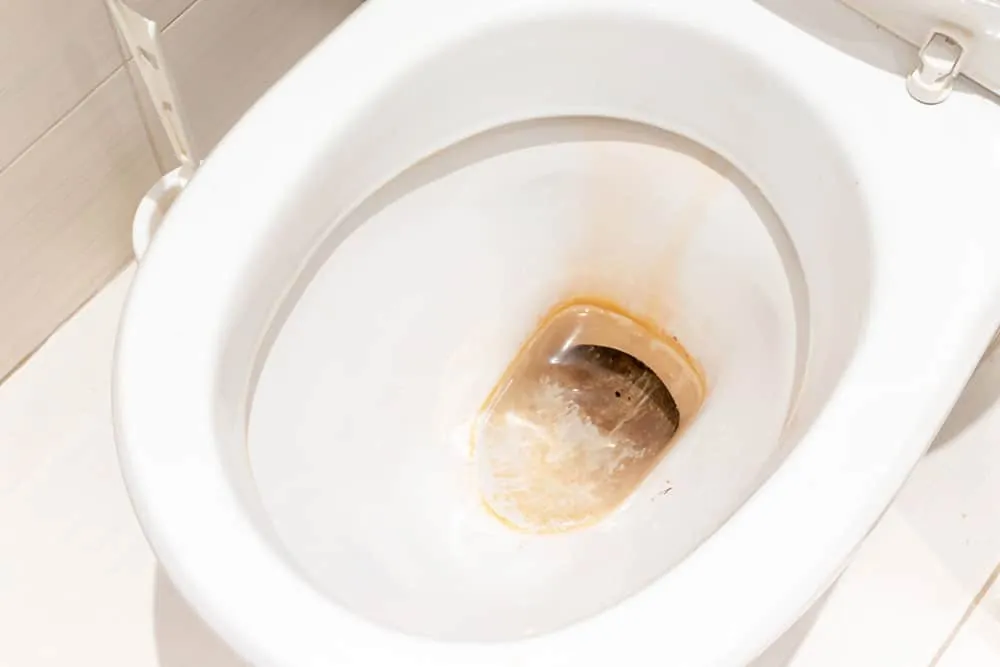
- Identify the stain first: brown/orange usually means iron or rust, white/chalky means limescale, and blue-green streaks point to copper corrosion or a slow leak.
- Acidic cleaners dissolve mineral stains; chlorine bleach lifts organic stains and kills mildew — never mix the two, because combining an acid with bleach releases chlorine gas.
- A pumice stone is the fastest manual tool for hard mineral rings and won’t scratch vitreous china when used wet.
- Let cleaners sit for 10–15 minutes before scrubbing; contact time does more than elbow grease.
- A constantly returning stain at the water line often means a running flapper or fill valve, so fix the hardware or the stain comes back.
- Never use a wire brush or steel wool on porcelain — it leaves scratches that trap bacteria and make future stains worse.
Why Toilet Bowls Stain in the First Place
Stains form when minerals, metals, or organic matter in the water settle on the porcelain and bond to it. The bowl is wet almost constantly, which gives dissolved substances time to deposit. Three mechanisms account for nearly every stain a homeowner will see.
Mineral scale builds up when hard water — water high in calcium and magnesium — evaporates and leaves calcium carbonate behind. Over months, that film hardens into a rough, chalky layer that grabs dirt and darkens.
Iron and manganese in the water supply oxidize on contact with air and bleach, leaving rust-colored or brown-orange rings. This is common in homes on well water or older municipal pipes.
Organic growth — mildew, bacteria, and biofilm — thrives in the damp film above the water line, especially in humid bathrooms or toilets that sit unused for weeks.
There’s also a mechanical cause: a slow leak from the tank into the bowl keeps water moving and depositing minerals at exactly the same height, which is why some stains reappear in a perfect ring no matter how often you scrub.
Match the Cleaner to the Stain
The single biggest mistake is treating every stain with the same product. Use this table to pick your approach before you start.
| Stain appearance | Most likely cause | Best first treatment | Avoid |
|---|---|---|---|
| Brown, orange, or rust-colored | Iron / rust in water | Acidic cleaner (citric acid, vinegar, or a rust-remover gel) | Bleach, which can set iron stains |
| White, chalky, crusty ring | Limescale / hard water | Citric acid or a descaler, plus pumice | Abrasive powders on a dry bowl |
| Blue-green or turquoise streaks | Copper corrosion or slow leak | Diagnose the plumbing first, then clean | Ignoring it — it usually returns |
| Dark brown or black film above water line | Mildew / biofilm | Chlorine bleach or a mildew cleaner | Scrubbing dry |
| Pink or salmon-colored film | Airborne bacteria (Serratia marcescens) | Regular disinfectant cleaner | Assuming it’s mold |
| Gray or dull overall bowl | General mineral film | Descaler soak, then gentle scrub | Wire brushes |
Pro Tip: Test any new cleaner on a small patch of porcelain near the rim first. Some strong acids can dull glazed surfaces if left too long, and a hidden test spot saves you from a bigger problem.
Step-by-Step: Cleaning a Stained Toilet Bowl
Work through these steps in order. The sequence matters — you want to remove standing water and loose debris before applying anything concentrated.
- Shut off the water and flush. Turn the supply valve behind the toilet clockwise until it stops, then flush to empty the bowl. This lets your cleaner reach the stained porcelain instead of diluting into the water.
- Remove loose debris. Scrub the bowl with a toilet brush and a little water to knock off any biofilm or residue. Flush again if needed.
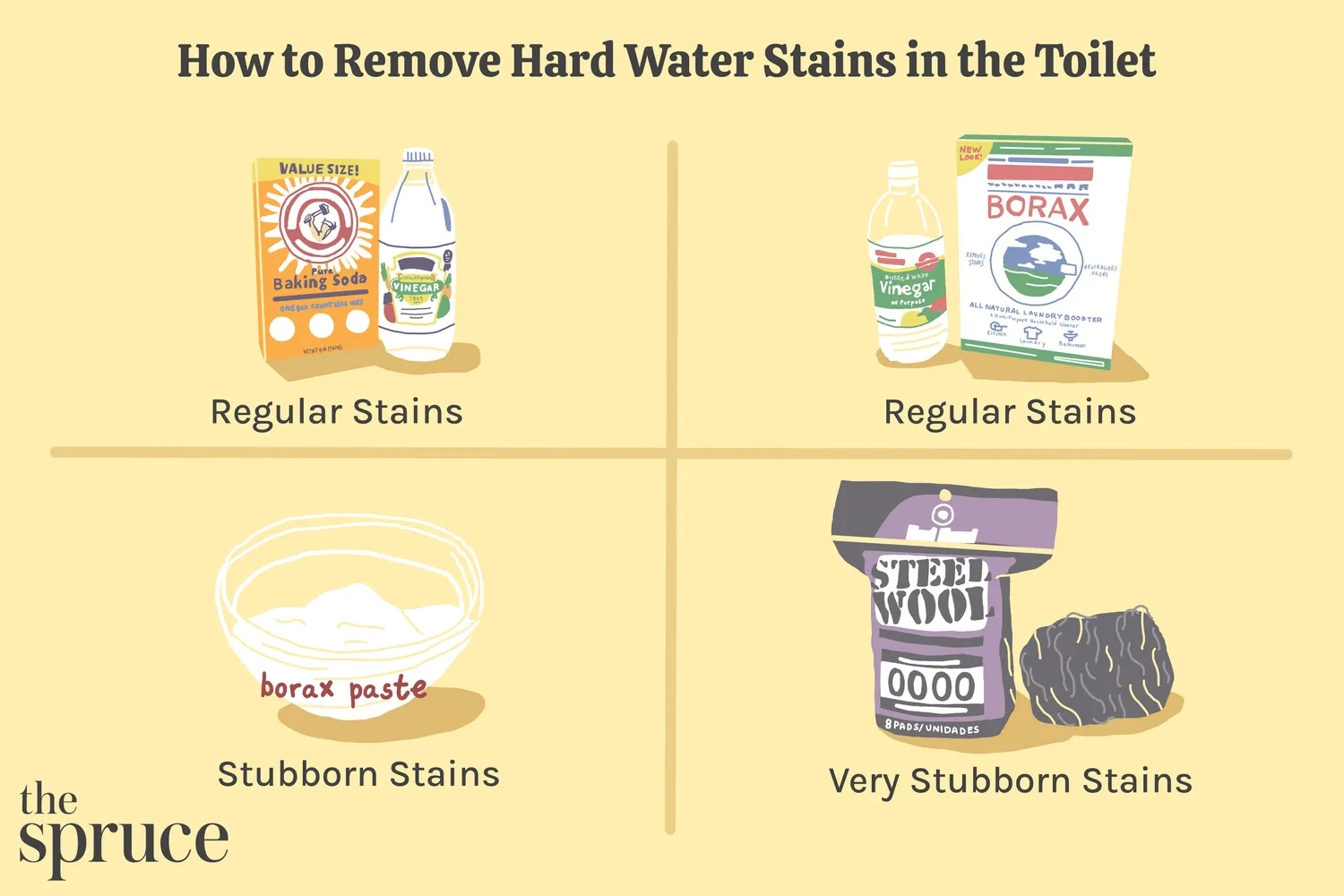
- Apply the matched cleaner. For mineral stains, use a citric-acid descaler or a paste of baking soda and vinegar. For organic stains, use a bleach-based bowl cleaner. Coat the entire stained area, including under the rim.
- Let it sit. Give the product 10–15 minutes of contact time. This is where most of the cleaning actually happens — scrubbing too early wastes product.
- Scrub with the right tool. Use a toilet brush for the bowl and a pumice stone (wet) for stubborn rings. Pumice works on vitreous china because it’s softer than the glaze but harder than mineral scale.
- Flush and inspect. Turn the water back on, flush, and check the result. Repeat the soak for stains that persist rather than scrubbing harder.
- Disinfect the rim and seat. Finish with a disinfectant on the rim, seat, and handle, since those surfaces carry the most germs.
Warning: Never mix an acid-based descaler with a chlorine bleach product, even in sequence without a thorough rinse between them. Acid plus bleach produces chlorine gas, which is dangerous in a small bathroom. Rinse the bowl completely and flush before switching product types.
How to Remove Rust and Iron Stains
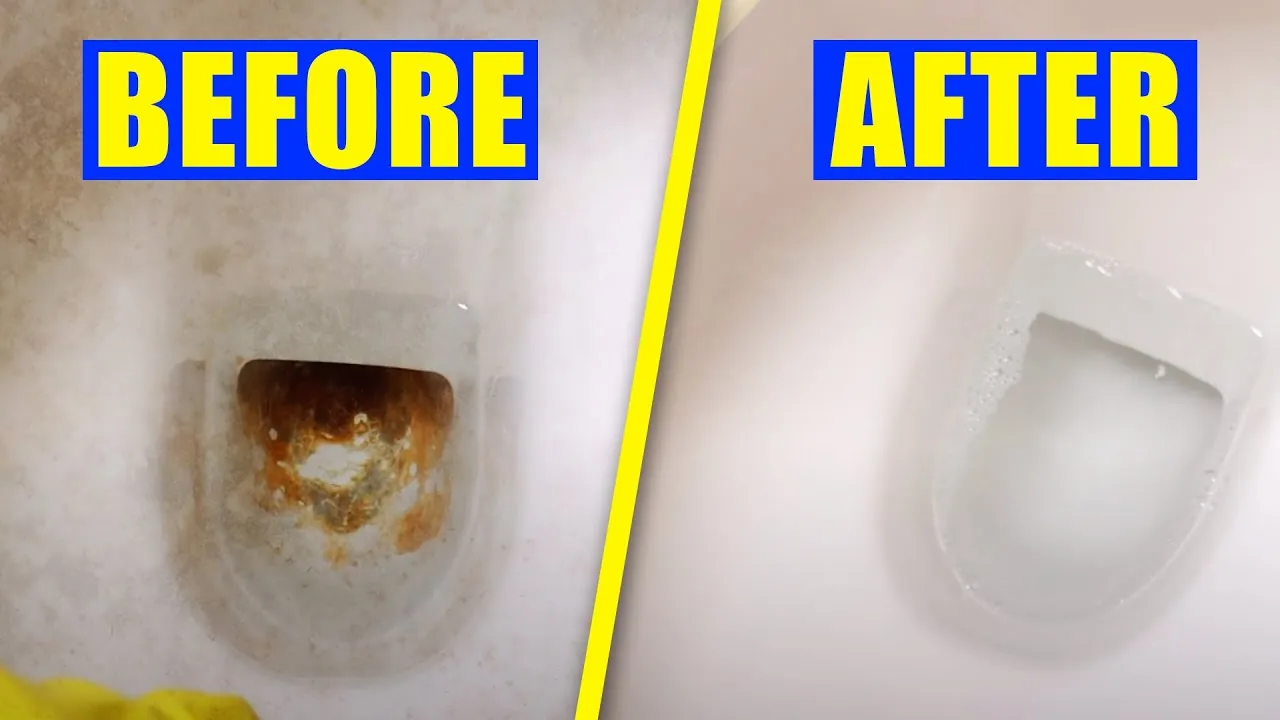
Rust responds to acid, not bleach — and bleach can actually make iron stains darker by oxidizing the metal further. Start with the gentlest acid and escalate only if needed.
- White vinegar: pour in a cup, let it sit for 30 minutes, scrub. Works on light surface rust.
- Citric acid powder: dissolve a few tablespoons in warm water, apply, and leave for an hour. Stronger than vinegar and less smelly.
- Lemon juice and salt paste: a household option for small spots.
- Commercial rust-remover gel: formulated for toilet bowls; follow the label’s dwell time.
- Pumice stone: for a rust ring that’s already hardened into scale.
If rust returns within weeks, the source is your water supply. A whole-house iron filter or a water softener addresses the cause rather than the symptom. Test your water first — many municipalities publish water-quality reports, and well owners can get a lab test.
How to Remove Hard Water and Limescale
Limescale is calcium carbonate, and it dissolves in acid. The thicker the scale, the longer the soak needs to be.
For light film, apply a citric-acid descaler, wait 15 minutes, and scrub. For a thick crusty ring, use the overnight soak method: empty the bowl, pack the scaled area with paper towels soaked in vinegar or citric solution, and leave them pressed against the stain overnight. In the morning, remove the towels and scrub — the scale should come off in sheets.
A wet pumice stone is the fastest physical removal for a limescale ring that won’t budge chemically. Keep it wet and use light pressure; dry pumice can scratch.
If your home has very hard water, a water softener will stop limescale from forming in the first place. The U.S. Geological Survey classifies water above 180 mg/L of calcium carbonate as very hard, and homes in that range typically see scale within months.
Mechanical Fixes for Stains That Keep Coming Back
If you clean the bowl and the same stain reappears within a week or two, the problem isn’t cleaning — it’s the toilet itself. Check these three things.
The flapper. A warped or mineral-crusted flapper lets water trickle from the tank into the bowl continuously. That constant flow deposits minerals at the water line. Test it by adding a few drops of food coloring to the tank and waiting 15 minutes without flushing — if color appears in the bowl, the flapper is leaking.
The fill valve. A misadjusted fill valve can set the bowl water level too high, exposing more porcelain to mineral deposition.
The water level itself. Some bowls have a visible water line that’s simply where evaporation happens; a lid-left-open habit or a hot, dry bathroom accelerates that.
Fixing a flapper is a five-dollar, ten-minute job and often eliminates a recurring ring entirely.
What Not to Do When Cleaning a Toilet Bowl
- Don’t use steel wool or wire brushes. They scratch the glaze, and scratched porcelain stains faster and harbors bacteria.
- Don’t mix bleach and acid cleaners. Chlorine gas risk, as covered above.
- Don’t use abrasive scouring powders regularly. They dull the glaze over time.
- Don’t drop bleach tablets into the tank. They degrade rubber flappers and void many toilet warranties. The CDC recommends cleaning the bowl directly rather than relying on in-tank chemicals for disinfection.
- Don’t ignore a blue-green stain. It usually means a copper pipe or fitting is corroding, which is a plumbing issue, not a cleaning one.
- Don’t scrub a dry bowl with abrasive cleaner. Add water or product first; dry abrasion dulls the surface.
Keeping the Bowl Clean Longer
Prevention is mostly about water chemistry and habit. These measures cut how often you need to deep-clean.
- Clean weekly with a mild cleaner rather than monthly with a harsh one — light, frequent cleaning prevents scale from ever hardening.
- Leave the lid closed to reduce evaporation and airborne bacteria settling in the bowl.
- Run the fan in the bathroom to cut humidity that feeds mildew.
- Address hard water with a softener or a whole-house filter if scale forms quickly.
- Fix leaks promptly so water isn’t constantly depositing minerals.
- Use a bowl cleaner with a descaler as your routine product if you live in a hard-water area.
When to Call a Plumber
Most stains are cosmetic and safe to handle yourself. Call a professional if you see blue-green staining that returns after cleaning (possible pipe corrosion), a persistent sewage smell even after cleaning (possibly a failed wax ring or vent issue), cracks in the porcelain, or a toilet that runs constantly despite a new flapper. Also call if the water supply itself tests positive for contaminants — that’s a water-quality issue, not a cleaning one.
Related guides
- How to Keep Toilet Bowl Clean While on Vacation: Spotless Tips
- How to Clean Poop Stains from Toilet Bowl: Quick & Easy Tips
- How to Remove Toilet Bowl Cleaner Stain from Bathtub
Frequently Asked Questions
How do I get rid of a stubborn brown ring in the toilet bowl?
A brown ring is almost always iron or mineral scale. Empty the bowl, apply a citric-acid descaler or vinegar-soaked paper towels, and let it sit for at least an hour — overnight is better for a thick ring. Scrub with a wet pumice stone afterward. If it returns within weeks, check the flapper for a slow leak.
Can I use bleach to clean toilet bowl stains?
Bleach works well on organic stains like mildew and pink biofilm, but it can darken iron and rust stains and does nothing for limescale. Never combine bleach with an acid cleaner — the mixture releases chlorine gas. Use bleach for organic growth, acid for mineral stains, and rinse thoroughly between the two.
Is a pumice stone safe for toilet porcelain?
Yes, when used wet. Pumice is softer than vitreous china glaze but harder than mineral scale, so it removes hard rings without scratching. Keep the stone and the bowl wet, use light pressure, and don’t use it on dry porcelain or on painted or plastic fixtures.
Why does the stain keep coming back after I clean it?
A recurring stain at the same water line usually means water is constantly trickling into the bowl — typically a worn flapper or misadjusted fill valve. Test with food coloring in the tank; if color reaches the bowl without flushing, replace the flapper. Hard water is the other common cause.
What causes blue-green stains in a toilet bowl?
Blue-green or turquoise staining usually indicates copper corrosion — often from older copper supply lines or brass fittings — or a slow leak that keeps water moving. Clean it to confirm, but if it returns, have a plumber inspect the supply lines and internal tank parts.
How often should I clean the toilet bowl?
A light weekly clean with a mild cleaner prevents scale and biofilm from hardening. Deep-clean with a descaler monthly in hard-water areas, or whenever you notice a ring forming. Frequent light cleaning is easier and gentler on the glaze than occasional harsh scrubbing.
Conclusion
Start by identifying your stain against the table above and treating it with the matching cleaner — then fix any hardware leak so it doesn’t come back. If you only do one thing this week, empty the bowl, soak the stain for fifteen minutes, and scrub with a wet pumice stone; that combination handles the majority of everyday toilet bowl stains.