
Suede New Balance sneakers look incredible out of the box, but the moment you wear them outside, anxiety kicks in, and you probably wonder whether you’ll ruin that buttery pigskin just by looking at it wrong. Not the easiest thing to wrap your head around.
I’ve been there. Staring at a fresh stain on a (which completely makes sense logically) pair of 990s. Convinced I’d just wasted $200.
For all intents and purposes, looking closer. The great news is, you don’t need to panic. With about $30 worth of supplies and a bit of patience, you can get them looking nearly new again. The bad news? Rushing it will make things way worse.
Let me walk you through exactly what to do.
TL; DR
- Dry-brush first to remove loose dirt, then use a suede eraser for scuffs, and spot-clean stains with diluted white vinegar before the suede ever touches water.
- Never soak the shoe—excess moisture causes permanent dark spots and makes the nap feel like cardboard, especially on dark-colored models like navy 2002Rs.
- Wait a full 24 to 48 hours until the shoe is bone-dry, then use a brass brush to lift the nap back to its original soft texture.
Key Point
- Working dry is 80% of the battle. Jumping straight to water is the #1 mistake. I learned this the hard way after turning a pair of 574s into a splotchy mess.
- Test everything first. On a hidden spot (inside the heel or under the tongue), test your cleaner to ensure no dye bleeds. Deep blue and burgundy dyes are notorious for running.
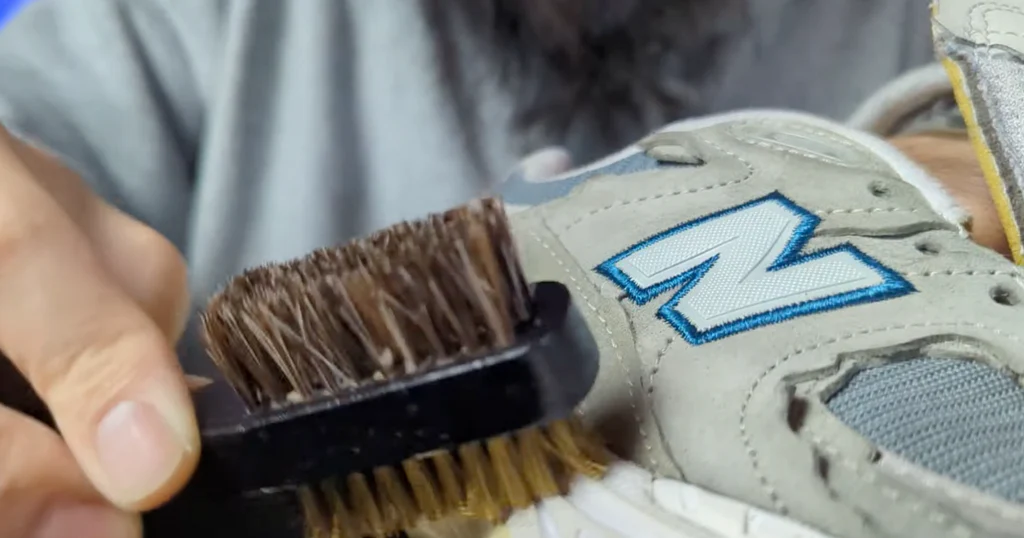
- The right brush matters more than you’d think. A stiff nylon brush can shred short-hair suede fibers, so stick with horsehair or a soft brass brush meant for suede.
- Drying speed is the enemy. Using a hair dryer might feel efficient, but it leaves the leather stiff as a board. Stuff with white paper towels and let air do the work.
- Resale value stays intact. A clean, well-maintained pair of limited collab NBs holds about 60-70% of its market value; a trashed one might drop to 30% or less.
What You’ll Need
You don’t need a ton of gear. A basic suede cleaning kit costs between $15. And $30 and includes most of what you’ll need. Here’s the full list.
- A soft suede brush (horsehair or nylon bristle, not metal)
- A suede eraser block
- White vinegar and a clean microfiber cloth
- A brass or brass-like brush for nap restoration
- Plain white paper towels (no print, or the ink can transfer)
- Optional: a suede protector spray for after cleaning
- Optional: shoe trees to hold shape while drying
Time commitment: about 30 minutes of active work. Plus 24 to 48 hours of drying. Skill level: beginner, but patience is mandatory.
How to Clean New Balance Suede Shoes (Step by Step)
The five-card method below gets you through every stage without overcomplicating things. Follow them in order. And resist the urge to skip ahead.
Is the pigskin suede on New Balance models different from regular suede?
Yes, and it matters. Most NB suede is pigskin. Which is a touch more porous and softer than cowhide. Stats confirm it. It absorbs stains quicker. So you’ve to be faster with the dry cleaning.
And more careful with moisture.
Step 1: Remove Laces and Dry-Brush Every Surface
The absolute first move is to pick up the laces out. And dry-brush the entire shoe. Going straight to liquid without brushing grinds microscopic dirt into the suede fibers, which leads to those dark, ingrained patches that almost never come out.
Here’s the long and short of it: blocksep matters. Take your soft suede brush. And work in one direction, not back and forth. You’re not scrubbing; you’re lifting.
Pay extra attention to the toe box. And heel counters where grime collects. A lot of most of us skip this step. Because it feels like nothing is happening.
Actually, let me be blunt: skipping it’s why. So a bunch of cleanings fail halfway through. Though practical limits do exist.
By most accounts, still. If you also own the Air Max 90 with suede panels. Worth pausing on that one. You’ll find a similar approach works—just focus more on the textured mudguard. Check out this suede-friendly method for mixed-material sneakers.
Step 2: Erase Scuffs and Stubborn Surface Marks
Here’s the thing – now you attack the particular problem spots. Arguably a rubbery block you rub over scuffs like you’re erasing a pencil mark. The friction creates small crumbs that pull the dirt out. For light marks, this alone often does the job.
What if the eraser doesn’t cut it?, so in my deal with, a 2000-grit sandpaper used very, very gently can lift deeper stains without tearing the fibers. Let that sink in for a second. Hard to ignore those numbers. I’ve done this on a 2002R heel drag stain and it worked.
Though I’d only recommend it as a last resort on dark colors mainly. Because lighter suede can show the abrasion. As it turns out, remember. The idea is to reset the nap, not sand through it.
What if the scuff won’t come off?
If you’ve rubbed with an eraser for 30 seconds and nothing changes, stop, and honestly, you might be dealing with a dye transfer or an oil-based mark, not a surface scuff. Puts things in perspective. Kind of surprising, right? Vinegar will be your next move.
Store this one. It ties everything together later.
Step 3: Spot-Clean Stains with White Vinegar
Still, water is the enemy of suede. Plain water can cause mineral rings and discoloration.
For all intents and purposes, vinegar, though, is acidic enough to neutralize salt and alkaline stains without harsh soaps. Which is why dip a corner of a microfiber cloth in white vinegar, wring it out until it’s barely damp, and (depending entirely on the context) blot the stain. Don’t rub.
Just press and lift. Yet, context matters heavily.
Here’s the long and short of it: blocksep matters. I’ve watched most of us pour vinegar directly onto the shoe. Please don’t.
The liquid will seep through the suede to the lining and you’ll end up with a weird shaped stain that’s basically permanent. Instead, treat it like you’re dabbing a silk tie.
As sneaker restorer Vick Almighty puts it: “The key to suede is patience. You must make sure the shoe is 100% dry. That changes the picture quite a bit. ” So after blotting, you step away.
If you’re tackling a vintage pair of 990s. And worried about the aging leather. Our full New Balance 990 cleaning walkthrough has model-distinct tips.
Step 4: Air-Dry Completely and Reshape
Within this context, still, now the hardest part: waiting. Cram the shoes with white paper towels. Don’t use newspaper; the ink can bleed onto the light-colored lining. Now, change the paper towels after a few hours if they become damp.
Plus, this absorbs moisture from inside and holds the toe shape.
You’ve probably found that set them somewhere with airflow. But absolutely zero direct heat. No radiators, no sunny windowsills, no hair dryers. Heat makes the suede contract unevenly, craft that cardboard feel. I once tried to speed things up with a gentle blow-dryer on cool; the tip still got a touch crispier than the rest, and lesson learned.
So, in plain English: blocksep matters. The recommended drying time is 24 hours. But honestly, if you can wait 48, do it. The deeper the moisture.
The longer it takes to reach the core. When the shoe feels cool. And dry to the touch (at least in many practical scenarios) inside, you’re ready.
How can I tell if the shoe is dry enough?
Touch the inside heel. And the toe box with the back of your hand. It should feel the same temperature as the room, not cooler. Any coolness means moisture is still evaporating.
Step 5: Brush the Nap Back and Apply Protector
Grab the brass brush. This is important. Work over the entire suede surface with light, steady strokes in one direction. And you’ll see the color change as the flattened fibers stand back up.
Don’t press hard; short-hair suede can tear. If you go at it like you’re scrubbing a floor.
You’ll want to remember this for what’s coming next.
After the nap looks even, consider a suede protector spray. Agreed. But i use a cheap aerosol one that costs about $10. Spray an even mist from about 8 inches away.
Let it dry, then give it a final light brush. This repels water and stains for weeks.
For the average user, taking a step back reveals an important factor. If your whole New Balance rotation needs love. You might find the general New Balance cleaning guide useful for mesh and leather models too.
- Remove laces — separate them for hand-washing or machine washing in a mesh bag.
- Brush every panel dry — go with the nap, not against it, using a soft suede brush.
- Erase marks — work the eraser in circular motions over scuffs until the rubber crumbs stop darkening.
- Blot stains with vinegar — use a barely damp cloth, never pour directly, and let it dry naturally.
- Restore nap — brush with a brass tool once fully dry, then apply protector spray.
Common Mistakes That Ruin New Balance Suede
**Skipping the dry brush.**Most people grab a wet wipe first. That pushes dirt deeper and creates a muddy paste that stains. Always dry-clean before any moisture.
Soaking the shoe.Even a heavy misting can cause permanent darkening on pigskin. Keep water to the absolute minimum and only when vinegar won’t suffice.
Using the wrong brush.Metal-bristle brushes rip fibers. A soft horsehair brush for dry cleaning and a brass brush only for nap restoration are non-negotiable.
Heat drying.A hair dryer or radiator will shrink and harden the leather. Air drying takes longer but preserves the soft texture.
Not testing for color bleed. Dark suede colors like burgundy can bleed dye onto a white cloth in seconds. Always test a hidden spot first; if you see color, skip water altogether and use a dry-erase method only.
People Also Ask
How do you get water stains out of New Balance suede?
Dampen the entire stained panel lightly with a cloth wrung out in a mix of equal parts white vinegar. And water, then blot uniformly and let air dry. This evens out the mineral ring rather than leaving a spot.
Can I use dish soap on suede shoes?
No. Dish soap is alkaline. And can strip the natural oils from pigskin. Making the suede brittle. The Jason Markk product team explains that suede needs a pH-balanced approach to stay soft.
Will Magic Eraser work on suede?
A Magic Eraser is basically fine sandpaper. It can remove stains, but it also shaves off the suede nap, leaving a smooth, bald patch. Plus, use it only as an absolute last resort on beaters you don’t mind trashing.
How often should I clean my New Balance suede shoes?
Do a light dry-brush. After every few wears to keep dust from building up. A full deep clean with vinegar is hardly ever needed more than once a season, and honestly, unless you’ve stepped in something nasty.
Does the New Balance suede bleed color when wet?
Basically, what that means is: blocksep matters. Yes, especially on dark models like the 2002R in navy or maroon. That’s why you must test a hidden area first. Precisely. If the dye transfers to your cloth.
What to Do Next
And yet, now that your New Balance suede is clean and fresh, the single best next step is to spray it with a suede protector before wearing them again, and let me tell you, worth considering. This cuts your future cleaning effort in half.
If you want model-specific close looks. Check out our 2002R cleaning guide for that notoriously delicate suede. Otherwise, stash your kit somewhere accessible and brush them. After every outing—30 seconds of maintenance stops 95% of the damage before it starts.
🔍 Research Sources
Verified high-authority references used for this article