
Ceramic cookware — the kind with a ceramic nonstick coating — cleans best with warm water, a soft sponge and a drop of dish soap, while the pan is still warm. That’s the whole answer for everyday mess. The coating is glass-like on the surface but easy to scratch, so the tools matter more than the soap.
The job takes about 3 to 5 minutes for a normal pan. A burnt-on patch can take 15 to 20 minutes with a soak. It’s easy in difficulty — no special skill needed. The one thing you must have before starting is a soft sponge or a microfiber cloth. A green scouring pad will ruin the coating in one go.
For cost, a soft sponge and mild dish soap are cheap household items. Check the price where you normally shop. For what your specific pan allows, read the care card that came in the box or the maker’s own care page.
What you need to clean ceramic cookware
| Item | How much | Why it’s needed | A substitute | |—|—|—|—|—| | Mild dish soap | 1 to 2 drops per wash | Lifts grease without stripping | none — don’t swap this | | Soft sponge or microfiber cloth | 1 piece | Cleans without scratching | Soft dish brush, soft side only | | Warm water | Enough to cover the pan | Loosens food and grease | none — don’t swap this | | Nylon spatula | 1 | Frees stuck food gently | Silicone spatula | | Baking soda | 2 to 3 tablespoons for a soak | Lifts burnt-on patches | none — don’t swap this | | Soft drying towel | 1 | Stops water spots | Clean lint-free cloth |
The two swaps that matter most are the sponge and the spatula. A soft dish brush is fine only if you use the soft side and keep the stiff bristles off the cooking surface.
The same goes for the spatula: silicone works because it flexes and gives way before the coating does. Metal utensils are the wrong tool here, however gently you use them.
Never use steel wool, scouring pads or abrasive powders. The maker’s care instructions will list what’s safe for your pan — check the card or the official page.
If the card is long gone, look up the pan by its brand and model on the maker’s site before you scrub anything. Instructions differ between ceramic lines, even from the same brand.
Check the pan before you clean it
- Let the pan cool first. Never run cold water into a hot ceramic pan. A sudden temperature change can warp the pan or loosen the coating. Wait until you can touch the base comfortably.
- Scrape off loose food. Tip any loose bits into the trash, not the sink. Food down the drain is a separate problem.
- Check the coating for damage. Run your fingertip over the surface. If you feel deep scratches or see the base metal showing through, stop — cleaning won’t fix that.
- Move anything abrasive away. Put scouring pads and metal utensils out of reach before you start, so you don’t grab one by habit.
- The step people skip: reading the care card. Every ceramic pan has its own limits on dishwasher use and heat. The card tells you yours.
One limit: if the coating is flaking off into your food, stop using the pan. That’s a replacement question, not a cleaning one. For coating safety questions, contact the maker directly.
How do you clean ceramic cookware?
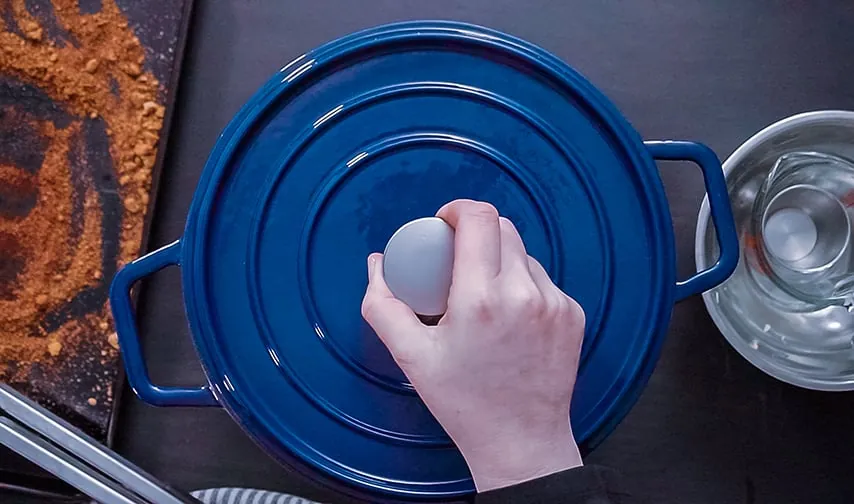
Fill the pan with warm water. Add enough to cover the dirty area, plus 1 to 2 drops of mild dish soap. Let it sit for 5 minutes while the pan is still warm but not hot. You’ll know it worked when food starts lifting at the edges.
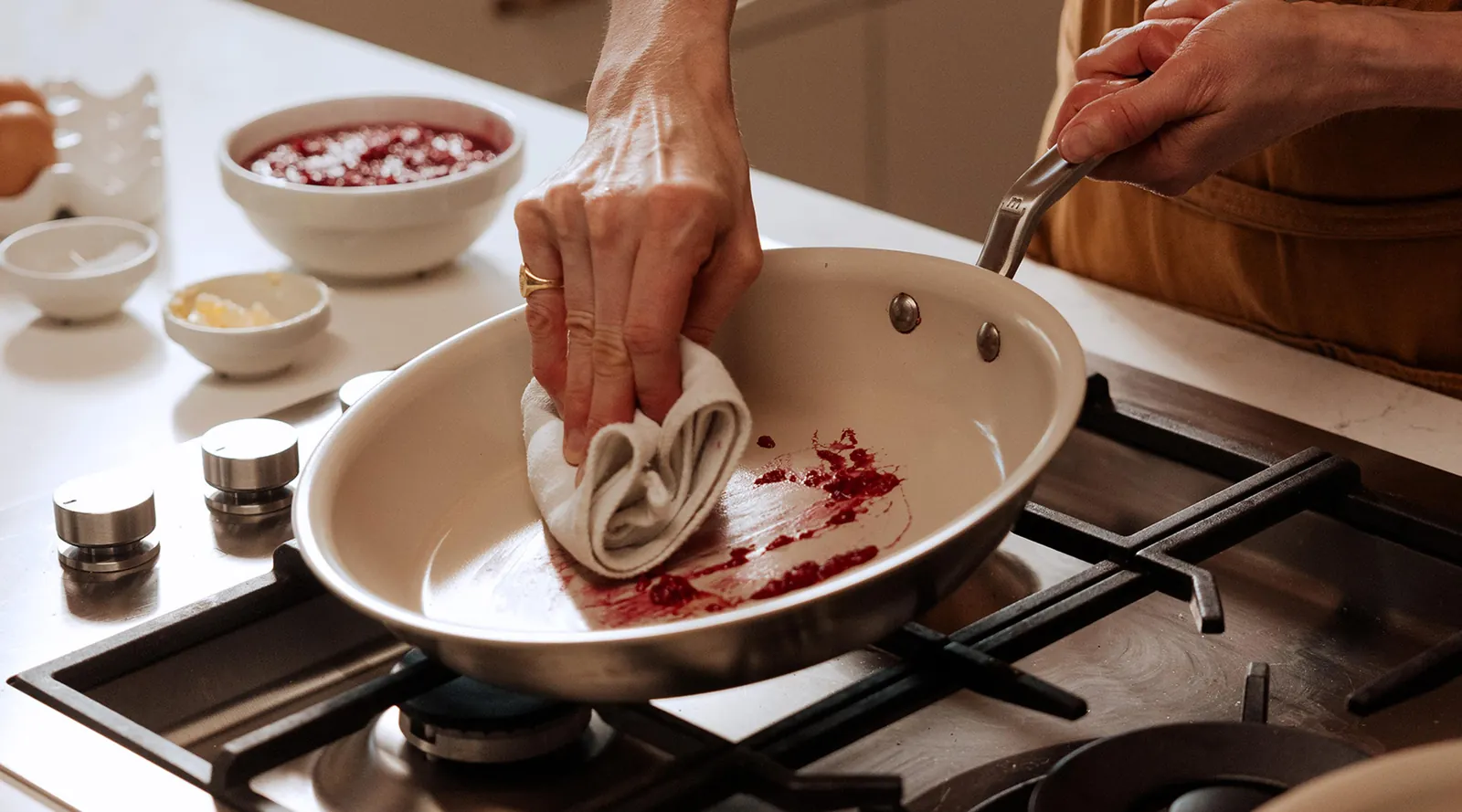
Wipe with a soft sponge. Use light circle motions over the whole cooking surface. Don’t press hard — the soap and warm water are doing the work. The step worked when the surface looks wet and clear, with no food film left.
Scrub stubborn spots with a nylon spatula. Push the flat edge gently under stuck food, at a low angle. Never dig with a corner. Stop when the food lifts free — if it won’t move after 30 seconds, go to the soak step instead of forcing it.
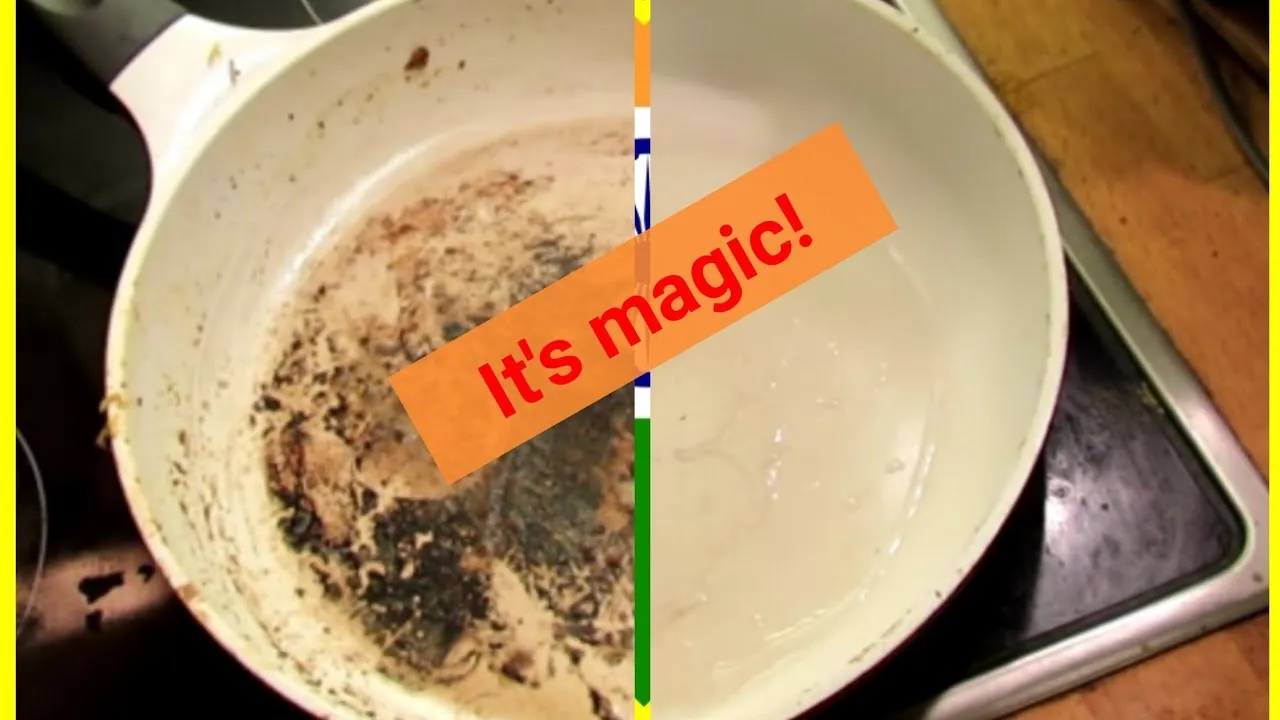
Soak burnt patches in baking soda. Sprinkle 2 to 3 tablespoons of baking soda over the spot, add warm water to cover, and wait 15 to 20 minutes. This assumes a normal thin patch; for a thick burnt layer, wait 30 minutes. You’ll know it’s ready when the crust looks soft and wrinkled.
Rinse with warm water. Hold the pan under warm running water and turn it so every part gets rinsed. Soap left on the surface can leave a film that affects the next cook. The step worked when the water runs clear and feels smooth, not slippery.
Wash the outside too. The base and sides collect grease that burns on next time. Use the same soft sponge and soapy water. Check the base is clean by running a finger along it — no sticky feel means it’s done.
Dry with a soft towel. Pat the pan dry instead of letting it air-dry. Water left standing can leave mineral spots on the coating. The step worked when the surface looks even, with no white marks.
Season lightly if your maker says so. Some ceramic coatings benefit from a thin wipe of cooking oil after washing. Follow your care card — not every brand asks for this. Skip it if the card doesn’t mention it.
Store with a protector. Put a felt pad or a paper towel between stacked pans. This stops the base of one pan scratching the coating of the one below. You’ll know it worked when the pans don’t touch metal to coating.
Check the pan before the next cook. Look at the surface in good light. Any new deep scratch or flaking means the pan is past cleaning. Replace it rather than keep cooking on a damaged coating.
How to tell the ceramic pan is really clean
A clean ceramic pan looks even in color, with no dull patches or food film. Run your fingertip across the surface — it should feel smooth, with no gritty spots. Hold it up to a window and tilt it. Any leftover grease shows as a faint rainbow sheen.
The water test is quick. Rinse the pan and watch how water moves across it. On a clean surface, water spreads and sheets evenly. If it beads up and runs off in drops, there’s still grease on the coating. Wash that area again with a fresh drop of soap.
Signs it needs a second round:
- Food still sticks when you run a fingertip over the spot.
- A white or gray film stays after drying.
- The burnt patch is still hard when you press it with a spatula.
One thing to know: a ceramic coating loses its nonstick grip over time, and no cleaning brings it back. If food sticks everywhere even after a proper wash, the coating is worn, not dirty. That’s a catch — the wear rate depends on how hot you cook and what tools you use, and your pan’s own care card is where you read what’s expected for your model.
Look closely and feel with your fingertip for flaking, peeling or exposed base metal before each cook.
When cleaning a ceramic pan goes wrong
| What happened | Why | What to do |
|---|---|---|
| Coating scratched after washing | Scouring pad or steel wool used | Switch to a soft sponge only |
| White film left on the pan | Hard water or too much soap | Rinse with warm water, dry at once |
| Burnt patch won’t lift | Soak time too short | Soak 30 minutes in baking soda |
| Coating cracked after washing | Cold water on a hot pan | Let the pan cool fully first |
| Food sticks everywhere | Coating worn from heat or tools | Replace the pan, not the soap |
| Pan smells burnt after cleaning | Grease left on the outside base | Wash the base with soapy water |
The scratched coating is the one mistake you can’t undo. A scouring pad takes off the finish in a single wash, and no rinse or seasoning brings it back. From then on the pan is a backup at best.
The white film is the opposite case: harmless and easy to misread. If it returns after every wash, your water is the cause, not your technique. A splash of vinegar in the rinse water helps dissolve the mineral film.
The cracked coating is the one to catch early. A hairline crack in the coating will only spread with further heating and washing. If you see cracks spreading from the rim, stop using the pan for food.
The burnt smell is often the base, not the inside. Set the pan upside down and look at the underside before you scrub the cooking surface again.
How often to clean a ceramic pan
Wash your ceramic pan after every single use — that’s the base rule, and it holds whether you cooked eggs or a wet stew. Waiting until the next morning makes food set harder and takes longer to lift. A quick 3 to 5 minute wash each time beats a 20 minute soak later.
Two things change that interval. The first is what you cooked. Sugar-based sauces and starchy foods set fast and need washing while the pan is still warm. Plain fried eggs can wait an hour, no more.
The second is your water. Hard water leaves mineral film faster, so drying at once matters more. If you see white spots building up, wash and dry more carefully rather than more often.
Deep cleaning with a baking soda soak is different. Do it only when you see a burnt patch or a grease build-up — not on a schedule. Doing it weekly on a clean pan just adds wear.
One more case sits outside the daily rule: a pan that has sat unwashed for a day or two, maybe after a dinner party. Dried-on food there needs the soak, not a harder scrub. Give it warm water and a little dish soap, let it sit, then wash as usual.
If you cook with the pan several times in one day, a rinse and dry between rounds is enough. Save the full wash for the last use.
Frequently asked questions
Can you put ceramic cookware in the dishwasher?
Only if your maker says so. Many ceramic nonstick pans are labeled hand-wash only, because hot dishwasher cycles and strong detergent wear the coating faster. Check the care card or the base of the pan for the dishwasher symbol. If you’re not sure, hand-wash it — that’s always safe.
Why does my ceramic pan lose its nonstick surface?
Heat and abrasive tools wear the coating down over time. Cooking above the maker’s stated maximum temperature speeds this up, and so does using metal utensils or scouring pads. Once food sticks across the whole surface even after a proper wash, the coating is worn. Cleaning can’t bring it back.
How long should I soak a ceramic pan?
Soak for 15 to 20 minutes for a normal burnt patch, or up to 30 minutes for a thick one. Use warm water with 2 to 3 tablespoons of baking soda. Longer than that gives no extra benefit. Never leave a pan soaking overnight — it doesn’t help and just delays the wash.
Is it safe to use a ceramic pan with scratches?
Small surface scratches are usually fine to cook on. Stop using the pan if the coating is flaking, peeling, or you can see the base metal through it. Flakes can end up in food. When in doubt, contact the maker or replace the pan — a new pan costs less than a worry you carry every meal.
What happens if I use metal utensils on ceramic cookware?
Metal utensils can scratch the coating, and once a scratch forms it doesn’t heal. The scratch also becomes a spot where food sticks and burns. Switch to silicone, wood or nylon tools. If your pan already has deep scratches, check for flaking before the next cook.
Does ceramic cookware need seasoning?
Some brands ask for a light oil wipe after washing; many don’t. Follow your care card exactly. If it says nothing about seasoning, don’t add oil — a thin oil film can build up and turn sticky. The maker’s own guidance is the only answer that fits your pan.
How do I remove burnt food from a ceramic pan without scratching it?
Soak it. Sprinkle 2 to 3 tablespoons of baking soda over the burnt spot, cover with warm water, and wait 15 to 20 minutes. Then lift the softened food with a nylon spatula. Never scrape with a knife or a scouring pad — that’s how the coating gets ruined.
Can I clean ceramic cookware with vinegar?
Yes, for mineral spots and white film. Mix equal parts white vinegar and warm water, wipe with a soft cloth, then rinse well. Don’t leave vinegar sitting in the pan for long periods, and don’t use it as your everyday cleaner. Mild dish soap is the right choice for normal washing.
Conclusion
A ceramic pan lasts longer when the wash is quick and gentle. Warm water, a drop of soap, a soft sponge, and a full dry — that’s the routine. Save the baking soda soak for the days something burns, and check the coating with your fingers now and then. The pan will tell you when it’s done.