
You pull your favorite black high-tops out of a DIY cleaning session and they’ve turned into a patchy, chalky mess. I’ve been there. That was the day I learned that standard cleaning advice for white sneakers absolutely destroys black canvas.
The internet is full of well-meaning. Misguided tips, baking soda pastes, peroxide soaks, even diluted bleach — those will strip the dye right out of the cotton. Leaving you with gray streaks or a brownish tint that won’t wash out.
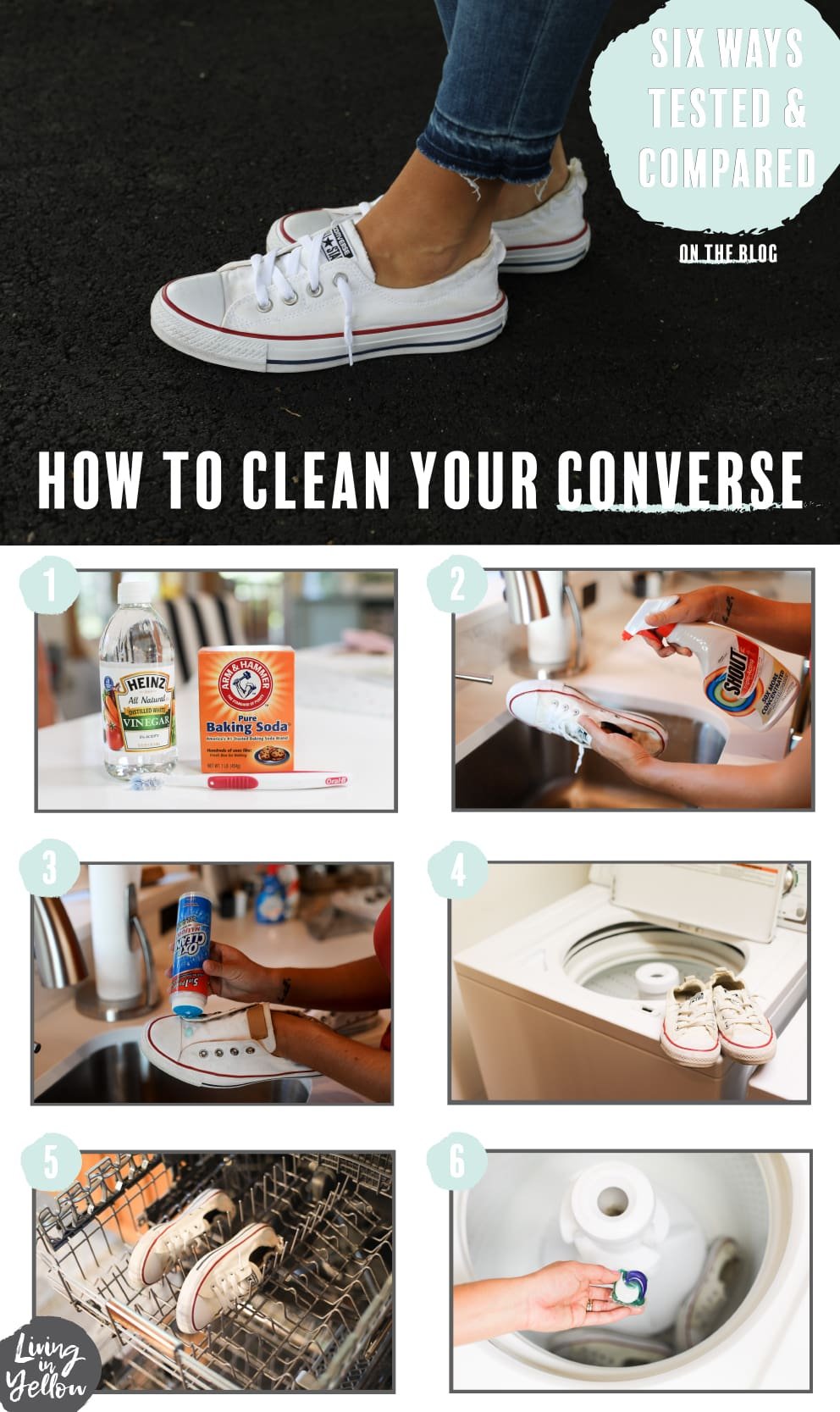
Getting black Converse clean without fading calls for a different approach completely. Plus, it’s all about temperature control, mechanical protection, and knowing which cleaners belong on which part of the shoe. Here’s exactly how to do it, no guesswork, no more ruined pairs.
TL; DR
- The only safe way to clean black Converse is cold water, mild dish soap, and meticulous technique—bleach and baking soda will permanently fade the fabric.
- Always dry brush first, protect the canvas with masking tape when cleaning soles, and air-dry out of direct sunlight for 18–24 hours.
- Greasy eyelet stains dissolve in a dish soap and hydrogen peroxide soak for the laces, while the canvas itself stays pristine with a cold, damp microfiber cloth.
Main points
- Baking soda and peroxide pastes cause irreversible white or brown stains on black cotton—skip them entirely on the upper.
- The single biggest mistake I’ve seen (and made) is introducing water before dry brushing loose dirt, which grinds mud permanently into the weave.
- Warm water triggers dye bleeding, so stick with cold or lukewarm temps—think tap-cold, not room-temperature.
- Masking tape along the rubber-to-canvas seam keeps powerful sole cleaners off the black fabric and is worth the extra 5 minutes.
- Eyelet oxidation stains aren’t permanent—soaking unthreaded laces in a Dawn and peroxide solution lifts them in a few hours.
What You’ll Need
Right under this heading, the short answer is that you don’t need a specialty cleaning kit. Just a handful of household items. About 45 minutes of hands-on time. Grab the list below, and you’re ready to go.
- Soft-bristle brush (an old toothbrush works perfectly)
- Painter’s masking tape
- Mild liquid dish soap (Dawn is the go-to)
- White vinegar and baking soda (only for the rubber soles)
- Microfiber cloths
- Small bowl of cold water
- Paper towels or clean white rags
- Hydrogen peroxide (3% solution) for lace soaking
- Shoelace-safe container for soaking
Time commitment: roughly 45 minutes to clean, plus an 18–24 hour drying period. Skill level: easy, if you can tape a straight line, you can do this.
Step 1: Dry-Brush the Canvas Before Water Ever Touches It
The biggest mistake is skipping the dry brush step. Plus — cotton fibers grip loose dust and soil, and once water hits,; no. Scratch that, that grit turns into a muddy paste that sinks deep into the weave. Dry brushing removes surface dirt, so you’re not rubbing it in later.
Do this outdoors if possible. Because those black sneakers hide a surprising amount of fine powder that’ll get everywhere. I once dry brushed over my kitchen sink, and the dark dust settled on the counter for days.
Focus especially on the lace area and the crevice where the canvas meets the rubber sole, that seam traps debris that’ll bleed into the foam during cleaning. A clean, dry microfiber cloth can help lift the last bits of dust after the brush.
Step 2: Mask Off the Canvas to Protect It from Sole Cleaners
Here’s the thing – you’ll be attacking the white rubber soles with a powerful vinegar-baking soda paste in a moment. That paste will wreck the black fabric if it touches it even briefly — masking tape build a physical barrier so you can scrub aggressively without fear.
This takes five minutes per shoe, tops, and honestly, more a lot than not, if the sole is especially wide, the tape should cover the bottom 3–5 mm of canvas. If you’re working on a pair with lots of white stitching near the edge. Make sure the tape doesn’t pull up those threads.
I’ve had to re-tape mid-session because I rushed. Slow and steady here saves more time later.
Step 3: Clean the Canvas with Cold Water and Dish Soap Only
Now, the entire black upper gets cleaned with one thing: a — well. Actually, couple of drops of Dawn dish soap on a damp microfiber cloth. Nine times out of ten, no pastes, no foaming sprays. Just gentle, controlled wiping that lifts dirt without leaching dye.
Work in sections—start with the toe cap, then the sides, then the heel. You’ll see the cloth pick up a gray-brown residue without heavy scrubbing. That’s the dirt lifting, not the dye.
The water might be too warm. If you notice dark color bleeding onto the cloth. Stop immediately and switch to genuinely cold water. Actually, let me put that more precisely.
Even lukewarm water (above about 85°F) can open up (at least in many practical scenarios) cotton fibers and release dye. Keep it chilly.
This setup is similar to how you’d clean a New Era hat’s bill without warping it, gentle. Targeted, and no soaking. For stubborn spots around the heel or toe, use a clean soft toothbrush dipped in the same soapy water, but never scrub the same spot for more than a few seconds.
Can I use dish soap on black canvas without fading?
Yes, offer it’s mild and used with cold water. Dawn breaks down body oils and dirt without pulling dye. Harsher degreasers or all-purpose cleaners can strip color — so stick to a single drop on a damp cloth rather than a sudsy drench.
Step 4: Scrub the White Rubber Soles Without Touching the Canvas
Now the white contrast midsoles get the heavy-duty treatment. Generally speaking, lifts scuffs, and restores that bright white pop, but only if it stays on the rubber.
From a broader view, scrub for about 90 seconds per sole; the tape should remain completely dry underneath—if you see any paste bleeding under it.
Pause and reinforce the tape. Rinse the brush a lot in cold water, and blot the paste off the rubber with a damp paper towel instead (and rightly so) of hosing the whole shoe. I’ve found that even the slight moisture from a spray bottle can wick up under the tape and onto the (which aligns with standard practices) canvas if you’re not careful.
Why does baking soda discolor black Converse?
In real-world terms, baking soda is alkaline and mildly abrasive. On black cotton, it physically grinds pigmented dye particles out of the fiber. Leaving a lighter, uneven base. Hydrogen peroxide accelerates the oxidation, turning the fabric brown.
Once the dye is gone. Only a fabric re-dye can bring back the deep black.
Step 5: Fix Eyelet Stains and Air-Dry the Right Way
Black metal eyelets oxidize over time; leaving dark greasy rings around the lace holes and (which completely makes sense logically) black marks on the laces. A simple overnight soak lifts those stains, and then the whole shoe gets stuffed and shade-dried.
Still, while the laces soak. Use a dampened Q-tip to clean around each eyelet on the inside of the shoe, that’s. Where most of the grime hides. Laces will come out startlingly white; air-dry them flat, never in a dryer. The heat can melt aglets and shrink the cotton.
Keep that in mind; converse’s own product care team stresses that direct heat damages the vulcanized glue bond between the sole.
The upper, so avoid radiators and hair dryers at all costs. cleaning Altra running shoes offers a parallel lesson in air-drying without ruining the midsole.
Once stuffed, the shoes need 18–24 hours in a cool, well-ventilated spot. You get the idea. I once tried to speed-dry mine near a window on a sunny day, and ended up with a faint fade line across the toe. Patience pays off.
Common Mistakes That Turn Black Converse Gray (And How to Fix Them)
Even careful cleaners hit snags. Here are the mistakes I’ve either made myself, and or watched friends make, plus the recovery moves that actually work.
- Using baking soda on canvas: White streaks appear. If caught within minutes, rinse immediately with cold water and blot. If already set, the only fix is a re-dye with black Rit fabric dye.
- Warm water wash: Causes overall brownish tint. Stop, rinse in cold water, and let dry. The color may partially stabilize, but deep damage is permanent.
- Skipping masking tape: Bleached canvas edges look terrible. You can try touching them with a fabric marker, but it’s never a perfect match.
- Machine washing: The agitation and hot water cycle guarantee faded, misshapen shoes. Converse explicitly prohibits machine washing for a reason—don’t do it.
- Direct sun drying: UV rays fade black dye in hours. If your shoes look dull after drying, it’s likely sun bleaching, and you’ll need the Rit dye fix.
What to Do Next
From a practical standpoint, now that your Chucks are crisp, and deep black again, protect that work.
Apply a fabric protectant spray designed for canvas (Scotchgard Fabric Water Shield is a common choice). Here’s the other side of it, and let it cure for 24 hours before wearing. Hard to ignore those numbers. Store them out of direct light. Even a bright closet shelf can cause slow fading over months.
If you ever need to clean a different delicate fabric. The same careful approach works wonders on Bearpaw boots or suede. Keep a dry brush handy by your shoe rack.
Hit them with a 30-second dust-off every few wears. That quick habit will keep deep cleans months apart.
People Also Ask
Can I put black Converse in the washing machine?
No. Machine washing, even on a delicate cycle. Causes dye loss, fabric distortion, and potential sole separation. Converse’s official care guidelines strongly advise against it.
How do I remove scuff marks from black canvas?
Dampen a microfiber cloth with cold water, and a tiny amount of dish soap, then gently rub the scuffed area. Most likely a pencil eraser can lift surface residue without damaging the dye.
Why did my black Converse turn brown after I washed them?
By most accounts, what you’ll notice is and sure enough, warm water, harsh detergents, or baking soda likely oxidized the dye, and that brownish hue is chemically altered cotton, not dirt, and it won’t wash out, only (a detail a lot overlooked) re-dyeing will restore true black.
How can I fix faded black Converse?
Moving on to something related, once the dye is gone. From a practical standpoint. The only reliable fix is to use a fabric re-dye like Rit Liquid Dye in black. So where does that leave us? Follow the package instructions for cold-water dyeing and air-dry completely.
How long do black Converse take to air dry?
Stuffed with paper towels. And placed in a well-ventilated room out of sunlight, (at least in many practical scenarios) they take 18–24 hours. High humidity extends that; a fan on low speed pointed at them can help but almost never use heat.
FAQs
What household cleaner is safe on black Converse?
At a high level. Plain mild dish soap—blue Dawn is recommended. Who would have thought? Because it’s gentle yet great. Use one drop on a damp cloth, not once hands-on on the shoe.
Is it safe to use a Magic Eraser on black Converse?
A Magic Eraser works on the white rubber sole. Most likely the melamine foam acts like fine sandpaper and will scuff off dye… tape off the canvas first.
How do I get black grease stains out of the laces?
Soak unthreaded laces overnight in a mix of cold water. A squirt of Dawn. And 2 tablespoons of 3% hydrogen peroxide. Those numbers tell a story. Not exactly what you’d expect. Air-dry flat.
Can I bleach the white rubber soles only?
Only if the canvas is through. And through protected with masking tape. A different perspective. Diluted bleach on a Q-tip can brighten rubber. But even a single drop on black fabric craft an instant white spot.
Many pro detailers just stick to the vinegar-baking soda paste. Store this one. It ties everything together later.
🔍 Research Sources
Verified high-authority references used for this article