
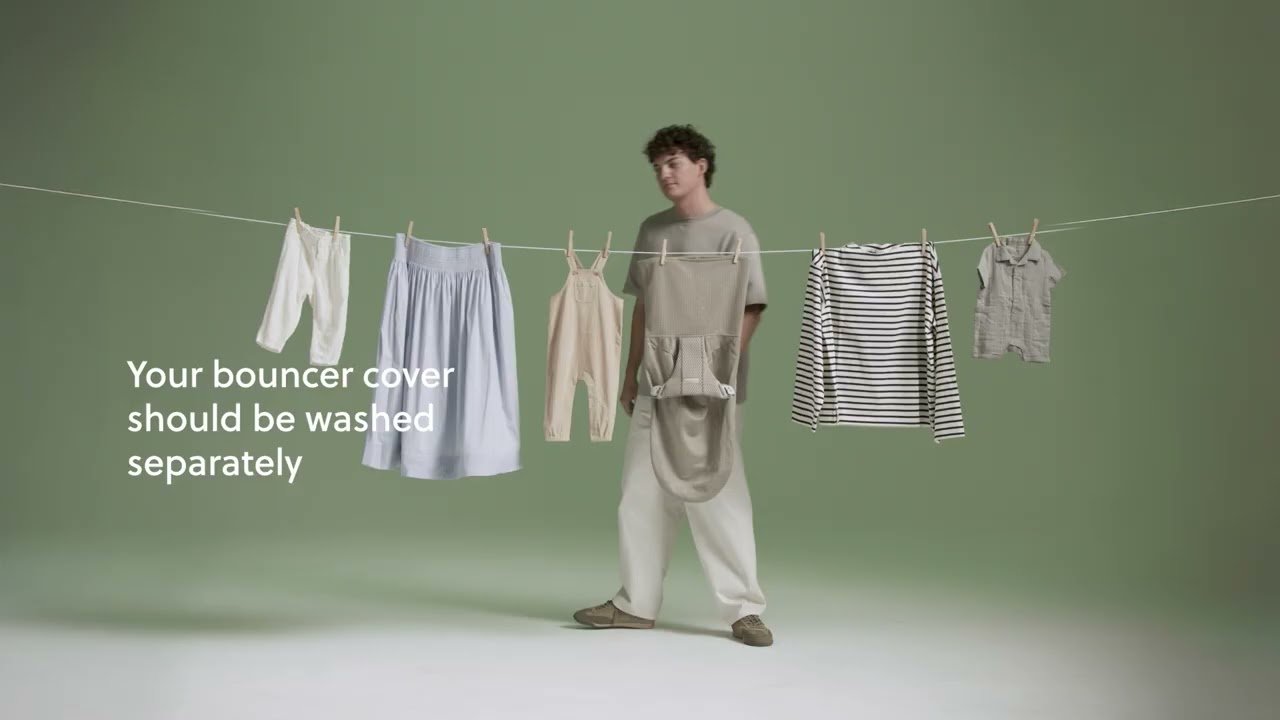
If you’ve ever referred to the BabyBjörn bouncer as a “poop-inducer,” you’re not alone. Parents across Reddit and parenting groups openly joke about the exact sitting angle that seems to trigger blowouts. That means learning how to clean a BabyBjörn bouncer isn’t a once-a-year task.
It’s something you’ll do more often than you’d like. Between the OEKO-TEX certified fabric that’s safe for your baby to chew on.
The need to not damage those elastic loops that keep the seat snug, the process has some strict rules that are painless to miss — skip one, and you could end up with a faded.
Shrunken cover that no longer fits right.
TL; DR
- Remove the fabric seat completely and wash it inside a mesh laundry bag at 40°C (104°F) with a mild, bleach-free detergent to avoid fiber breakdown and fading.
- Never use fabric softener or tumble dry the cover, because air-drying is mandatory and heat destroys the elastic loops that keep the bouncer safe and ergonomic.
- Wipe the metal frame and plastic base with a damp cloth and mild soap, avoiding abrasive sponges that scratch the finish, then reassemble the fabric while it’s slightly damp.
Key Takeaways
- The fabric seat is machine washable at exactly 40°C, but only with mild detergent and no bleach, fabric softener, or dryer heat of any kind.
- Air-drying the cover can take over 12 hours for quilted cotton versions, so having a spare cover is widely recommended by experienced users.
- The 3D mesh version dries in about 2 hours and resists stains better than cotton, making it the easier choice if you’re still deciding on a model.
- All touchable fabrics are OEKO-TEX Standard 100 Class 1 certified, meaning they’re chemically safe even when your baby inevitably gnaws on them.
- Remounting the cover while it’s still slightly damp helps it stretch back into the ergonomic shape that properly supports your baby’s spine.
What You’ll Need
- Mild, bleach-free liquid detergent (powders can leave residue that clogs the fabric’s pores on mesh models).
- A large mesh laundry bag (to protect the elastic loops from snagging and stretching during the wash).
- Soft microfiber cloths for wiping down the frame.
- Mild dish soap or castile soap for spot cleaning and frame cleaning.
- Cool water and a well-ventilated drying area (direct sunlight fades cotton covers quickly).
Step 1: Remove the Fabric Seat from the Frame
The fabric seat detaches easily by unhooking the two elastic loops at the bottom and sliding the top off the frame, but never yank it off or you’ll stretch those loops over time, which compromises the secure fit that keeps your baby safely cradled.
Then again, pivoting slightly, once you’ve unhooked both loops. Slide the top of the seat off the frame. The fabric may feel snug, and that’s the point. Set the frame aside, and inspect the seat for any dried messes that need extra attention before the wash cycle.
Is it really okay to wash the whole fabric seat in a machine?
Yes. The entire fabric seat is designed for machine washing at 40°C…which means as long as you use a mild, bleach-free detergent and place it inside a mesh laundry bag. Puts things in perspective, but does that actually hold up?
Looking closer, the OEKO-TEX certification confirms that the chemicals in the textile are safe even when the fabric gets soaked and re-dried. It makes a difference. Skipping the mesh bag is where things often go wrong, and honestly, because the elastic loops can snag on other items or twist around agitators in top-loading machines.
What this means is a torn loop means the cover won’t stay taut anymore, and BabyBjorn doesn’t sell replacement loops separately.
Step 2: Pre-Treat Any Stubborn Stains
Spot clean visible stains with a dab of mild soap and cool water before the machine cycle, because the wash alone won’t always lift set-in bodily fluids, especially on cream or light gray fabric colors.
On quilted cotton covers, which soak up liquids faster than the 3D mesh, the key is speed. The longer a stain sits. The more it bonds with the 16% cotton fiber in the blend (the seat is give. It just works. Or take 80% polyester, 16% cotton, something like 4% elastane). I’ve found that even after the pre-treat and a 40°C wash.
Old formula stains can leave a faint shadow on the lightest colorways. That doesn’t happen much on the mesh version, which is probably why parents on Reddit consistently praise it for being easier to scrub clean.
Does the mesh version really clean that much easier than the cotton one?
Absolutely. In general, the 3D mesh fabric (a polyester-dominant knit) is more breathable and doesn’t absorb liquids deeply before you can blot them.
A snappy rinse under the faucet often removes fresh messes without needing a detergent scrub. Whereas quilted cotton covers tend to wick moisture inward and hold onto stains. Air-drying the mesh takes roughly 2 hours in a ventilated room. Compared to more than 12 hours for the quilted cotton.
That’s a difference that matters when you’re waiting for the (depending entirely on the context) bouncer to be usable again.
Step 3: Machine Wash the Fabric the Right Way
Machine wash at 40°C with a mild, bleach-free detergent inside a mesh bag, and skip fabric softener entirely because it coats the breathable pores of the mesh and reduces the fabric’s ability to keep your baby cool.
After the cycle ends. Pull the seat out immediately. don’t let it sit damp in the machine. Or mildew can set in.
Gently shake it out to smooth wrinkles. In the dryer on low, at this point.
You might be tempted to toss it. Don’t. More importantly, according to the product maintenance manual, tumble drying makes the cover lose its shape and ergonomic fit, and the heat destroys (which aligns with standard practices) the elasticity of the loops. Instead, lay it flat on a clean towel.
Or a drying rack in a room with awesome airflow. If you’ve a fan blowing across it.
The single biggest mistake is using fabric softener.
It leaves a waxy residue that plugs the microscopic pores in the 3D mesh, negating the breathability you paid a premium for. On cotton covers, it also attracts dirt faster. Just skip it.
Step 4: Clean the Frame and Plastic Base
Wipe down the entire frame, including all the nooks where milk can drip, with a damp microfiber cloth and a tiny drop of mild dish soap, then dry it fully before reattaching the fabric.
The plastic base and the footrest can collect crumbs, and dust in the textured areas.
A soft bristle brush. You could say avoid any abrasive sponge, mainly because fine scratches weaken the surface and make it look cloudy. The thing is, that’s especially noticeable — actually. Hold on, on the black and dark gray frames.
What about sanitizing the frame without harsh chemicals?
For a baby-safe disinfecting approach, mix equal parts water, and white vinegar in a spray bottle. The numbers confirm this.
Mist a cloth lightly, then wipe the frame down. Let’s be clear, and let it air-dry completely. Vinegar kills plenty of common germs, and doesn’t leave a toxic residue.
Just don’t spray directly onto the frame, mainly because overspray can seep into joints where it might sit undried for (and that implies quite a bit) hours and encourage corrosion. A dry microfiber buff. After the vinegar pass ensures no moisture remains.
Step 5: Reassemble the Bouncer Correctly
Reattach the fabric seat while it’s still slightly damp, not wet—because the fibers have more give in that state and will slide onto the frame more easily, then they’ll dry into the exact ergonomic contour your baby needs.
After the loops are secure, let the bouncer sit for a couple of hours, so the fabric dries through and through in place. don’t put your baby in it. While the cover is still damp, mainly because moisture against the skin can cause irritation. It for instance. Once dry, test the fit by pressing down gently on the middle of the seat.
It should spring back evenly, with no sagging, which is why. If you notice one side dipping lower than the other, the elastic on that side may have stretched. Over the span of plenty of years, this is common.
It’s a signal that it might be time for a new cover.
Troubleshooting Common Mistakes
**The biggest mistake is using too much detergent. Excess detergent leaves a sticky film on the fabric that actually attracts dirt and reduces the softness of the 3D mesh, so measure carefully and use half the recommended amount if you’re washing a single cover.Problem 1: The fabric seat no longer fits tightly after washing.**You probably washed it in hot water (above 40°C) or tumble dried it, which caused irreversible shrinkage or elastic damage. The fix: order a new cover, because stretched or shrunken fabric can’t be reversed. Always wash in cool or 40°C and air-dry.
Problem 2: Stains didn’t come out after the wash.Some stains, especially from carrot-based purees or formula, set faster than others. Before rewashing, soak the stained area in a mixture of cool water and oxygen-based stain remover that’s labeled safe for baby fabrics for about 30 minutes. Don’t use chlorine bleach. The good news is that the OEKO-TEX certification means the fabric is free of harmful chemicals, so even a faint remaining stain won’t affect safety.
Problem 3: The frame squeaks or the joints feel gritty after cleaning.Over time, lint and dust can collect in the hinge points. Use a can of compressed air or a dry toothbrush to blow out and brush away debris. A tiny drop of food-grade silicone lubricant on a Q-tip, applied only to the metal hinge, can reduce squeaking if it persists.
Problem 4: The fabric smells musty even after washing.
This usually means the cover was left in the washer too long or air-dried in a humid, poorly ventilated room. Rewash with a cup of white vinegar added to the rinse cycle (no detergent this time) and then dry it immediately in front of a fan. The vinegar neutralizes mildew spores without leaving any scent.
People Also Ask
How often should I wash the BabyBjorn bouncer cover?
A full wash every 1–2 weeks is normal for babies that use it daily, but any blowout or major spill mandates an immediate wash to prevent bacterial growth. Spot cleaning the seat with a damp cloth in between washes can stretch the interval. Especially if you use a muslin liner most of the time.
Can I put the bouncer cover in the dryer on a no-heat air fluff setting?
Even an air-only cycle is risky. Because the tumbling motion itself can stretch the elastic (and — okay, more accurately; that implies quite a bit) loops and warp the shape. The safest bet is lying it flat on a drying rack. As far as I know, the mesh version dries fast enough that this rarely feels like an inconvenience.
Does the Bliss cover actually fit on the Balance Soft frame?
Yes. All current BabyBjorn bouncer fabric seats are standardized across models. So a Bliss cover fits a Balance Soft frame and vice versa. Here’s the other side of it. Remains an open question. This is handy if you spot a discount on a different colorway. Or fabric type and want a spare cover that matches nothing, but works perfectly.
What’s the best way to clean the bouncer when traveling and a washing machine isn’t available?
Bring a small travel-sized bottle of castile soap. And a microfiber cloth.
Spot clean any messes by working the soap into the stain with cool water. Then blotting it away with a damp cloth.
But here’s the thing – hang the seat to air dry overnight. The plastic frame can be wiped down with a baby wipe in a pinch.
Will the fabric fade if I wash it too often?
Cotton covers, especially the lighter colors like beige and soft pink, do fade gradually over dozens of washes. It makes sense. Using a mild detergent and avoiding direct sunlight while drying slows the process considerably. The darker mesh and black covers show far less visible fading even. After years of regular washing.
What to Do Next
inspect the elastic loops for any early signs of fraying (and that implies quite a bit) while the fabric is dry. Catching a loop that’s starting to thin out early means you can order a replacement cover before it snaps at an inconvenient moment. More importantly, going forward, make a habit of putting a thin muslin cloth between your baby and the seat. That single layer does more for daily cleanliness than any washing technique. And if you find yourself washing the cover so a lot it feels like a second job, getting a spare cover is the practical upgrade that experienced parents swear by. While you’re thinking about baby gear care. Our guide on delicate fabric cleaning for items like play mats shares some of the same principles about gentle washing and air-drying routines that work just as well here.
🔍 Research Sources
Verified high-authority references used for this article