
Cleaning a wooden pipe takes about 30–45 minutes of hands-on work, plus overnight drying. It costs almost nothing — a pack of pipe cleaners, some cotton swabs, and a little high-proof alcohol. The job is medium difficulty: easy to do, but easy to do wrong if you rush the drying. Check your pipe’s maker’s care page first if it’s a bent shape with a metal filter or a glued stem.
Cleaning a wooden weed pipe takes a few cheap tools and a slow hand. The wood is the part that matters. Briar and other pipe woods soak up moisture, so water and harsh chemicals do more harm than good. Keep the inside dry-ish, clean the airway, and let the wood rest. That’s the whole method.
What you need for a wooden pipe cleaning
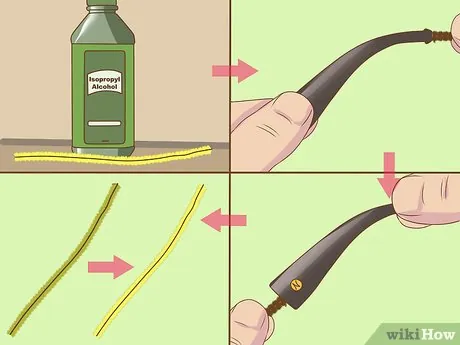
| Item | How much | Why it’s needed | A substitute |
|---|---|---|---|
| Pipe cleaners | 8–12 per cleaning | Reach tar in the stem and shank | None — don’t swap this |
| High-proof clear alcohol | 1–2 tablespoons | Dissolve tar and resin | None — never use water |
| Cotton swabs | 4–6 | Clean the bowl and mortise corners | Folded pipe cleaner |
| Paper towel | 2 sheets | Catch ash and drips | Old clean cloth |
| Pipe reamer or blunt knife | 1 | Trim cake, not remove it | Senior pipe nail |
| Soft bristle brush | 1 | Loosen loose carbon dust | Old toothbrush |
| Pipe stand | 1 | Hold the pipe while it dries | Small bowl, upright |
Alcohol strength matters. Use clear drinking alcohol of high proof — many pipe smokers use 151-proof rum or clear grain alcohol. Isopropyl alcohol works too, but keep it off the outside finish. Never use water inside the bowl; briar soaks it up and holds it, which sours the pipe and makes the shank swell and crack.
The pipe cleaners are the one item worth buying in quantity. A briar stem and shank can swallow several in a single pass once the tar is warm, and a cleaner that comes out brown is spent. Running a dirty one back through only pushes the tar deeper.
Keep the alcohol in a small dish rather than the bottle. You dip a cleaner, shake off the excess, and work — a wide-mouth bottle tips too easily over a table covered in ash.
Cotton swabs earn their place at the mortise, the narrow slot where the stem meets the shank. Tar collects there in a hard ring that a pipe cleaner slides past without touching. A folded cleaner will do in a pinch, but the swab reaches the corners.
If your pipe has a metal filter or a stinger, add a second soft brush kept dry for it alone.
Before you start on a wooden pipe
- Empty the bowl fully. Tap it gently on a cork or your palm, not on a hard surface. A hard tap can chip the rim or split the shank. Keep the ash out of the airway.
- Let the pipe cool completely. A warm pipe is soft and a stem can seize or crack if you twist it while hot. Wait at least 20 minutes after your last smoke.
- Take the stem off slowly. Twist, don’t pull. A stuck stem goes in the freezer for 10 minutes to loosen the joint, then twist again.
- Cover your work surface. Lay down a paper towel. Alcohol and tar stain wood tables and cloth.
- The step people skip: check the airway first. Run a dry cleaner through before you wet anything. If it won’t pass, you have a blockage, and pushing a wet cleaner makes a plug worse.
Stop here if the pipe is an antique with a fragile stem, has a cracked shank, or is a meerschaum or clay pipe. Those need a restorer or the maker’s own service.
Step by step: cleaning a wooden pipe
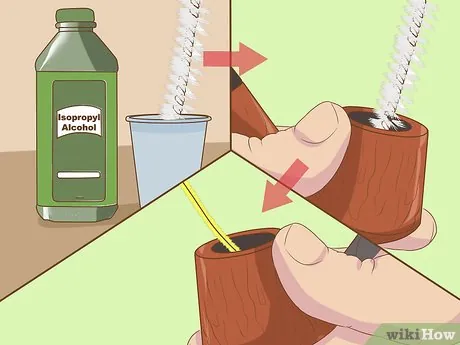
Scrape the bowl gently. Use your pipe reamer or the flat of a blunt knife. Work around the bowl in small turns for about 2 minutes. Leave a thin layer of carbon cake — about the thickness of a coin — because bare wood burns hot. The step worked if the bowl wall feels even and no soft, crumbly carbon comes off.
Wipe the bowl interior. Fold a paper towel into a small square and twist it into the bowl. Turn it 5–6 times. This lifts loose dust. Stop when the towel comes out mostly clean, not black.
Dip a cleaner in alcohol. Pour about a tablespoon of alcohol into a small dish. Dip one end of a pipe cleaner about 1 inch. Don’t soak it; a dripping cleaner floods the shank.
Run the wet cleaner through the stem. Push it from the mouthpiece end through to the tenon. Pull it out and look at it. Repeat with a fresh cleaner until the cleaner comes out light brown, not black. This usually takes 3–4 cleaners for a well-used pipe.
Clean the shank and mortise. Push a fresh alcohol-dipped cleaner through the shank from the bowl side. Use a cotton swab in the mortise — the small cup where the stem fits. That corner holds the most tar. The step worked if the swab comes out clean after 2 passes.
Scrub the bowl with a bristle brush. Dry-brush the inside of the bowl for about 30 seconds to loosen carbon dust. Wipe again with a paper towel. Don’t soak the bare wood inside the bowl — a light alcohol wipe is fine, but flooding it leaves residue that tastes harsh.
Wipe the outside. Dampen a paper towel with a little alcohol and wipe the rim and outer bowl. Keep alcohol off any varnish or wax finish; it dulls it. Buff with a dry cloth.
Clean the mouthpiece. Wipe the bit with a swab dipped in alcohol. If it’s vulcanite (black rubber), a little mineral oil afterward keeps it from going dull.
Dry the parts separately. Stand the bowl upright on the pipe stand and lay the stem flat. Leave both for at least 12 hours, ideally 24. Never reassemble a damp pipe; trapped moisture sours the wood.
Reassemble and test the draw. Twist the stem back on gently. Draw air through the empty pipe. It should feel open and easy. A tight draw means a cleaner fiber is stuck — run a dry cleaner through again.
How to tell your wooden pipe is clean
The pipe is clean when a dry pipe cleaner pushed through the stem and shank comes out light brown or clear, not black. That’s the check you can trust. Do it after the pipe has dried, so you’re testing the real airway, not a wet one.
A second sign is the draw. Suck air through the empty, reassembled pipe. It should feel open, with no whistle and no gurgle sound. A gurgle means moisture is still trapped in the shank or mortise.
A third sign is the bowl wall. Run a fingertip around the inside. It should feel smooth and firm, with an even cake layer. Soft, spongy spots mean the carbon is wet and needs more drying time before you smoke again.
Signs it needs a second round: the cleaner still comes out dark after 4 passes, the draw feels tight, or the mortise swab stays brown. In that case, repeat steps 3–5 with fresh cleaners. A heavily used pipe may need two rounds the first time.
One thing that varies for every pipe: how much tar builds up depends on the tobacco you smoke and how often. Aromatics leave more sticky residue than dry ribbon cuts. Read your own pipe’s signal — the color of the cleaner — rather than a fixed schedule.
When a wooden pipe cleaning goes wrong
| What happened | Why | What to do |
|---|---|---|
| Stem won’t come off | Tar glued the tenon | Freeze 10 minutes, twist gently |
| Draw is tight after cleaning | Cleaner fiber stuck in airway | Push a dry cleaner through again |
| Bowl tastes bitter | Wet carbon left inside | Dry 24 more hours, re-wipe |
| Shank cracked | Twisted a warm or stuck stem | Stop — take it to a pipe repairer |
| Rim looks dull or scratched | Alcohol hit the finish | Buff with a soft dry cloth |
| Pipe gurgles when smoking | Moisture trapped in mortise | Swab the mortise, dry longer |
A crack in the shank or bowl is the one problem you can’t fix at home. Glue won’t hold under heat, and a bad repair can make the pipe unsafe to smoke. A pipe repairer or the maker’s service department handles that.
The freeze trick is for a stem that’s stuck but sound. If the stem is briar-colored and carved as part of the bowl, it doesn’t come off at all, so don’t force it. On a meerschaum-lined bowl, skip the freezer entirely and let the pipe sit in a cool room.
A bitter bowl that stays bitter after a second drying usually means the cake was scraped too far back. Smoke a few bowls of a mild blend to let a thin new layer build up before judging the taste again.
If the rim still looks dull after buffing, the finish is worn, not dirty. A pipe repairer can refinish it; more alcohol will only take off more.
How often to clean a wooden pipe
Clean the stem and shank after every 3–5 bowls, and do the full bowl-and-cake job about once a month if you smoke daily. That’s the working rhythm for most pipe smokers. A pipe you smoke once a week can go 2–3 months between full cleanings.
Two things move that number most. The first is your tobacco: sticky aromatics and heavily cased blends leave more residue, so shorten the interval. The second is moisture: a pipe that gurgles often needs cleaning sooner, because wet shank tar turns sour fast.
The other rule that matters more than the calendar is rest. Give each pipe at least a day off between smokes so the wood dries. If you smoke several bowls a day, rotate 3–4 pipes rather than cleaning one pipe harder. Rest does more for flavor than any cleaner.
The calendar is a starting point, not a schedule to keep. Let the pipe tell you when it’s early. Aromatics are the clearest case: a blend that leaves your fingers tacky after packing will gum the shank well before the bowl count says so.
Weather counts too. In a humid summer or a damp house, the wood holds moisture longer, so the day of rest stretches out. In dry winter air it dries faster. Watch the pipe, not the month.
If you smoke outside in wind, or you tend to puff hard, expect more moisture down the shank and clean sooner.
Frequently asked questions
Can I clean a wooden pipe with water?
No — keep water out of the bowl and shank. Water swells briar and can crack the shank or lift the finish. Use high-proof clear alcohol on the stem and shank instead. A slightly damp paper towel on the outside is fine. If your pipe gets soaked by rain or an accident, dry it slowly at room temperature for several days, not on a radiator.
Why does my pipe taste bad after cleaning?
Bitter taste after cleaning usually means wet carbon or alcohol residue is still inside. The bowl wasn’t fully dry, or alcohol soaked into the bare wood. Let the pipe air-dry another 24 hours, then wipe the bowl with a dry paper towel. Never smoke a pipe that still smells of alcohol — it will taste harsh for several bowls.
How long should a pipe dry after cleaning?
Let it dry at least 12 hours, and 24 hours is better for a full cleaning. The bowl and stem dry separately, standing upright in open air. A warm, dry room speeds it up. A cold garage slows it down. If the bowl still feels cool and damp to the touch, it isn’t ready.
Is it safe to clean a pipe with isopropyl alcohol?
Yes, on the stem and shank only, and let it dry fully before smoking. Isopropyl alcohol is toxic if swallowed, so keep it off anything you’ll put your mouth on and let it dry fully before smoking. Clear drinking alcohol at high proof is the safer choice for anything that touches the smoke path. Rinse nothing with water.
What happens if I don’t clean my pipe?
Tar builds up, the draw tightens, and the pipe turns sour and bitter within weeks of daily smoking. A clogged shank can also make the stem stick or fit badly. Skip cleaning long enough and cake grows too thick, which shrinks the chamber and can cause uneven burning and a tight draw. Cleaning every few bowls prevents all of it.
Does it matter which pipe cleaner I use?
Yes — use cleaners made for pipes, not craft or household ones. Pipe cleaners are sized to pass a shank without shedding fibers. A cleaner that’s too thick jams, and one that sheds lint leaves fibers in the airway. Bristle cleaners scrub better for tar; soft ones are better for a final dry pass.
How do I clean a pipe without taking the stem off?
You can clean the bowl and mouthpiece without removing the stem, but you can’t clean the shank or mortise properly. Run a cleaner through the mouthpiece into the bowl and back out a few times. For a full clean, the stem has to come off. If it’s stuck, freeze it briefly rather than forcing it.
Can I use a wooden pipe right after cleaning?
Wait until it’s fully dry — at least 12 hours, and 24 is safer. Smoking a damp pipe gives a steamy, bitter draw and can crack the bowl from sudden heat. Test it first: the bowl should feel room-temperature and dry, and a dry cleaner should pass easily. Then load a small bowl, not a full one.
Conclusion
Once your pipe is dry and back together, smoke it gently for the first few bowls to let the wood settle in again. If you notice a sour taste or a tight draw, that’s your cue to repeat the routine sooner rather than later.