
Cleaning a fan takes 20 to 40 minutes for a table or pedestal model, and it’s a medium job — easy on the outside, needs care once you open the motor housing. You’ll spend nothing if you already have a screwdriver, a microfiber cloth and a vacuum with a brush head. Have the owner’s manual before starting, since some blades and grilles are held by clips that break if you pull them the wrong way.
What you need to clean a fan
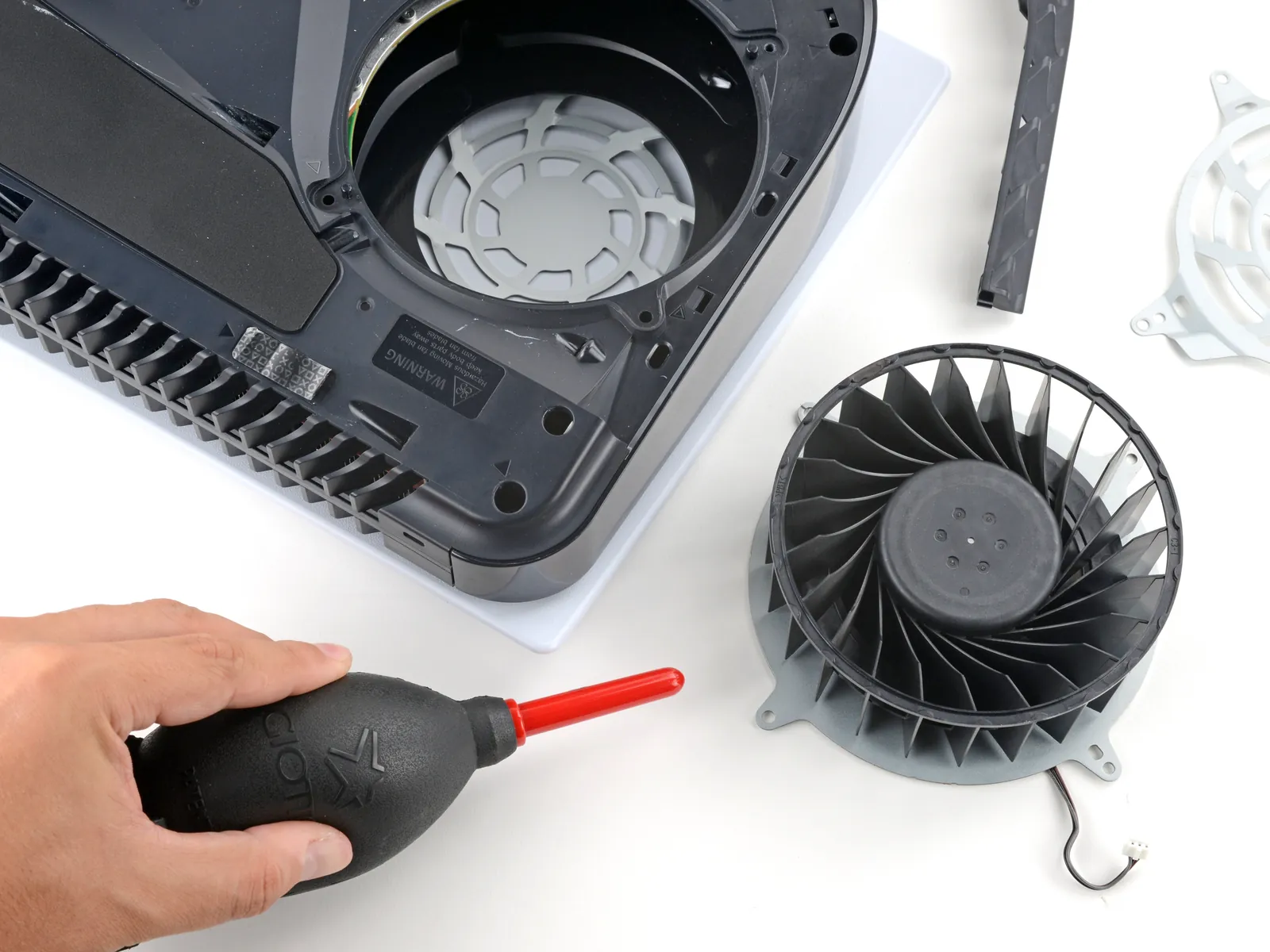
| Item | How much | Why it’s needed | A substitute |
|---|---|---|---|
| Owner’s manual | One, for your exact model | Shows how the grille and blade come off | Maker’s website page for your model |
| Screwdriver | One, the size your manual names | Frees the grille screws or clips | None — don’t swap this |
| Microfiber cloths | 2 to 3 | Wipes blades and housing without scratching | Soft cotton cloth, lint-free |
| Vacuum with brush head | One | Pulls dust off the grille and vents | Soft brush and a cloth |
| Mild dish soap | 1 teaspoon in 1 quart warm water | Lifts greasy dust from plastic parts | None — don’t swap this |
| Compressed air | One can, short bursts only | Clears motor vents and tight gaps | Vacuum brush on low |
| Towel | One dry bath towel | Dries parts fully before reassembly | Clean dry cloth |
Before you start cleaning a fan
- Unplug it first, and don’t just switch it off. A fan on standby still has live parts inside. Pull the plug from the wall and leave it out until you have finished cleaning.
- Take off the front grille and the blade before you wet anything. Water and electric motors don’t mix, and a wet blade that goes back on a damp shaft can rust the fitting.
- Move it to a hard floor with a towel under it. Dust falls in a cloud when you first brush the grille, and a carpet holds it until the fan blows it back into the room.
- Check the blade for cracks before you wash it. A hairline crack you can see in daylight means the blade is done — a cracked blade can fly apart at full speed. Replace it, don’t glue it.
- The step people skip: reading the manual for the grille clips. Most broken grilles come from pulling a clip that was meant to slide. If your model has a sealed motor housing or the manual says “no user-serviceable parts,” stop there and have a qualified repair shop handle the inside. Opening a sealed motor can void your warranty, and the capacitor inside holds a charge.
How to clean a fan
- Unplug the fan and keep the plug out. You know it worked when the fan stays dead after you press the button. If it hums or the light flickers, the plug is still live somewhere — find the second cord or the wall switch.
- Remove the front grille. Most table and pedestal fans use 4 to 6 small screws around the rim, or a single clip at the bottom. Turn each screw a half turn at a time so the grille doesn’t twist. It worked when the grille lifts free without bending.
- Take off the blade nut and slide the blade off. The nut usually turns counterclockwise, but some makers reverse it — check the manual. Hold the blade with one hand so the shaft doesn’t spin. It worked when the blade slides straight off with no force.
- Vacuum the grille on both sides with the brush head. Work from the back of the grille first, so you push dust out the way it came in. Spend about 2 minutes per side on a standard 16-inch grille. It worked when you can see daylight through every gap.
- Wash the grille and blade in warm soapy water. Use 1 teaspoon of mild dish soap in 1 quart of warm water. Soak for 5 minutes, then wipe with a cloth — never scrub a plastic blade with a scouring pad. It worked when the water runs clear and no grey film is left.
- Dry every part fully before it goes back. Stand the grille and blade in the air for at least 30 minutes, or dry them with a towel and check the blade hub with your finger. It worked when no water shows on a dry tissue pressed into the hub.
- Clean the motor housing with a dry cloth and short bursts of air. Hold the can upright and give 2 to 3 one-second bursts into the vents, from about 4 inches away. Long bursts push dust deeper into the motor. It worked when the vents look clear and no dust puffs out.
- Wipe the stand, base and cord. Run the cloth down the cord from the plug end to the motor, so you don’t drag dust into the housing. Check the cord for cracks or fraying as you go. It worked when the cord is clean and the casing shows no splits.
- Put the blade back on and tighten the nut by hand plus a quarter turn. Line up the flat side of the shaft with the slot in the blade hub. Don’t overtighten — plastic hubs crack. It worked when the blade sits flat and turns freely by hand with no wobble.
- Refit the grille, plug in, and run it on low for 2 minutes. Listen for rubbing or a new rattle before you turn it up. It worked when the fan runs quietly on low and blows strong air on high. If you hear scraping, unplug it and check that the blade is seated all the way down.
How to know the fan is clean
The clearest sign is air volume. Before you cleaned it, hold a tissue against the grille on high — if it only lifts partway, the grille was blocked. After cleaning, the same tissue should press flat against the grille and stay there. That’s a check you can repeat any time, and it costs nothing.
A second sign is sound. A clean fan runs smoothly, without a new rattle or scraping. A new rattle or a low hum usually means the blade isn’t seated flat, or a screw is loose. Run it on low for 2 minutes and listen before you trust it on high.
Check the motor housing with your hand after 10 minutes on high. It should feel warm, not hot — most fan motors run warm in normal use. If it’s too hot to hold your palm on for 5 seconds, unplug it and have it checked.
It needs a second round when dust still shows in the grille gaps, the blade has a grey film, or the air still feels weak. Wipe the blade again with a damp cloth and dry it. If the air stays weak after two rounds, the problem isn’t dust — it’s the motor or a stretched blade, and cleaning won’t fix either.
If something goes wrong
| What happened | Why | What to do |
|---|---|---|
| Fan rattles after cleaning | Blade not seated flat on shaft | Unplug, lift blade, line up the flat slot, refit |
| Grille clip snapped | Pulled instead of slid | Order a replacement grille for your model |
| Fan won’t start | Plug loose or fuse tripped | Check the plug and the breaker, then the manual |
| Motor smells hot | Dust packed in the vents | Unplug, vacuum vents, let it cool, retry |
| Blade wobbles | Nut overtightened or hub cracked | Stop using it, replace the blade |
| Weak air after cleaning | Dust still on the back grille | Vacuum both sides again, check the vents |
A rattle that stays after you refit the blade usually means the blade is worn at the slot, not that you seated it wrong. Try the blade once more before you assume the fan is finished.
If the grille clip snapped on a model with clips that are no longer sold, a parts shop that stocks older fans is a better bet than the manufacturer.
A motor that still smells hot after you vacuum the vents should stay unplugged. A hot smell that returns is a sign of a failing motor, and that’s a repair, not a cleaning job.
How often to clean a fan
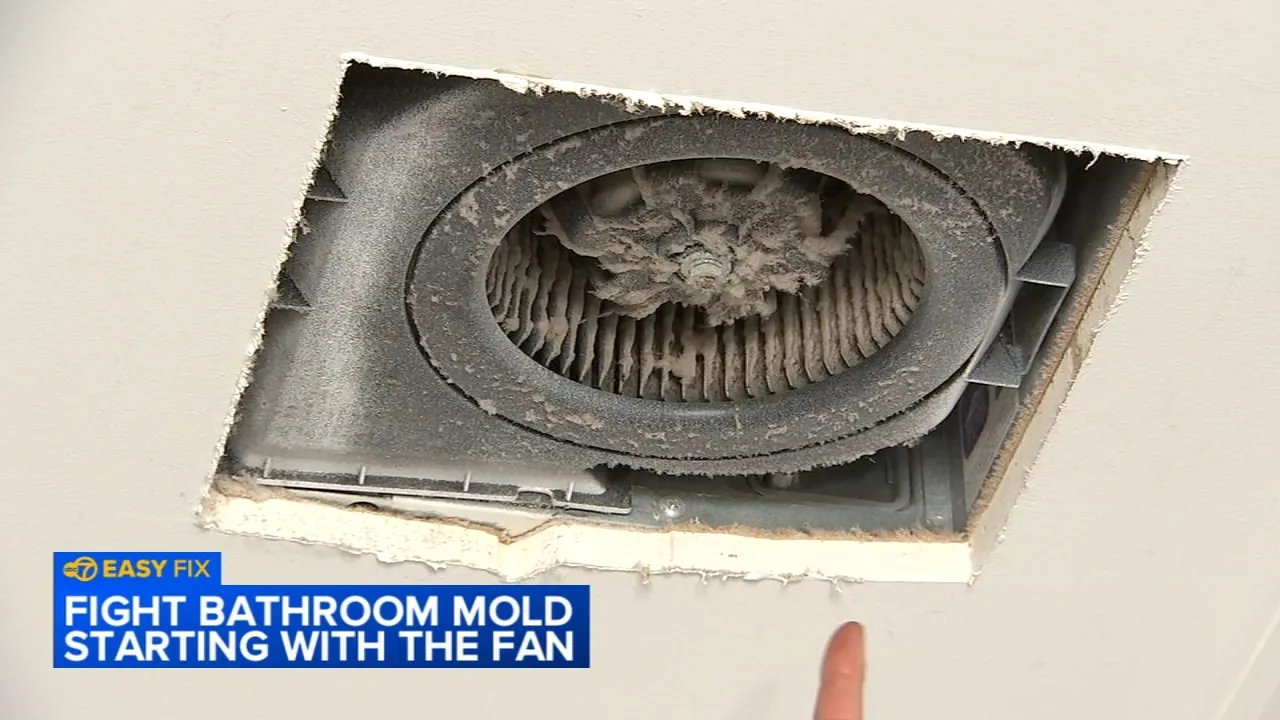
How often you clean a fan’s grille and blade, and the motor vents, depends on how much you use it — your owner’s manual is the authority on the schedule.
The first thing that moves it’s pets and dust. A home with a shedding dog or cat, or a room near a busy road, needs the grille and blade every 4 to 6 weeks — hair wraps the blade edge fast and cuts airflow before you notice.
The second is run time. A fan left on all night, every night, in summer builds a visible dust layer in about 6 weeks; a fan used only on hot afternoons can go 4 months.
Your own check beats any calendar: hold a tissue to the grille on high. If it doesn’t press flat, clean it now.
The U.S. Consumer Product Safety Commission keeps recall notices by brand and model, so check there before you buy a used fan or if your model is older.
The season matters too, and it’s easy to forget. A fan that sat in a garage or closet all winter collects dust while switched off, so give it a clean before the first hot week rather than waiting for the calendar to come around.
If you store a fan between summers, clean it before it goes away, not when it comes back out. Dust that settles on a dirty blade hardens over the winter and takes more work to lift in June.
One more thing to watch: a fan that suddenly needs cleaning far more often than it used to is telling you something changed. New carpet, a new pet, or a window that now opens onto the road all add dust. Match the schedule to the room as it’s now, not as it was last year.
Frequently asked questions
Can I clean a fan without taking it apart?
Yes, for light dust. Unplug it, vacuum the front and back of the grille with a brush head, and wipe the reachable blade edges with a damp cloth through the grille gaps. This takes about 10 minutes and handles surface dust. It won’t clear a packed grille or a filmed blade, so do the full strip-down every 2 to 3 months.
Why does my fan blow weak air after cleaning?
A blade put back upside down or not pushed fully onto the shaft is the usual cause. The blade’s curved edge must face the same way it did before — check the manual diagram. If the blade is correct, the back grille still has dust, or the motor vents are blocked. Unplug, recheck all three, and test again on high.
How long does it take to clean a fan?
About 20 to 40 minutes for a table or pedestal fan, including 30 minutes of drying time for the washed parts if you count that separately. A ceiling fan takes longer — 45 to 60 minutes — because of the height and the number of blades. A quick grille-only vacuum takes about 10 minutes.
Is it safe to wash fan blades in water?
Yes, if the blade is plastic or metal and you dry it fully before refitting. Use 1 teaspoon of mild dish soap in 1 quart of warm water — hot water can warp thin plastic blades. Never put a blade in a dishwasher, and never wash any part that holds the motor, switch or wiring.
What happens if I don’t clean my fan?
Dust builds on the blade and grille and cuts airflow, so the fan feels weaker and you run it longer. Dust also packs into the motor vents, which makes the motor run hotter. A hot motor wears out sooner. In a bedroom, a dusty fan also blows that dust into the air you breathe all night.
Does it matter which way I put the blade back?
Yes. A blade fitted backward still turns, but it pushes air the wrong way and feels weak. Line up the flat side of the shaft with the slot in the blade hub, and check the manual diagram for which face points toward the grille. If air blows backward after reassembly, unplug and flip the blade.
Can I use a vacuum on the motor vents?
Yes, on low suction with a brush head, and it’s safer than compressed air for most people. Compressed air can push dust deeper into the motor. If you use a can, hold it upright and give 2 to 3 one-second bursts from about 4 inches away. Never spray air into a running fan.
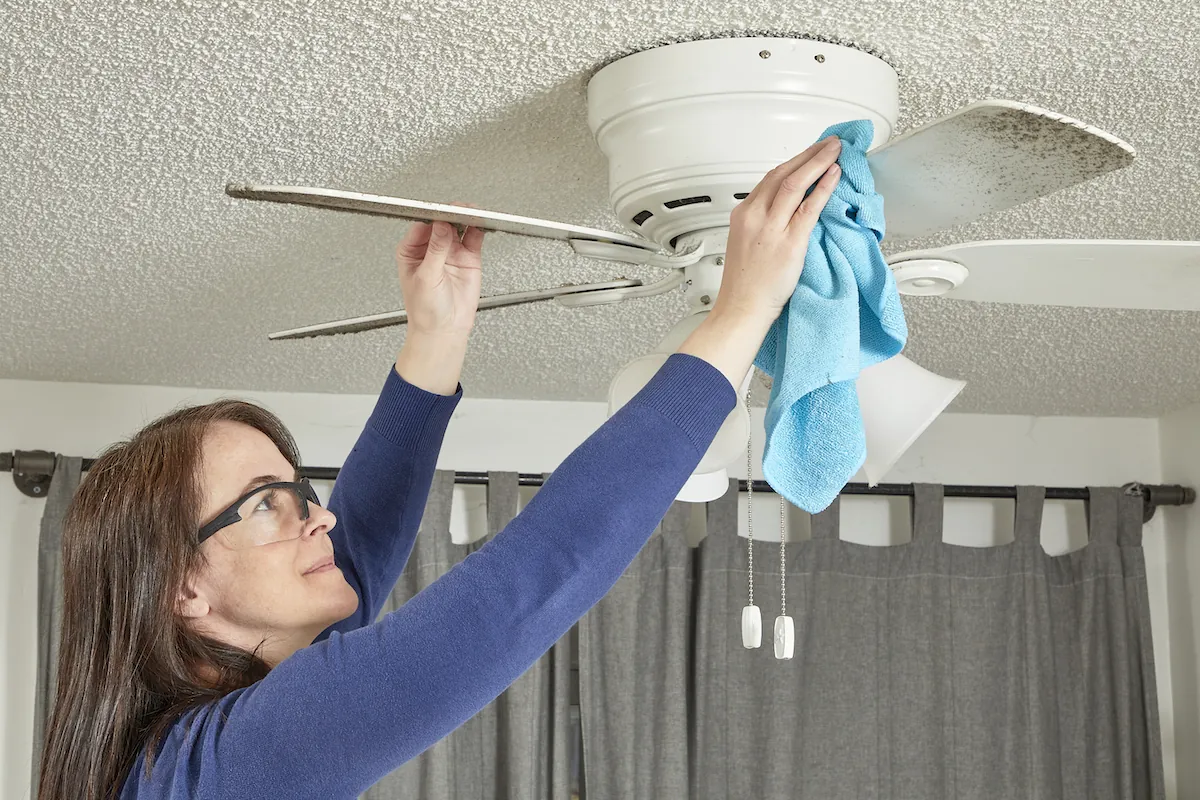
How do I clean a ceiling fan safely?
Turn it off at the wall switch, not just the pull cord, and let the blades stop completely. Use a step stool rated for your weight and have someone hold it steady. Wipe each blade with a damp cloth and dry it, then vacuum the motor housing vents from below. Skip the motor housing if your manual says it’s sealed.
Conclusion
Once it’s back together, run it on low for a minute and listen for any wobble or rattle before you trust it overnight. If something sounds off, switch it off and check that the grille clips and blade nut are snug. You’ll catch most problems early that way.